Everyone has the right to life, but not at the expense of other’s rights, such as their right to dispose of their time, skills, knowledge, and materials as they see fit.
Socialized medicine, AKA “universal healthcare,” violates those rights by demanding that others must pay for my care (or vice versa), and it violates the rights of providers by coercing them to to give said care to me at government prescribed rates vice market rates, which means: at a loss.
“I would posit that healthcare is as important to the defense of the country as the military or education. Somethings are better if we use economies of scale which implies the government’s participation… “socialized” is just a word used to imply something derogatory.
You might make the mistake of thinking this denigrates the military… you’d be wrong.”
“If your only tool is a hammer, every problem looks like a nail.”
If healthcare and education are “important to the defense of the nation,” then why on earth would you want the US government involved? The purpose of the US government, as codified in the founding documents, is to protect our rights. That implies the use of force, if necessary, a la the military or the police and the courts…and not a whole lot else.
The thing that distinguishes government from other entities is its authority (derived from us) to use force to do its proper job…but since force is its only real tool, applying that tool to problems that don’t involve violating our rights is…dysfunctional at best, usually absurd, and frequently wasteful and/or harmful, and occasionally result in the direct violation of the very rights that are supposed to be protected!
Here’s an interesting thought experiment to help make my point. Try replacing the words “by the government” with the words “by force” in the following sentences:
Healthcare should be run by the government
Education should be run by the government
Social Security should be run by the government
Fiscal and monetary policy should be run by the government
National Parks should be run by the government
Radio and television broadcast frequencies should be controlled by the government
The internet should be controlled by the government
See what I mean?
“This is just meaningless rhetoric…
“If healthcare and education are “important to the defense of the nation,” then why on earth would you want the US government involved? “
The answer is that its important… I wouldn’t want 50 states fielding military because it doesn’t work as well as having a national military… the main complaint is that some local people want to teach crap to their kids. That can be extreme enough that it is child abuse.
Your answer reveals more about your personal outlook on the world than reality.
Here’s my challenge to you. Take that same list and substitute
“a private company whose mission is to make as much profit as possible with no obligation to the health of society”
Thats either the current reality, the reality being legislated in Congress or a reality that is on the verge.
Thanks for the softball.”
My answer should not have been any great revelation. I am pro free-market capitalism and individual rights. That “bias” informs my answers to many questions on Quora. On the other hand, your reply reveals a few factual errors and/or reasoning flaws.
The 50 states do have militaries: The (fill in the state) National Guard.
A private company cannot “make as much profit as possible” unless it delivers a product or service its customers want to buy. Only government has the power to force you to buy something you don’t want at price that doesn’t generate profit, then tax you to make up the difference, fail at that, then devalue your currency, still fail to make a profit, then borrow money against future revenue, then still not make ends meet. That’s why we have a 20 trillion dollar national debt.
Beside using force, what is the US government good at? I contend it is worse at anything and everything it tries that could be done by private enterprise, because government eliminates competition and profit motive. The very thing you are decrying is the thing that has driven the ever increasing standard of living for the past ~200 years.
“I don’t know why you all think “we’re” not free market people. We are. We don’t pretend that markets remain free if they don’t have rules. If you don’t think that••• then you’re not free market you’re for anarcho capitalism.
Ya, I don’t like anarchy. I don’t like social darwinism and the Russian woman…
You’all also think we’re not experienced business people. I am. You think I don’t understand how finances work. Here’s how it works. The more customers I have the more I sell. I’ve never added a single piece of equipment or bought anything with tax break. Or whatever.
You wanna do me a favor… get me out from under this crazy idea that business should supply insurance. Thats crazy- who the hell thought that up. Lets save some money, help business and make America healthier. Lets have a single payer system.
And I know all about the military. Of course I meant if we had no national military and had 50 state militaries our national security would suffer. I would even go so far as to say… completely ineffective.
So now that we’ve laid to rest the idea that we’re… I… am against private enterprise and the profit motive… why don’t you call Washington and tell them to quit watching Fox and reading Breitbart because its all fiction.”
First up: You stated you “know all about the military.” Have you served?
Second, you might not be against private enterprise or profit, but you have a very different idea about what a free market is. A “free market” where government controls entire industries isn’t free at all. At best, it’s a mixed economy where cronyism takes root; at worst it’s fascism a la Nazi Germany. I am not for anarcho-capitalism OR fascism. Anarchy would never last; it would be supplanted by a dictatorship run by the most powerful bully in short order. But capitalism is another matter.
I am for an economy where the government protects our rights via enforcing laws against force and/or fraud, but keeps its mitts off otherwise. That is capitalism without the anarchy.
I am against “single payer” healthcare because “single payer” is code for “government,” and government just isn’t the right tool to provide goods and services, nor does the Constitution delegate it any authority to do so, save for one case: the post office. The term “single payer” is also disingenuous, because it’s really paid for by us taxpayers. Private enterprise and non-profits can and do provide goods and services much more effectively than government – when the government butts out.
Of course, our government couldn’t butt out of healthcare. In fact, it’s the reason the industry is what it is today. Health insurance has been around a long time in some form or fashion, and “mutual aid societies” existed even before that, but businesses “thought it up” and began offering it in earnest during WWII as a means to attract employees. Why? Because, in a perfect example of violating the very rights it’s supposed to protect, the government froze wages during the war! With a good chunk of the workforce drafted into the military (another rights violation!), companies had to find creative ways to offer competitive compensation. Health insurance was often the answer. It was a popular perk – so popular that it became a routine offering after the war, then expected, and now demanded as a “right.”
To summarize: Government interference into the not-so-free market induced the evolution of the healthcare industry into the monstrosity we know and hate today – and you are advocating for exponentially more government to “solve” it, asserting against all evidence that it will save us all money and make us healthier, while purporting to be pro-free market. That is bad medicine.
Have you ever noticed that the people who complain the loudest about wealth inequality, or global warming, or racism, or (insert social malady here) always only ever have one solution? To take something away from you. They say you’ve won life’s lottery, so they need you to “give back.” By that, they mean they are going to take your money through taxes. They are usually also trying to take away some of your comfort by banning or restricting something: low-flow shower nozzles, incandescent light bulbs, plastic shopping bags, etc.
They never seem to admit to even the possibility that the single greatest contributing factor to one’s “station” isn’t “luck,” it’s the life choices one makes. They never seem to admit to the possibility that one can improve one’s standard of living over time.
Superstitious people often cite “seven” as a lucky number. Well, I have a seven-ingredient formula to have a “lucky” life. It doesn’t require anything from anybody to accomplish, only that you are made aware of its existence. The formula is simple to understand, but hard to follow. It’s almost never taught in school:
As early as possible, adopt the attitude that you are responsible for everything you do or fail to do, because once you turn eighteen, that is the way the law sees it, and that’s the way your employer sees it. The people who will allow you to not see things that way, i.e. the people who would encourage you to always play the victim and blame others, are merely trying to get you hooked on a cycle of dependency: your vote for their “assistance” against your purported “victimizers.” It’s a recipe for a life of perpetual resentment.
Graduate from high school. A diploma is better than a GED, which is better than “dropped out.”
Don’t become a single parent. If you cannot or will not abstain, then Males: wrap that rascal. Ladies: pick a birth control method, AND make him wrap his rascal.
“Live on less than you make.” (h/t to Dave Ramsey.) You don’t need to live like you are rich. Fun fact: many, many rich people became rich by not living like they were rich! You don’t need designer clothes, blinged-out or brand-new cars, the latest model cell phone, flat screen, and Blue-Ray, etc. The people who matter don’t give a crap whether you have those things.
Corollary 1: If you think you can afford something because you can “afford” the monthly loan or credit card payments – you can’t afford the thing! (One exception usually applies: a home mortgage). If you are making interest payments on car loans, credit cards, etc., you couldn’t afford those things.
Improve yourself. Never stop learning. Increase your opportunities to advance by increasing your value to the market place – continuously improve your knowledge, skills, and abilities, and/or continuously add new ones to your repertoire. Note that going $100,000 into debt to pay for a degree from a big-name university is not required. Heck, a college degree is not required (though it is highly advisable!). There are ways to get a degree on a budget and stay out of debt. Bottom line: the more you follow item 5, the higher your income will go, and the easier it becomes to follow item 4.
Invest in yourself. “Spend” money on an emergency fund, a retirement plan, and health insurance. Save up to pay cash for big-ticket items. Again: The more you follow items 4 & 5, the easier following item 6 will be.
Don’t become an addict or a criminal. Just don’t.
Not one of the things on the list requires that one have “white privilege,” or that you start out in the 1%, or that you belong (or not belong) to a certain race, or gender, or religion, or that you grow up in a given neighborhood. None of them require a college degree (although that is often helpful!), professional-caliber athletic ability, cover-model good looks, or keen intellect. Most of them do require understanding the concept of delayed gratification: if you practice some discipline now, the reward will be greater later on!
Following the formula is not a guarantee you will have a successful life, nor are you guaranteed to have a crummy life if you don’t follow it…but I estimate that 80% of the people who follow this formula will be better off than 80% or more of the people who don’t.
Some of the things on the list are hard. I know I only avoided violating number 3 by random chance. Complying with number 4 was touch-and-go for nearly a decade after high school. But all of the things on the list can be done, and they don’t require anything from anyone besides you (see item number 1).
President Trump has partially fulfilled one of his most controversial campaign promises. Earlier this week, he signed an executive order to build a wall along the Mexican border, and his administration floated the idea of a 20% tax on Mexican imports to pay for the construction. The mainstream media is predictably up in arms.
While I am encouraged by Mr. Trump’s attention to the illegal immigration issue, I find myself in disagreement that a wall is the right solution – but not for the same reasons as the crowds of critics assailing the president. I’ll explain in a bit, but let’s untangle the knot a little first:
If you are an elected Democrat, the illegal immigration “problem” is: how to make it legal for illegal immigrants to vote? There are millions potential voters out there who cannot legally participate in national elections. How to solve that problem? Adopt narratives that simultaneously paint the illegal immigrants as victims who need rescuing and those who see things differently as racists. Then legalize the immigrants (or some portion of them) somehow, and/or prevent the passing of laws that require voters to produce a photo ID proving their eligibility.
If you are in one camp of elected Republicans, the illegal immigration problem is that there are millions of potential Democratic voters out there who might vote illegally or who might become legal voters at the stroke of a pen. How to solve that problem? Adopt narratives that illegal immigrants are by definition criminals just for being here, and who steal jobs from American citizens, who vote illegally, and who cost us a lot of money in “stolen” benefits and entitlements.
If you are in another camp of Republican lawmakers, the problem of illegal immigration is that you are fearful of alienating constituents of Latino or Hispanic origin, so you go along with Democrats on immigration issues.
If you are in yet a third camp of elected Republicans, the illegal immigration problem is that you receive significant campaign funds from donors who employ illegal immigrants, so you also tend to vote along Democratic lines on immigration.
If you run a manual-labor intensive business that can’t afford to pay the minimum wage, paying an illegal immigrant in cash under the table is an attractive option.
If you are a desperate person from Mexico or an impoverished country to our south, getting to America for the opportunities and freebies is an attractive option.
If you are a cunning and morally flexible person, exploiting the stream of immigrants headed north is an attractive option.
I believe the real problem with illegal immigration is: too much government. Here’s what I mean:
Our federal and state governments blatantly disregard current immigration law via policies like “Catch and Release,” “sanctuary cities,” and the “Deferred Action for Childhood Arrivals” directive (i.e. President Obama’s executive order that established the so-called “Dreamers”). Our federal government maintains at least two federal police agencies (Immigration and Customs Enforcement and Customs and Border Patrol) charged with enforcing those same laws. In so doing, our lawmakers are essentially telling our protectors: “Your written job description says ‘enforce the law,’ but your real job is just to have a job so that I can tell voters I did my job by creating your job.” How dysfunctional is that?
In addition, our current immigration law is too byzantine and restrictive. Currently, it’s fairly easy to visit the US, but unless one can claim to be one of the “Three R’s” (Related to a citizen, Rich, or Remarkable), it is extremely difficult to attain a green card or citizenship.
I think Mr. Trump’s actions show promise for resolving the dysfunctional aspect of immigration enforcement, but a wall is too dystopian, sinister, and unnecessary. Functional enforcement policies and increased presence all along the border will reduce the flood of illegal immigrants to a trickle. On the other hand, the bureaucratic burden to those aspiring to remain here longer than a visa allows still remains to be addressed.
So how do we solve such a multi-faceted problem? With a multi-pronged strategy that is consistent with limited government:
Enforce existing law
Control the border via increased presence
Update the law to minimize bureaucracy and maximize freedom – by addressing all of the competing interests and reducing or eliminating the motivations that lure our government into violating its own laws:
Make it much easier to become a legal “permanent resident” and moderately easier to become a citizen. This benefits immigrants wishing to live and work here permanently, and it would benefit lawmakers in both parties who represent immigrant constituencies.
Create a migrant worker visa AND migrant worker wage scale & tax status. This legitimizes hiring migrant workers and paying them less-than-minimum wages. This would benefit migrant workers by making it legal (and safer) to do what they are already doing, and it would benefit industries that can’t be profitable paying the regular minimum wage to unskilled workers. It will be perceived and promoted as a threat to citizen minimum-wage earners…but that is another Gordian knot – which I addressed here.
Last year I wrote about the war on Christmas. This year the election of Donald Trump has overshadowed the usual brouhaha over nativity scenes at City Hall. So this year I thought I’d go with something a little more practical. The guiding purpose of this blog is to make sense out of the vast array or “manufactured truth” that we are constantly bombarded with. Here are a few tips and tricks to deal with it every day:
Consume news skeptically: the first thing you need to remember about the news media is that their first concern is to sell advertising. Their second concern is often to reinforce a narrative or advance an ideological or even partisan agenda. Running in third place is actually informing you about the new events of the day. There has been much ado recently about fake news. Given the first and second criteria just outlined, almost all the news is fake to one degree or another. When there is some crisis happening, such as 9/11, and the news “breaks in” to tell us about the event as it’s happening, they haven’t had much time to adapt it to their preferred narrative. In those cases we are usually getting real news, even if some of the details are inaccurate while the debris is still falling or the smoke is still rising. As soon as one of these stories acquires its own theme music, it’s no longer breaking news. At that point you must start taking it with a grain of salt. In reality, the best way to glean something of the truth may be to examine headlines from multiple news sources, to include some foreign outlets such as the Economist, BBC, and perhaps even Al Jazeera or Xinhua. Even so, while those sources may tell you what’s happening and why, they seldom articulate what it means and what will likely happen because of it. Personally, I like to scan the news headlines, but I also like to read intelligence. One of my favorite sources is StratFor; a private “intelligence” firm that uses the lens of geopolitics to explain the world.
Geopolitics, as you might have guessed, is not just about geography or politics, but about how geography enables or constrains political and/or economic action between nations and other actors. For example: The United States is largely regarded to have the largest economy and the most powerful military, and we are generally thought of as being the world’s only superpower. But it is not only our military might or our form of government that has led us to this condition. The United States is this way in part because of where it’s at and what it has. The most striking example of this is our river and coastal waterway system. “The Greater Mississippi Basin together with the Intracoastal Waterway has more kilometers of navigable internal waterways than the rest of the world combined. The American Midwest is both overlaid by this waterway and is the world’s largest contiguous piece of farmland. The U.S. Atlantic Coast possesses more major ports than the rest of the Western Hemisphere combined. Two vast oceans insulated the United States from Asian and European powers, deserts separate the United States from Mexico to the south, while lakes and forests separate the population centers in Canada from those in the United States. The United States has capital, food surpluses and physical insulation in excess of every other country in the world by an exceedingly large margin.” (From StratFor’s “The Geopolitics of the United States.”) Give these advantages, it would have been a shock if the US had not become an economic powerhouse! By way of contrast, consider the difficulties faced by a landlocked country. Afghanistan, for example, is estimated to have over $1 trillion worth of natural resources in the form of valuable ores and minerals. Yet owing to the difficulty of getting to and from Afghanistan and navigating within its borders, and the fractured nature of its tribal society, Afghanistan has never realized its economic potential, and is unlikely to do so in the foreseeable future. Where the United States has abundance of access, Afghanistan has a dearth. Geography has dealt a difficult hand to landlocked countries, but there is at least one way to overcome that difficulty: adopt a Western form of governance that recognizes individual rights and promotes liberty. Switzerland is the epitome of a country that can overcome geographic isolation by staying neutral in the conflicts of its neighbors and giving its people freedom.
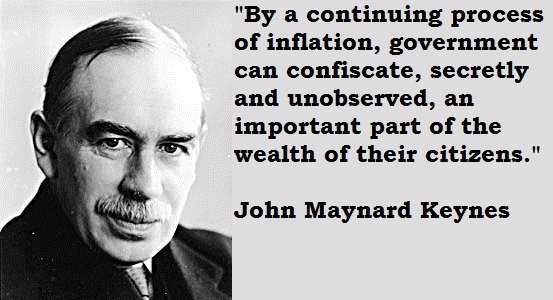
Like most, I’ve had geography classes, and classes on US. Government, but I never had a “geopolitics” class per se in my formal education. Our schools are set up to teach material as discreet subjects, but our brains are not set up that way. We learn and make memories by association. Another example might be economics. The word economics conjures up thoughts of central banks, such as the Federal Reserve, changing interest rates and conducting “quantitative easing.” Those elements of economics were among the set popularized by John Maynard Keynes, and “Keynesian Economics holds sway among the vast majority of economists today. But in a broader sense, economics is the study of human activity. This goes hand in glove with geopolitics, as does history. Come to think of it, so does psychology. What if there was a way of learning economics (and other subjects) in a way that more closely mimics the way the human brain learns? Under such a rubric, there would be far fewer barriers between what we think of as the traditional subjects. Such a field exists. It’s called “praxeology.” In short, praxeology is the study of volitional human action, and it is a basis for the Austrian school of economic thought. We can borrow the concept to help us understand the world without trying to become economists ourselves.
Using these three tools (skeptical news consumption, understanding how geography can enable or constrain political and economic action, and removing the artificial barriers between “subjects,” and examining human action holistically), we can better learn to Filter the Feed.
A common thread in the alarms raised by the election of Donald Trump is the concern that his brand of nationalism/populism will turn the US isolationist, or worse, into a fascist dictatorship. Why are globalists, themselves no friends of individualism, alarmed at such a prospect? It might help to understand more about the complexities of globalism/globalization.
“Globalization is a process of interaction and integration among the people, companies, and governments of different nations, a process driven by international trade and investment and aided by information technology. This process has effects on the environment, on culture, on political systems, on economic development and prosperity, and on human physical well-being in societies around the world….
…Globalization is deeply controversial, however. Proponents of globalization argue that it allows poor countries and their citizens to develop economically and raise their standards of living, while opponents of globalization claim that the creation of an unfettered international free market has benefited multinational corporations in the Western world at the expense of local enterprises, local cultures, and common people. Resistance to globalization has therefore taken shape both at a popular and at a governmental level as people and governments try to manage the flow of capital, labor, goods, and ideas that constitute the current wave of globalization.”
Don’t get me wrong. There is nothing inherently wrong with globalization per se. In fact, taken at face value, it is probably a net benefit to humanity. Think about the spread of modern medicine and information technology, for example. I think unfettered international free markets would be a great thing. I have often presented my bias for free-market capitalism. My bias has no border. Unfortunately, the only unfettered free markets that exist today are the “black” markets for illicit goods, and unfortunately, human trafficking. The rest of the global market is beset by trade imbalances, currency manipulation, defaults, sovereign debt crises, bailouts, and other “fetters.”
Given that explanation, the shape of the globalist critique against Mr. Trump (and the recent “Brexit” vote) begins to emerge. Among the proponents of globalism are those who have been unethically enriched by manipulating matters at the diplomatic, international finance, and CEO levels. Many of the proponents of globalism are not proponents of an unfettered free market. They seek to establish and/or perpetuate imbalances that they can profit from. These are not productive people; they are more like vultures or parasites. These are the globalists who fear that Donald Trump’s administration, a Republican majority Congress, and a conservative Supreme Court will upend the existing “globalist” order – the globalists who have the most wealth and power to lose.
And that is why we must also examine nationalism. The elite manipulators of international intercourse may be parasitical; but that does not make their concern over a rise in Trump-branded nationalism baseless. Extreme nationalism has led to dark places before. Consider the word “Nazi.” It’s a German abbreviation for Nationalsozialist, i.e. “Nationalist Socialist,” hence the anti-Trump crowds’ easy conflation of Trump’s “America First” populism with fascist nationalism.
Will Mr. Trump’s brand of nationalism lead to that same dark place? Did we just elect a tyrant-in-waiting? Time will tell. If Trump does become a dictator, I wonder: will the lachrymose legions lamenting Hillary’s loss begin to see the wisdom of the Second Amendment?
Q: How is the nuclear power industry like shaving cream?
A: We’ll get to the answer in a moment, but a little background is in order. According to the video above, the “energy density” from nuclear fission (splitting atoms of heavy radioactive elements, like uranium and plutonium) is a million times greater than from chemical reactions, such as occur with conventional explosives or burning fossil fuels. A nuclear reactor perhaps the size of your thumb could power your car. Yet there is a huge fear factor with nuclear power because nuclear fission is also the same energy source in atomic weapons, and because of incidents like Three Mile Island, Chernobyl, and Fukushima.
We needn’t be so fearful. Check out these facts:
The nuclear energy industry is safer than the coal industry. As of Februray 2013, no one had died due to radiation poisoning from Fukushima. In fact, despite the deaths that occurred at Chernobyl, the nuclear power industry is the safest of all of the major power generating industries in terms of deaths per terawatt hour generated. Here’s the breakdown (retrieved from http://www.theenergycollective.com/willem-post/191326/deaths-nuclear-energy-compared-other-causes ):
Energy Source Mortality Rates; Deaths/yr/TWh
Coal – world average, 161
Coal – China, 278
Coal – USA, 15
Oil – 36
Natural Gas – 4
Biofuel/Biomass – 12
Peat – 12
Solar/rooftop – 0.44-0.83
Wind – 0.15
Hydro – world, 0.10
Hydro – world*, 1.4
Nuclear – 0.04
That’s right: even solar and wind energy are more hazardous to workers than nuclear power.
So if nuclear power is safer and more energy-dense than any of these other forms of power, why aren’t we using more of it, and burning less fossil fuels? Cost, mainly. Because nuclear power scares people, and because a reactor safety failure can lead to radioactive contamination, the industry is heavily regulated and plants are very expensive to build. (By the way, the coal industry releases far more radioactivity into the atmosphere than the nuclear industry!)
But some of that problem is due to the business model followed by the industry. Power plant reactors are designed to use radioactive uranium or plutonium isotopes in their cores. Very little of the uranium that occurs naturally in the earth is of the required isotope. The necessary isotope can be made by “enriching” regular uranium through various processes, all of which lead to a very expensive (on par with gold or platinum in price per ounce) final product. Plutonium doesn’t even occur in nature, but it can be man-made, or “bred,” in nuclear reactors using enriched uranium…for about the same price per ounce. Both enriched uranium and plutonium can be made “weapons grade” and used to make the cores of atomic bombs. In fact, the weapon industry, inaugurated by the Manhattan Project, gave rise to the power industry as we know it today.
So how is the nuclear power industry like the shaving industry? Some time ago, Gillette came upon the idea of selling razor handles cheaply, at or below cost, or even giving them away, and charging prices with high profit margins for shaving consumables (disposable blades, creams, and gels). A perpetual profit engine was born.
Nuclear power companies often work the same way. They might build a power plant for a utility for little or no profit, but then reap a profit stream via the consumables (enriched uranium and plutonium) end of the business.
There is another business model that might make nuclear power much more palatable to the average customer, if the corporations in the industry could be convinced it would be as profitable. It involves using a much more widely available radioactive material to generate the fission reaction: thorium. In this model, the thorium would be mixed with fluoride and circulated in the reactor as a molten salt. The acronym the industry uses for such a system is LFTR (“lifter”). The benefits are worth considering:
Thorium is far more plentiful and far cheaper to obtain than uranium or plutonium
The reactor can’t “runaway” and “melt down” through its own containment – the fuel is already molten, but it’s at ~700 degrees, not the thousands of degrees needed to melt through steel and concrete
The fuel can be used much more efficiently (there would be far less radioactive waste)
A power plant that used it would not be cheap, but it wouldn’t need to cost any more than a standard nuclear plant
The reactor operates at ambient pressures, which means the plant doesn’t need expensive pressure containment “vessels,” such as the ones that failed at Fukushima
There is increasing debate about using the LFTR model in the nuclear power generation industry. It may or may not be a better system, but to have a chance at replacing the current standard, proponents will have to convince the industry that they can make as much or more profit from LFTR than they can with traditional reactors. They may get two boosts from unexpected quarters: magnets and China.
Not just any magnets, but strong, rare-earth magnets made from a metal element called neodymium. Neodymium magnets are used in such applications as microphones, speakers, and computer hard drives. Where thorium may be plentiful and cheap (compared to the desired uranium isotope), neodymium is relatively scarce and expensive…but it is often found in the same geological areas (in other words, a thorium mine might produce some significant quantities of neodymium as well, according to an extended version of the video above). China currently has a corner on the world market for neodymium, and China, and a few other countries, are looking into building LFTR nuclear plants. Switching the US nuclear power generating paradigm from uranium to thorium might not generate the same kind of profitable consumables stream, but obtaining the neodymium might make up for the loss – and break China’s near-monopoly on neodymium to boot.
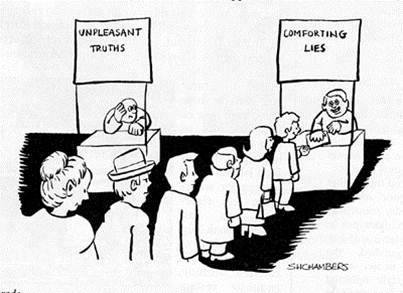
Comfortable lie: The one-percenters have too much money. They should have to pay their fair share of taxes so the rest of us can have more government benefits.
Painful truth(s): 1.The 99-percenters in the developed world (especially in the US) are the one-percenters compared to the rest of the world. If you have food, (even if it wasn’t prepared by a private chef) a car (even if it’s a used beater), a roof (even if it’s a crappy apartment or trailer), multiple changes of clothes (even if you got them second hand), air conditioning, a microwave, and a flat screen TV (or could have those things if you didn’t blow your money on tattoos, booze, drugs, or lotto tickets) then YOU ARE NOT POOR, even if you are living “below the poverty line.” 2. Regardless of how much money a rich person has, it is their money. If you elect politicians to take money from the rich via taxation, you are no different than a gangster who hires thugs to rob people at gunpoint (unless it can be proved that a given rich person obtained their wealth via theft, exploitation, or other criminal means – and even in such circumstances, the only people who deserve their “fair share” of that wealth are the direct victims, not the rest of us).
Comfortable lie: Your employer owes you a “living wage” and medical benefits. People who don’t get those things are being exploited.
Painful truth(s): 1. Your employer owes you what you agreed to work for when you signed on and not a dime more. 2. The idea that your employer OWES you medical coverage is fallacious – unless such coverage was part of the compensation you agreed to before you started working there. The practice of offering medical insurance became popular as a way to increase compensation to deserving employees during World War II without violating the government-imposed wage freezes of the time. 3. You OWE IT TO YOURSELF to increase your knowledge, skills, and abilities in order to increase your worth to your current employer (in order to merit raises and promotions) or to progress up the career ladder at subsequent employment – if you want to increase your income, increase your value. 4. You OWE IT TO YOURSELF not to start, or increase the size of, your family while you are working low-wage/low-benefit jobs. 5. If the pay in your chosen field is generally lower than you might like, it’s probably because there is no shortage of people waiting in line that can take your place. If people with similar skills sets to your own aren’t scarce, there is no need for employers to offer higher compensation. Again – if you want to increase your income, increase your value.
Comfortable lie: We have a right to life, liberty, and happiness. The government must take care of all of our needs from birth to death.
Painful truth: You have the right to life, liberty, and the pursuit of happiness. The government is supposed to protect those rights by not allowing others to interfere with you, so long as you don’t interfere with others. The government cannot “take care of” everyone without violating those very same rights. Consider: if the government MUST provide your health care, then it MUST force doctors and other medical professionals to deliver that care. In so doing it has violated the medico’s right to life and liberty and pursuit of happiness (because the government has directed, under threat of penalties, how some portion of the medic’s life is to be spent).
Comfortable lie: We must nurture every kid’s sense of self-esteem by awarding participation trophies, de-emphasizing grades, and eliminating every objectionable word or insensitive influence, etc…
Uncomfortable truths: “If you look like food, you will be eaten.” (Clint Smith) 1. All life is competitive. Predators have to catch prey; prey has to outrun predator. Even plants compete for sunlight. If you try to protect your kids from competition instead of teaching them how to function in a competitive environment, you are doing them a disservice. (Oh, and by the way, sports are an excellent place to do that…but they are not the only arena!) 2. A kid who has never felt the sting of losing or the “thrill of victory” isn’t going to have healthy self-esteem; he or she is going to have a dysfunctional sense of being entitled to things he or she didn’t earn.
The latest kerfuffle in the culture wars has put Dirty Harry in the camp of Donald Trump. In the latest issue of Esquire magazine and in other recent comments, actor Clint Eastwood laments political correctness and the attention given to some of Mr. Trump’s brasher statements. (He did not officially endorse Trump.)
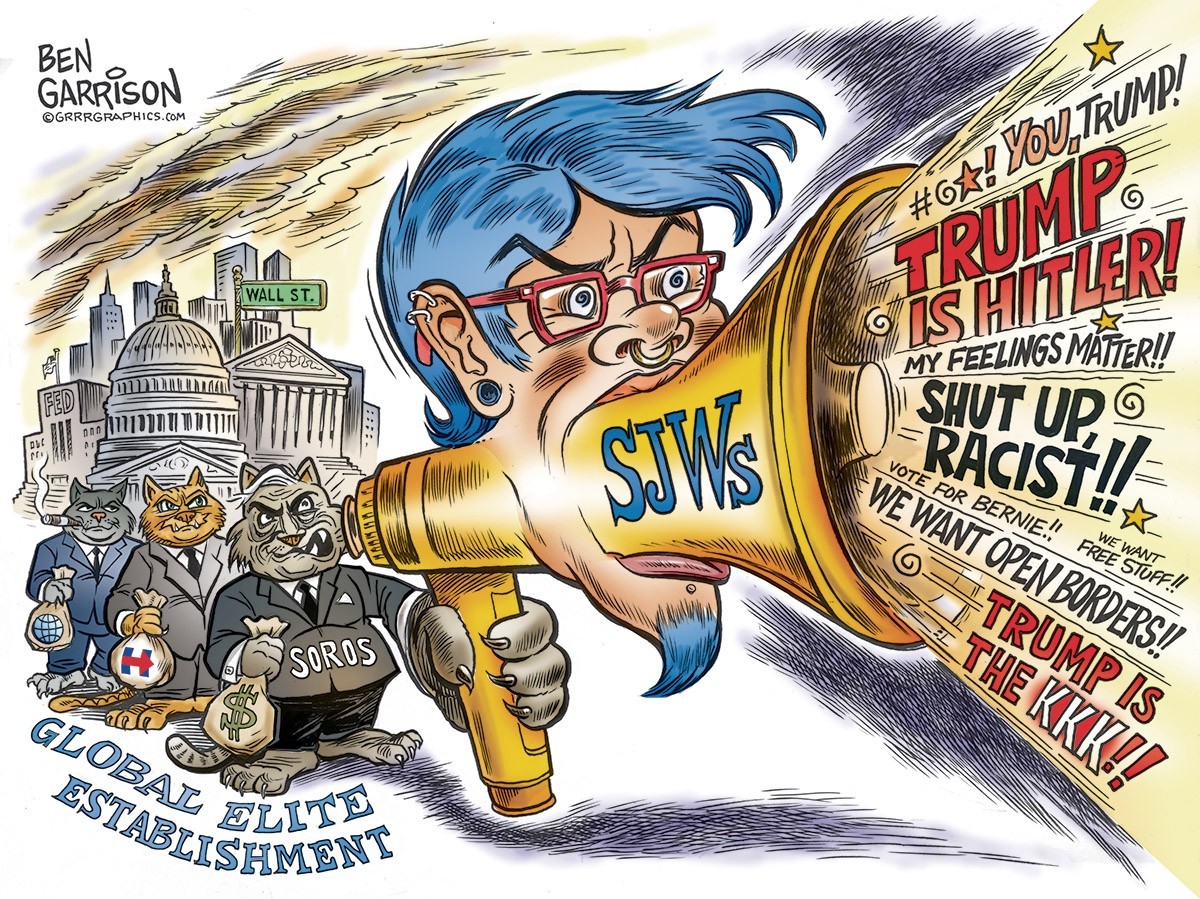
One need not support Mr. Trump, (or any other candidate) to find political correctness troubling. The First Amendment to the Constitution charges the government to protect our right to speak freely. This is an intolerable condition to control freaks who just know that their ways and opinions are right and everybody’s lives would be better if we just obeyed them. Political correctness seeks to accomplish by peer pressure and social sanctions what cannot be legally done by government: the limiting of personal expression.
Last week’s post was bout the spotty availability of formal training in logic and critical thinking in America’s educational institutions. The purposeful omission of such fundamentals from curricula smacks of an elite trying to restrict entry to their ranks. Now add political correctness to the mix.
According to Merriam-Webster online, political correctness is “conforming to a belief that language and practices which could offend political sensibilities (as in matters of sex or race) should be eliminated.”
Bottom line: giving offense should be eliminated. We can’t have dissent. Do not speak freely. Protect everyone else’s feeling, but don’t have any non-conforming thoughts of your own.
Don’t look at the value of the dollar. Don’t examine public education. Don’t question the dysfunction of maintaining an immigration enforcement enterprise while rewarding illegal immigration. Don’t peer into the doings of your city, county, state, or federal government. Don’t read the Declaration of Independence, the Constitution, or the Bill of Rights. Don’t ask probing questions.
Do not give offense. Don’t see the hypocrisy and irony of being offensive in the name of eliminating offensiveness, being racist in the name of eliminating racism, and churning out myriad petty laws in the name of reducing crime.
Do not think for yourself. Don’t find the insanity in trying to stimulate the economy by taxing real wealth out of it then pumping funny money back in. Don’t be self-reliant; rely on your elected rulers to use the power of government to steal from your more productive friends and neighbors and give some of the loot back to you.
Go with the crowd. Run the machines. Consume. Watch the latest reality show/sitcom/talent contest/news crisis on cable/satellite/internet. Go find some Poke-mon.
It’s OK to kill our (human) enemies, but we dare not name them. On the other hand, we have no compunction about conducting war against all sorts of things that aren’t enemies: Terrorism is a tactic used by our aforementioned unnamed enemy, but terrorism itself is not an enemy. Drugs are a commodity sold by enemies taking advantage of the risk/reward conditions our drug laws create, but drugs themselves are not an enemy. Poverty is a condition often perpetuated by people who refuse to accept that they are responsible for the choices they make. Poverty is not an enemy, but the “War on Poverty” often treats the most productive among us as foes.
The “Occupy Wall Street” types who made a stink a few years ago railing against capitalism were often seen wearing name-brand clothing, drinking coffee from famous-brand cafes, and calling and texting each other on smart phones. How can one accept an anti-capitalist argument from spokes-dudes wading up to their necks in the products, goods, and services created at the hands of some of our most effective capitalists?
Scientifically speaking, anything with a carbon molecule is organic. Virtually all of the food items we eat, with the exception of water, salt, and trace minerals, are organic in the most factual sense possible: they contain carbon atoms and molecules in the structures of carbohydrates and proteins. The idea that a vegetable or box of cookies or a can of soda might not be legally “organic” when they are factually “organic” is a semantic absurdity fostered by the pipsqueaks of panic.
Ditto for “genetically modified organisms” (GMOs). Virtually every domesticated food plant and animal produced and consumed today is a result of genetic modification that has been going on since the dawn of agriculture. Here again, the pipsqueaks are pandering to fear. It makes no difference to your body if a tomato or grape or a chicken was modified over many generations in the field or one generation in a test tube. You are going to eat the stuff, draw energy from it, and eliminate it, not blend it into your genetic code. Eating “Franken-food” will not cause you to turn into a shambling mutant!
I am reliably informed that airline pilots for most of the big domestic airlines (American, United, Delta) are paid by the hour, from the time the jet is pushed back from the gate at the departure airport until the door is opened at the arrival airport. Is it not absurd to incentivize your highest-paid hourly employees to NOT be efficient in an industry with such low profit margins that attention to efficiency is essential for financial success?
The concept of “white privilege” has been instigated as a way to induce guilt in white people for (supposedly) causing, or at least not having to suffer, the woes (real or imagined) of every other demographic. It is a racist concept, and it absurd. It is racist because it attributes advantage to whites solely on the basis of their skin color. It ignores the fact that there are many non-white people who attain as many, or more, rewards and advantages in their lives than most whites. It is absurd when applied to Americans because all of us in the US enjoy far more “privilege” (in the form of better living conditions, more freedom, and more opportunities for some, and sadly, also in the form of government handouts for others) than most people in most countries around the world. The constant stream of immigrants pouring into this country (legally and illegally) aren’t coming here seeking to be oppressed by the man!
We are supposed to take it for granted that income inequality is a bad thing and accept all kinds of wealth redistribution schemes to help resolve it. There is never any allowance for the possibility that income inequality might be a direct result of ingenuity inequality or effort inequality. That would mean that people are responsible for their own achievements (or lack thereof). We can’t have that – it would be absurd!
Some fields of human endeavor are inherently hard to learn. Medicine, for example. Becoming a doctor requires a person to study for eight or more years beyond the baccalaureate level and become an expert on the composition, functioning, and behavior of the human body. The sum of human knowledge on the subject increases greatly each year due to the efforts of scientists. People who have acquired skill as a physician are relatively scarce, but because we all want to have our diseases cured and our injuries repaired, they are in high demand and they command high salaries.
On the other hand…some fields are made hard to enter by the members comprising them. Consider: The Constitution of the United States is the ultimate law of the land. It was written by well-educated men – in elegant prose that any reasonably literate reader can understand, even after two centuries of language drift. It is about 17 pages long, and one need not become a lawyer to understand and apply it. Yet somehow that document can describe the limits and give operating instructions for three branches of government. Now consider that the field of law grows every year. The vast majority of that growth is due to politicians making new laws, not by legal “scientists” discovering new truths. And most of these new laws are written in “legalese,” which is often designed to be vague or confusing to the lay person. Understanding modern law requires years of schooling not because it is inherently difficult, but because it is purposely made and kept so by legal practitioners. In other words, most of the difficulty in understanding law and becoming a lawyer is self-imposed by the field of law, not by the need to learn nature’s secrets. Even so, the end result is a person who, like a doctor, has acquired a relatively rare ability set, so he or she can also command a high salary.
Some star athletes at the pinnacle of professional sports (specifically the NFL, MLB, and NBA in the US, and Soccer/”Futbol” throughout the world) get paid even more than doctors and lawyers – sometimes fantastically more. Yet any able-bodied person can go out and play football, basketball, baseball, and soccer. The difference is that the professional “star” athlete has a skill even more rare than medicine or law – the ability to entertain us and win championships. Most professionals have to spend years at college to acquire the knowledge and skill to practice their trade; the star athlete had to be born with a greater degree of natural athleticism than the rest of us, and he had to learn his sport and hone his skills from elementary school through college. His career will likely be over by the time he gets to 40; the professionals in more intellectual and academic settings will just be hitting his or her stride by that point.
As difficult, or even deadly, as it is to be a teacher, or a first-responder, or a military member, or a tradesman, it is far easier to acquire the skills and knowledge to enter such professions than it is to become a doctor, lawyer, or pro sports star. And because they are easier fields to enter, there are lots more people qualified to enter them, and lots more people in them. The skills, knowledge, and abilities just aren’t as rare, so the salary just isn’t as high.
We might like to think our priorities are all wrong because we pay people who put their lives at risk to protect us far less than pro athletes or entertainment stars. After all, isn’t protecting our lives more important than entertainment? Don’t teachers deserve more because they are preparing our children to be productive members of society? I think most of us would agree that our military and first-responders and teachers certainly deserve more. As a veteran, I certainly would have liked to earn more than I did, and I might have even deserved more than I got…but I didn’t get paid based on what I felt I deserved. But there is a hard, inescapable truth: No one really gets paid on the basis of what they “deserve” or on how difficult their job is. The real basis for pay is how rare and how in demand your knowledge skills, and abilities are. Those with the rarest, most in demand attributes will always be offered bigger salaries than the rest of us with more mundane skill sets.






















 Filter the Feed

You might make the mistake of thinking this denigrates the military… you’d be wrong.”
“If your only tool is a hammer, every problem looks like a nail.”
If healthcare and education are “important to the defense of the nation,” then why on earth would you want the US government involved? The purpose of the US government, as codified in the founding documents, is to protect our rights. That implies the use of force, if necessary, a la the military or the police and the courts…and not a whole lot else.
The thing that distinguishes government from other entities is its authority (derived from us) to use force to do its proper job…but since force is its only real tool, applying that tool to problems that don’t involve violating our rights is…dysfunctional at best, usually absurd, and frequently wasteful and/or harmful, and occasionally result in the direct violation of the very rights that are supposed to be protected!
Here’s an interesting thought experiment to help make my point. Try replacing the words “by the government” with the words “by force” in the following sentences:
Healthcare should be run by the government
Education should be run by the government
Social Security should be run by the government
Fiscal and monetary policy should be run by the government
National Parks should be run by the government
Radio and television broadcast frequencies should be controlled by the government
The internet should be controlled by the government
See what I mean?
“This is just meaningless rhetoric…
“If healthcare and education are “important to the defense of the nation,” then why on earth would you want the US government involved? “
The answer is that its important… I wouldn’t want 50 states fielding military because it doesn’t work as well as having a national military… the main complaint is that some local people want to teach crap to their kids. That can be extreme enough that it is child abuse.
Your answer reveals more about your personal outlook on the world than reality.
Here’s my challenge to you. Take that same list and substitute
“a private company whose mission is to make as much profit as possible with no obligation to the health of society”
Thats either the current reality, the reality being legislated in Congress or a reality that is on the verge.
Thanks for the softball.”
My answer should not have been any great revelation. I am pro free-market capitalism and individual rights. That “bias” informs my answers to many questions on Quora. On the other hand, your reply reveals a few factual errors and/or reasoning flaws.
The 50 states do have militaries: The (fill in the state) National Guard.
A private company cannot “make as much profit as possible” unless it delivers a product or service its customers want to buy. Only government has the power to force you to buy something you don’t want at price that doesn’t generate profit, then tax you to make up the difference, fail at that, then devalue your currency, still fail to make a profit, then borrow money against future revenue, then still not make ends meet. That’s why we have a 20 trillion dollar national debt.
Beside using force, what is the US government good at? I contend it is worse at anything and everything it tries that could be done by private enterprise, because government eliminates competition and profit motive. The very thing you are decrying is the thing that has driven the ever increasing standard of living for the past ~200 years.
“I don’t know why you all think “we’re” not free market people. We are. We don’t pretend that markets remain free if they don’t have rules. If you don’t think that••• then you’re not free market you’re for anarcho capitalism.
Ya, I don’t like anarchy. I don’t like social darwinism and the Russian woman…
You’all also think we’re not experienced business people. I am. You think I don’t understand how finances work. Here’s how it works. The more customers I have the more I sell. I’ve never added a single piece of equipment or bought anything with tax break. Or whatever.
You wanna do me a favor… get me out from under this crazy idea that business should supply insurance. Thats crazy- who the hell thought that up. Lets save some money, help business and make America healthier. Lets have a single payer system.
And I know all about the military. Of course I meant if we had no national military and had 50 state militaries our national security would suffer. I would even go so far as to say… completely ineffective.
So now that we’ve laid to rest the idea that we’re… I… am against private enterprise and the profit motive… why don’t you call Washington and tell them to quit watching Fox and reading Breitbart because its all fiction.”
First up: You stated you “know all about the military.” Have you served?
Second, you might not be against private enterprise or profit, but you have a very different idea about what a free market is. A “free market” where government controls entire industries isn’t free at all. At best, it’s a mixed economy where cronyism takes root; at worst it’s fascism a la Nazi Germany. I am not for anarcho-capitalism OR fascism. Anarchy would never last; it would be supplanted by a dictatorship run by the most powerful bully in short order. But capitalism is another matter.
I am for an economy where the government protects our rights via enforcing laws against force and/or fraud, but keeps its mitts off otherwise. That is capitalism without the anarchy.
I am against “single payer” healthcare because “single payer” is code for “government,” and government just isn’t the right tool to provide goods and services, nor does the Constitution delegate it any authority to do so, save for one case: the post office. The term “single payer” is also disingenuous, because it’s really paid for by us taxpayers. Private enterprise and non-profits can and do provide goods and services much more effectively than government – when the government butts out.
Of course, our government couldn’t butt out of healthcare. In fact, it’s the reason the industry is what it is today. Health insurance has been around a long time in some form or fashion, and “mutual aid societies” existed even before that, but businesses “thought it up” and began offering it in earnest during WWII as a means to attract employees. Why? Because, in a perfect example of violating the very rights it’s supposed to protect, the government froze wages during the war! With a good chunk of the workforce drafted into the military (another rights violation!), companies had to find creative ways to offer competitive compensation. Health insurance was often the answer. It was a popular perk – so popular that it became a routine offering after the war, then expected, and now demanded as a “right.”
To summarize: Government interference into the not-so-free market induced the evolution of the healthcare industry into the monstrosity we know and hate today – and you are advocating for exponentially more government to “solve” it, asserting against all evidence that it will save us all money and make us healthier, while purporting to be pro-free market. That is bad medicine.
“I know the patter. Its unconvincing.”
So what do you think? Did I win, or Mr. Jones?