Why is the Trouble in Ukraine Newsworthy here?

Location of  Ukraine  (green)in Europe  (dark grey)  –  [Legend]

(image from Wikipedia)

By Mike Cronin

During the days of the USSR, Ukraine was one of the many Soviet Socialists Republics.  Ukraine is an energy producer, breadbasket (third largest food exporter in the world), and industrial power, similar to the US Midwest. Ukraine has Europe’s 2nd largest military (and for a little over five years, it was a significant nuclear power: Ukraine inherited nearly 2000 nuclear weapons during the dissolution of the USSR; it returned all of them to Russia for dismantling by 1996), and it hosts the Russian Navy’s Black Sea/Mediterranean fleet at Sevastopol.

Russian rulers have always felt the need for buffers between Russia and its potential adversaries. During the Soviet days, that buffer was made up of the various Soviet “republics,” such as Kazakhstan, Belarus, and Ukraine. When the Soviet Union fell, such republics became independent countries. Since Vladimir Putin came to power, Russia has been steadily trying to reassert itself in those countries that were once part of the USSR – including Ukraine.

Current events in Kiev matter because Ukraine is the northern edge (Turkey is the southern edge) of the intersection between the Russian, European and, to some extent, Muslim spheres of influence. In fact, the name Ukraine literally translates to “on the edge.” None of these factions wants to see a prize like the Ukraine fall into another’s orbit. Ukrainians themselves understand this, and want to be independent while playing all sides off each other – a risky, but profitable, strategy.  This is not new. Ukraine has been invaded many times over the course of Eurasian history; and it sits at the historical intersection of the Christian, Islamic and Eastern Orthodox spheres of influence. In the early 20th Century, World War I ended the Ottoman Empire, to which the southern portions of Ukraine belonged. Soon after, the Soviet Union was formed – with Ukraine as a founding member.

Expect periodic drama and conflict regarding Ukraine to continue for decades, if not centuries – it’s the normal pattern of life for valuable territory on the geopolitical fault lines between civilizations.

Hazing vs. Hell

http://www.youtube.com/watch?v=Lr6Rw0ltFxc

By Mike Cronin

Most of my posts to date have been pretty heavy on how our bloated government is dragging us away from the ideal of liberty our founders envisioned.  Despite these criticisms and misgivings, I continue to work as a civil servant, because I think the USA is still the best place on the planet for individuals to aspire and achieve their dreams. We have a long way to fall before we reach bottom, and we can stop the slide.

By way of contrast, consider the latest reports of the inhumanity routinely visited upon the poor souls in North Korea.

“A North Korean prison camp survivor told of a pregnant woman in a condition of near-starvation who gave birth to a baby — a new life born against all odds in a grim camp. A security agent heard the baby’s cries and beat the mother as a punishment.

She begged him to let her keep the baby, but he kept beating her.

With shaking hands, the mother was forced to pick up her newborn and put the baby face down in water until the cries stopped and a water bubble formed from the newborn’s mouth.” (from http://www.cnn.com/2014/02/16/world/asia/north-korea-un-report/ )

Compared to the catalog of misery in that hell-hole, what happened at Abu Ghraib in the early days of Operation IRAQI FREEDOM was mere hazing, and water boarding terrorists isn’t much more than a mean prank.

As long as we have the freedom of speech, we can argue and protest all of the slips, missteps, debacles, and scandals that erode our freedom and are driving us towards the execrable brutality of living in a North Korean-style atrocity machine.

Four Branches of Dysfunction in US Government, Part II

War

By Mike Cronin

“What’s the point of having this superb military that you’re always talking about if we can’t use it?” Secretary of State Madeleine K. Albright in 1993, to then Chairman of the Joints Chiefs of Staff Gen. Colin Powell, in reference to Bosnia

In Part I, I opined that slavery was the first of four major branches of dysfunction that plague our government, and that slavery led us to the worst instance of the second: the Civil War. George Washington once compared government to fire: “Government is not reason; it is not eloquent; it is force. Like fire, it is a dangerous servant and a fearful master.” Government attracts the power hungry, and war is the most attractive method for the power hungry to exercise their power. War negates reason, and provides a fertile field for yet more power to accrue to the government.  It changes the balance of power in the relationship between people and government – war gives unjust power to the government, powers NOT derived from the consent of the governed.

It is to America’s credit, and to the genius of the founders, that for the most part our government’s powers have retracted somewhat after our wars, but it is to our detriment that that power has never ebbed to the level it was at before each war.  In other words, our government assumes new and greater powers with each war, and then sheds some measure of the accrued power after the war, but never all of it. Hence, with each succeeding war, our government grows and become more intrusive.

Certainly, some wars are more just than others, and our nation must be prepared to them. I felt strongly enough about that to serve in the military, but not blindly. Which wars are just?  Smashing Al-Qaeda was (and remains) a national defense imperative. Going after Saddam Hussein was just, but appears to have also been unwise. Was the Spanish-American war just and wise? It put America on map as a great power, but was it necessary to the defense of the nation?  We weren’t attacked or threatened by Spain.  Historians have alleged that President Roosevelt pressured and goaded the Japanese in to attacking us in order to get us into WW II. We probably would have been drug into the war at some point, regardless, but, if true, was it just and wise to encourage and hasten it? If the Spanish-American War put us on the map as a great power, WW II left us (briefly) as the only superpower, and the Cold War left us alone on the superpower stage. It may be good to be the king, but is it wise to be the largest target in a hostile world?

Slavery and war have exposed us to several virulent strains of hypocrisy: Our founders held that all men were created equal…unless one didn’t count as a man. We abolished the chattel slavery of Africans and their descendants in the south, but periodically enslaved men of all colors and creeds through conscription until the 1970s.  We want to bring peace and freedom and prosperity to the world, but we have allowed (or engineered) ourselves to engage in the biggest wars in history, and suffered internal paroxysms as a result.  If there can be such a thing as a national psyche, these dichotomies are not conducive to its health.

Thoughts on Illegal Immigration

34152946-illegal-immigration

By Mike Cronin

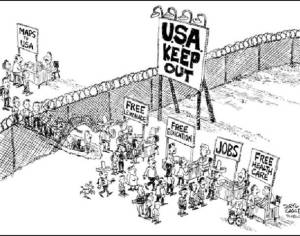
The topic of amnesty and “a path to citizenship” for those illegally present in the US has been making the news lately.  Illegal immigration is a complicated issue; perhaps we can unravel it a bit.

Illegal immigration occurs for a variety of reasons (economic opportunity, drug smuggling, social benefits, joining family, human trafficking, etc.) but only one principle applies: Incentive. People come here (or are brought here) illegally because they (or their abductors) perceive a benefit that outweighs the risk.

There are about 11-12 million people present in the US illegally.

Illegal immigration is not a felony, such as robbing a bank. It is a civil offense that comes in several forms: illegal entry and overstaying a visa are two. These violations carry relatively minor penalties. Nonetheless, illegal immigration is a violation of federal law.

PC police would have us believe the terms “illegal immigrant” and “illegal alien” are racist.  The reasoning goes that the terms should be treated as slurs because most (about 70-75%) of those to whom they apply are Hispanic and hale from Mexico and Central America, or because no person is illegal, only acts are. “Undocumented” is the preferred substitute. No doubt, there are racists who use one or other of the terms as code for those of Hispanic descent.  That does not mean everyone who uses the terms is making a slur. If I drive faster than the speed limit, I am a speeder.  If I steal candy from a convenience store, I am a shoplifter. People who commit such minor offenses and misdemeanors earn themselves appropriate sobriquets, which do not brand them for life. Likewise, people who are illegally present in the US, especially those who remain so of their own free will, have earned a descriptive moniker; “illegal immigrant” is factual, fit for polite company, just like “speeder” or “shoplifter,” and it can be overcome.  It certainly has a more benign connotation than many other terms one can think of.

Amnesty has been granted at least once before: By Ronald Reagan. Whatever their opinion or stance on amnesty, Republican politicians are generally not in favor of providing a path to citizenship, because, as has been mentioned, the vast majority of those who would benefit from such a path are Hispanic, and Hispanics, as a demographic, tend to vote for Democrats. By the same token, whatever their stated rationale may be for supporting a path to citizenship, Democratic politicians are aware of the huge voting bloc that would accrue to them if “path to citizenship” legislation came to pass.

In my opinion, this entire problem can be greatly reduced in the following ways:

  1. Legal immigration is a nightmare unless you are related to a citizen, rich, or eminent. We need to bring back the “Ellis Island” style of immigration: One shows up at the port of entry, gets documented, enters legally, and works towards citizenship. No quotas.
  2. We need to eliminate the incentives for immigration that stem from dysfunctional governance, such as minimum wage laws that incentivize paying paltry wages under the table to migrant workers, draconian drug laws that ensure the street prices attract the most ruthless minds to the narcotics trade, and “in-state” tuition rates at colleges and universities.
  3. Any “amnesty” or “path to citizenship” for those already here illegally must include paying the routine fine for the applicable original offense(s). Amnesty should only be from deportation, not from being cited and fined for the original immigration offense. Exemptions should be given for those who were brought here as minors or demonstrably against their will. Any “path to citizenship” should not be rewarded to those already here illegally simply because they are here illegally. It should include being placed last on current applicant lists – in other words, people who have followed the law and are waiting to gain entry, legal residency, and/or citizenship should be ahead of “path” applicants for citizenship consideration. Public or military service for qualified candidates could serve as an alternative mechanism, provided the same opportunity is given to standard applicants.
  4. We need to secure our borders.

America: Republic, Democracy, or Empire? Part III

UncleImperialist

By Mike Cronin

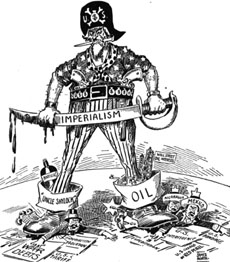
In parts I and II, I opined that the U.S. is supposed to be a republic, but that we have become dysfunctional as such, and that people think we are a democracy, but if we adopt true majority rule vs the rule of law, we will descend into dictatorship.  Whether we are a republic or a democracy or a dictatorship speaks to our domestic governance, but what about our foreign relationships?  Some say America is an empire, and we have certainly done things that are imperialistic. But what is an empire, exactly? According to Paul Schroeder, Professor Emeritus of History, and University of Illinois at Urbana-Champaign:

“…empire means political control exercised by one organized political unit over another unit separate from and alien to it. Many factors enter into empire–economics, technology, ideology, religion, above all military strategy and weaponry–but the essential core is political: the possession of final authority by one entity over the vital political decisions of another. This need not mean direct rule exercised by formal occupation and administration; most empires involve informal, indirect rule. But real empire requires that effective final authority, and states can enjoy various forms of superiority or even domination over others without being empires.”

America certainly wields enormous power and influence across the world. We have the most powerful military and the largest economy. We have a military presence in something like 75-80% of the countries, and our Navy and Air Force can hold any target anywhere on the globe at risk. A few words from the president or the Chairman of the Federal Reserve can affect the fortunes of investors the world over.  We have acted imperialistically in many historical cases, but we are not fully an empire yet. The critical distinction is that we do not maintain “final authority” over other polities. In the historical cases where we had such power, we kept it only temporarily. (For example: the Philippines, Japan post WW II, Panama, Iraq.) We may not ever become an empire…unless we do descend into dictatorship. A dictator needs to accumulate power in order to keep accumulating power. An American dictator would have enormous power indeed – certainly enough to enable his or her ambition for empire.

So, to sum up this series of posts: are we a republic, a democracy, or an empire? If the answer eludes you, don’t feel bad. If you asked 100 historians or social scientists, you’d get 100 different answers.  In my opinion, we are stuck between modes of governance, that is, we have a mix of systems, and pressure is building.  “We the people” are supposed to have a republic, with representation in furtherance of protecting our rights; instead we get lip service. Where our votes are supposed to matter, instead corporate lobbyists and issue-based pressure groups buy or bully for the legislation they want and turn America against itself in the doing. Our elected leaders pass laws we don’t want, waste money that isn’t theirs on programs the Constitution doesn’t authorize, and empower armies of bureaucrats to regulate with the force of law. Then they then exempt themselves from their own handiwork. Our Supreme Court to often tries to legislate new rights out of thin air in an effort to achieve “social justice” and ignores the  Constitution, or says it’s a living document and re-interprets it to mean exactly the opposite of what it says. Ayn Rand was prescient when she wrote: “… no one’s interests are safe, everyone’s interests are on a public auction block, and anything goes for anyone who can get away with it. Such a system—or, more precisely, anti-system—breaks up a country into an ever-growing number of enemy camps, into…groups fighting one another for self-preservation in an indeterminate mixture of defense and offense, as the nature of such a jungle demands.”

If it seems like we are the most powerful nation on the planet, but that we are in decline because we can’t get our governmental act together , you are seeing things pretty clearly.


Is Your Understanding of the World Distorted by the Maps We Use?

By Mike Cronin

Here are two ways maps can mislead:

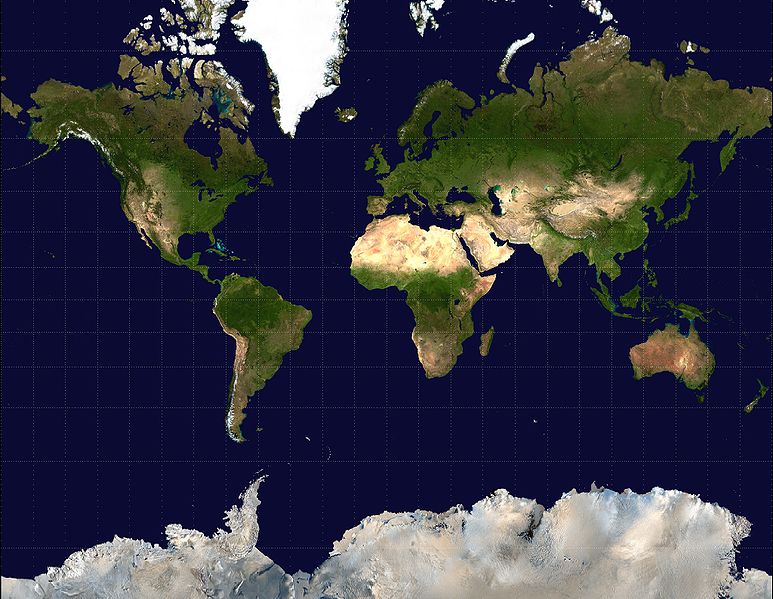
1.            Physical Distortion. Since the earth is a sphere, every flat map we look at distorts the physical geography of the planet. The most common flat map is the Mercator projection.  In order to depict the spherical surface of the earth on a flat map, the Mercator projection distorts our perspective in two ways. First, the northern and southern latitudes are stretched way out of proportion.  Consider: Greenland is not really the same size as Africa, and Antarctica is not as big as all the rest of the world!  The second distortion is more subtle: the image of the earth is centered on Western Europe. It could just as easily be centered on the Pacific Ocean, or the Middle East, or North America.  This orientation may subliminally reinforce Europe-centered thinking.

773px-Mercator-projection

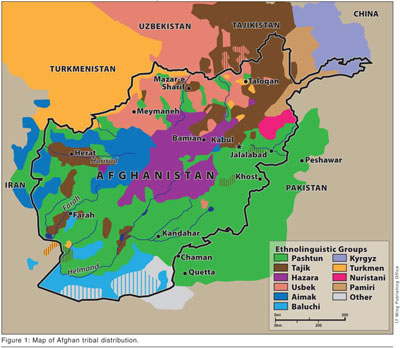
2.            Political Distortion. A country and a nation are not the same thing. While most countries have nations, and most nations have countries, there are exceptions that are the source of much conflict in world affairs.  Consider Central Asia and Middle East. When we look at a map and see the country Afghanistan, we are looking a region bounded by lines drawn about 100 years ago. Those boundaries don’t really correspond to the ground truth.  There are many ethnic/tribal groups in Central Asia. Some of those groups’ territories cross several country borders, such as the Pashtuns, Uzbeks, and Tajiks.  Although there is a semi-functional central Afghan government, it would not be much of a distortion to say that the nation of Afghanistan is not nearly so recognizable as the country of the same name. 

cameron-3-eng 

Conversely, Kurdistan is a nation without a country. Spread over portions of Turkey, Syria, Iraq, and Iran, the Kurds have a central government, but no defined territory to call their own:

kurdistan (1)