The Land of the Free* (*terms and conditions may apply)

essay

By Mike Cronin

When asked what kind of government our new country has, Benjamin Franklin is widely quoted as stating “a republic, if you can keep it.”  Apparently we could not.  It’s almost universally accepted these days, to the point of being taught as fact in schools, that we have a democracy. Yet our Constitution outlines a republican form of government with three branches (Executive, Legislative, and Judicial) that functions with some democratic processes. (You can check this for yourself – the word democracy does not appear anywhere in the Constitution or Declaration of Independence).

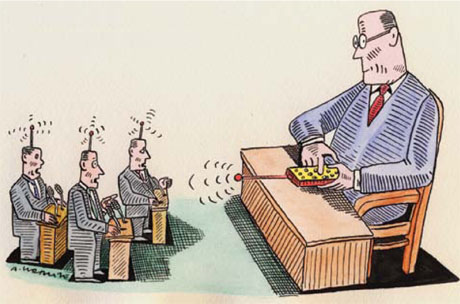
Unfortunately, we’ve accumulated three additional, unofficial branches of government, and devolved so far from our Founder’s vision that we may no longer have either a republic or a democracy, but an oligarchy (i.e. a form of government where power is held by small group).

What are the three “unofficial” branches that the oligarchs use to wield power?  The donor branch, the media branch, and the education branch; all run by the so-called “elites.”

I’ve written before about the “elites” that steer this country, and you’ve probably read or heard others speak of them without really explaining the composition of the group.

Who are the elites in the United States (international elites are another subject)? They are people at the head of the three legitimate branches and the three “shadow” branches of government. In influential order:

The President of the United States: Head of State. Head of Government. Chief Executive Officer of the Executive Branch and Commander in Chief of the military. The incumbent holds possibly the most influential position in the world; certainly whoever occupies the Oval Office wields the most diplomatic influence backed by the most extraordinary military.

The donor class – the folks who provide significant funds to politicians, PACs, and campaigns and are owed favors and quid pro quos. Think George Soros, the Koch brothers, corporate lobbyists, and the like. If we could dig deep enough, we might also find drug lords and other organized crime dons in this class.

The rest of the elected politicians at the Federal level: the 535 members of Congress (the House of Representatives and the Senate), plus the vice president.

Next come political appointees: ambassadors, cabinet secretaries and other cabinet-level executives, federal judges, and military combatant commanders and the Joint Chiefs of Staff – and the emeriti of these positons – e.g. Henry Kissinger.

There is some overlap between the politicians above and the influencers in their networks. These are their fellow Ivy-League and service-academy alumni, corporate and institutional boards, bank chairmen, media moguls, etc.

Perhaps at the bottom rung of the elites are the folks who try to influence us more directly. This group is largely composed of the academic and think-tank intelligentsia and “on-air talent” in the mainstream media.

Perhaps not really elite, but still somewhat culpable for the direction of our country: The entrenched bureaucrats just below the political appointee level. They provide institutional continuity across multiple administrations – and they are largely not accountable. Not because they don’t “report” to anyone, but because it’s so damn hard to fire someone in the Federal government, and because they can just outlast the appointed bosses that can fire them.

Altogether, I estimate that there are perhaps as many as 300,000 to as few as 30,000 people running our country of 300,000,000+ people.  What would you call a form of government where perhaps 1/1000th to 1/10,000th of the population holds almost all of the power?

“…A lot of Dumb Things.”

no-smoking-films-photo-u1

By Mike Cronin

The latest kerfuffle in the culture wars has put Dirty Harry in the camp of Donald Trump.  In the latest issue of Esquire magazine and in other recent comments, actor Clint Eastwood laments political correctness and the attention given to some of Mr. Trump’s brasher statements.  (He did not officially endorse Trump.)

One need not support Mr. Trump, (or any other candidate) to find political correctness troubling.  The First Amendment to the Constitution charges the government to protect our right to speak freely. This is an intolerable condition to control freaks who just know that their ways and opinions are right and everybody’s lives would be better if we just obeyed them. Political correctness seeks to accomplish by peer pressure and social sanctions what cannot be legally done by government: the limiting of personal expression.

Last week’s post was bout the spotty availability of formal training in logic and critical thinking in America’s educational institutions.   The purposeful omission of such fundamentals from curricula smacks of an elite trying to restrict entry to their ranks.  Now add political correctness to the mix.

According to Merriam-Webster online, political correctness is “conforming to a belief that language and practices which could offend political sensibilities (as in matters of sex or race) should be eliminated.”

Bottom line: giving offense should be eliminated.  We can’t have dissent. Do not speak freely. Protect everyone else’s feeling, but don’t have any non-conforming thoughts of your own.

Don’t look at the value of the dollar.  Don’t examine public education.  Don’t question the dysfunction of maintaining an immigration enforcement enterprise while rewarding illegal immigration. Don’t peer into the doings of your city, county, state, or federal government. Don’t read the Declaration of Independence, the Constitution, or the Bill of Rights. Don’t ask probing questions.

Do not give offense. Don’t see the hypocrisy and irony of being offensive in the name of eliminating offensiveness, being racist in the name of eliminating racism, and churning out myriad petty laws in the name of reducing crime.

Do not think for yourself. Don’t find the insanity in trying to stimulate the economy by taxing real wealth out of it then pumping funny money back in. Don’t be self-reliant; rely on your elected rulers to use the power of government to steal from your more productive friends and neighbors and give some of the loot back to you.

Go with the crowd. Run the machines. Consume. Watch the latest reality show/sitcom/talent contest/news crisis on cable/satellite/internet.  Go find some Poke-mon.

The Battle Begins. How Will you Fare?

trump-clinton

By Mike Cronin

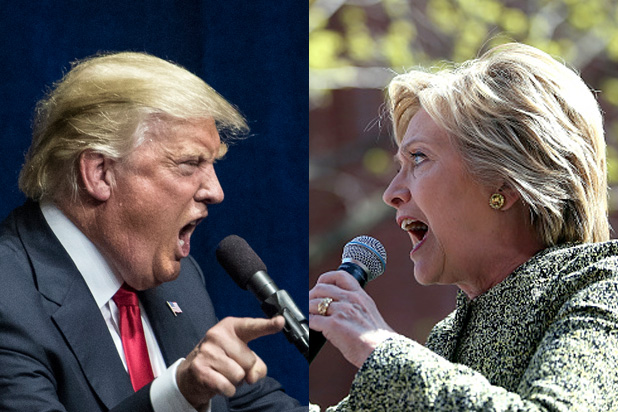
Barring a “black swan” event, the race for president is down to Trump vs. Clinton.  Who will you vote for, and why?  Will you even vote?  Will your vote matter?

There are so many marginal factors that can shape an election, but there are some basic election fundamentals that seldom get explained.

First: From 1932 to 2012, the average voter turnout has never been higher than 63% or less than 49%.  That means on average only a little over half of the eligible population votes in any given presidential election.  Of the half that votes, roughly 32% are dyed-in-the-wool liberal Democrats and will always vote for the Democrat candidate.  Roughly another 22% of the half that votes is comprised of hard-core conservative Republicans who will always vote for the Republican candidate.  These groups are the “base” for a given candidate/party.  Once you exclude the 54% of voters that are going to automatically vote D or R in any given election, the real battle takes place over the remaining half of the half of Americans who are going to vote. Expressed another way: Presidential elections hinge on the lever pulls of slightly less than 25% of the adult population!

It gets better.  Where those 25% reside is crucial.  If a majority of them reside in states that are overwhelmingly likely to vote a certain way, their votes aren’t going to mean very much.  Conversely, if the bulk of those independent voters reside in states that could go either way (the so-called battleground states), their votes could wield enormous influence!

Are you one of the independents or third party members who vote but don’t blindly punch holes for any party’s candidate (or against the other party’s!)?  Where do you live?  Will your vote count?

If you are, how will you make your decision? Party loyalty isn’t your thing, so what does it for you?  Unfortunately, some will waste their votes on frivolous criteria such as the looks, race, or gender of the candidate, or on candidate’s oratorical prowess.

To do justice to our system and not waste my vote, I’ve developed a small list of criteria that I can rate each candidate against using a survey technique called a Likert scale.  Here it is:

Rate each candidate on how you believe they would:

Honor the Oath of Office and abide by the Constitution & the laws of the land Fail Marginal Mediocre Good Exemplary
Appoint Supreme Court Justices that will uphold the Constitution Fail Marginal Mediocre Good Exemplary
Command the armed forces and employ military force only to counter serious threats to the United States Fail Marginal Mediocre Good Exemplary
Act with integrity & honesty, and demonstrate character Fail Marginal Mediocre Good Exemplary
Govern transparently Fail Marginal Mediocre Good Exemplary
Reduce dysfunction and corruption in the Executive Branch Fail Marginal Mediocre Good Exemplary
Work to reign in government spending, promote capitalism and demonize socialism Fail Marginal Mediocre Good Exemplary
Work to audit, and possibly end, the Federal Reserve Fail Marginal Mediocre Good Exemplary
Work to end, or at least lessen and simplify, the income tax Fail Marginal Mediocre Good Exemplary
Overhaul the immigration system to allow maximum freedom to enter and remain in the country  consistent with preventing criminals, terrorists, and other bad actors in and without yielding an automatic electoral advantage to any party Fail Marginal Mediocre Good Exemplary

Obviously, you might prefer different criteria than what I’ve settled on, but whatever thoughtful criteria you select can still work.  Once you establish your criteria and rate each candidate, score them thus: 1 point for each Fail, 2 points for each Marginal, 3 points for each Mediocre, 4 points for each Good, and 5 points for each Exemplary. Total up the scores and vote for the candidate that earns the highest marks.

Still, there is at least one other major contextual factor that is seldom examined during presidential elections: Congress.  We can elect a president based on the most cogent criteria, but if he or she must deal with a Congress skewed to the opposing party, it is likely they will face high resistance to carrying out their plans or their mandate.  Even if he or she gets to work with a same-party Congress, your candidate could still find it hard to make headway if, like Donald Trump, they come from outside the beltway political establishment.

There is a simple (not easy!) fix to that: Help your presidential candidate get a sympathetic, same-party Congress to work with!


A Crazy Idea

bright-idea-different-individual-group-society-community

By Mike Cronin

In the 1600s, pilgrims came to this land to escape religious persecution. Other colonists soon followed. In the late 1700s, the thriving 13 colonies decided to throw off the yoke of their far-off ruler. In the 1860s, we fought a war over slavery.  (Some will tell you the war was about state’s rights, but the “rights” being fought over were the right to secede from the Union in order to continue the practice of slavery.) About a half-century later, women won the right to vote. Nearly another half century after that, we had the civil rights and equal rights movements.  At some point, other groups saw that these early movements were largely successful in gaining for their members the recognition that they deserved the same rights as anyone else. But then new groups started seeking privileges disguised as rights.

For instance: the gay marriage movement.  This movement sought (and is still seeking) the privilege for one person to be able to marry another person of the same gender. The movement postulates that since heterosexuals have a “right” to marry, homosexuals deserve no less. Advocates of this arrangement are right that homosexuals ought to have the same rights as heterosexuals; but they err by seeking parity with heterosexuals in being permitted to marry by the government. If marriage (or domestic partnership), or any other kind of association is indeed a right, then the movement should be demanding the elimination of government intrusion (except for the function of contract enforcement) in the domestic arrangements of competent, consenting adults. (Freedom-loving heterosexuals ought to consider advocating for the same thing!)

Now we live in a time with a constantly-increasing number of movements and causes seeking special privileges for smaller and smaller groups of people.  The latest examples: Trans-gendered folks seeking the “right” to use whichever public restrooms are appropriate to the gender they “identify” with.  College kids demanding “safe spaces” where they can be free from challenging ideas espoused by disagreeable people. Illegal immigrants demanding in-state tuition rates and voting rights. Minimum-skilled fast-food workers demanding higher pay than junior military members (who have months of technical training) make. Able-bodied yet jobless people demanding food stamps.

Before you know it, every single individual in this country will get the crazy idea that they deserve equal rights for themselves.  Some will demand free speech, others will want to own a gun, and many would like to have the right to be free from unreasonable search and seizure.  Some might even want to be free to associate with whomever they’d like.

Folks might get the fantastical notion that a genuine individual right cannot require or obligate anything of anyone else other than that we leave each other alone and honor our voluntary commitments.

Some thought leaders and other prominent people might even get together and decide to craft a document that would enshrine these ideas.  They might imagine that the best way to organize a government would be around the concept that its sole purpose is to protect the rights of free individuals, and that such freedom is the best way yet devised by humans to deliver the greatest good to the greatest number.

I wonder what it would take to produce such a document and put it into force. Could such a society ever flourish? What would we call such a place?


Do We Need a Dictator to Restore our Freedom?

download

By Mike Cronin

Over the last 240 years, our federal government has become a bloated monstrosity that bears little resemblance to the founder’s vision. It is so massive and tangled that there is little hope that we can restore it to a more reasonable size or constrain it from grabbing an ever-increasing share of our liberty and freedom. Even if we could elect a Congress and Presidency full of freedom- and liberty-minded politicians for a generation or more, it might not be enough to de-fang the beast and put it on a forced diet.  How can we fix it?

I have an affinity for the adage that whoever wants to be the president is not qualified to have the job. I certainly don’t want it, but if I was ever elected, people might call me the world’s first libertarian* dictator**.  If you think that’s a contradiction, you are only partially correct.  No doubt, in all of human history, the record of dictators tends towards loss of freedom.  But what if we had a dictator who used his or her power to shrink government and increase freedom?

Here’s how I would become subject to such a characterization:

After being elected and taking the oath of office, I would declare a state of emergency and impose martial law.  It would be the weirdest martial law ever, because there would be no curfews or tanks in the streets. No rationing, checkpoints, or firing squads.  Instead, I would go before the American people and explain that the emergency is that we are destroying the Republic with excessive government.  Too many bureaucrats have too much power to regulate our lives.

My first dictate would be to abolish the IRS and institute the Fair Tax plan.  We would no longer punish productivity; we would pay for government the same way we pay for everything else: according to how much we use. In the same stroke, I would put in place a plan to audit the Federal Reserve and end the use of fiat currency, and re-introduce currency exchangeable for precious metals or other suitable commodity. In these two acts alone, we would greatly curtail the power of the government by removing its prerogative to confiscate our money before we see it, and its ability to confiscate our wealth by devaluing the currency we have been allowed to keep.

I would also announce to the world that the vast bulk of our armed forces based abroad would be returning to US territory in calibrated withdrawals from foreign lands.  Our defense strategy would focus on protecting US territory and US interests in international sea- and airspace. In this way, military spending could be reduced without reducing military strength.  Indeed, such a pull-back would allow the armed forces a much-needed breather to reconstitute after decades of continuous warfare and deployments.  No doubt, some countries would not be happy with us, while others, including some adversaries, would be ecstatic.  It would certainly disrupt the balance of power in many regions…but it would not alter the fundamental truth in the global balance of power: The US has the most powerful military and the economic might to back it up.

Next, I would turn to the various departments of the executive branch.  I would call in each incumbent cabinet-level secretary/director to defend the constitutionality of the operations, or even the very existence, of their department – on the basis of how it protects the rights to life, liberty, and pursuit of happiness of the citizens.  Some would have an easy job of it, especially the Departments of Defense and Justice, and perhaps the Director of National Intelligence (though he or she would have a tough time convincing me domestic intelligence operations do more constitutional good than harm!).  Some would have a very tough time indeed, such as the Departments of Commerce, Transportation, Education, Energy, and the Interior.

Departments with unsatisfactory answers would be on the chopping block for re-organization, mission reductions, or even complete dismantlement.  The chief of every department left standing would be under orders to examine all of their operations and to de-regulate anywhere such operations do not protect the life, liberty, or property of citizens.

There are innumerable issues that would have to be addressed during such a departmental shake up:  Welfare. Social Security. Immigration. Guns. Abortion. Drugs. Trade. All manner of regulations. The list would be quite long, but always the test for each would be simple: How does a program, regulatory structure, function, etc. protect the rights of the citizens? Is the coercive power of the federal government the right way to address the issue?  If the answer to the first question is that it does not, or to the second, no, then that program would be on the chopping block for re-design, privatization, or elimination.

Of course, such a scheme (getting elected on a “libertarian dictator” platform) is pretty much a pipe dream, but the idea that it will take some unorthodox leadership to re-align the Republic to the founders’ vision and restrict the government to its Constitutional limits is very timely.

*Note that my use of the word “libertarian” (little l) should not be construed as an endorsement for the (Big L) Libertarian Party.

**There is a book by the name of “The Libertarian Dictator” (published in 2015).  I’ve never read it, but if any of the ideas I espouse in this post were first put forth in said book, I yield credit to the author.


A Hard Truth About Pay

By Mike Cronin

Some fields of human endeavor are inherently hard to learn. Medicine, for example. Becoming a doctor requires a person to study for eight or more years beyond the baccalaureate level and become an expert on the composition, functioning, and behavior of the human body. The sum of human knowledge on the subject increases greatly each year due to the efforts of scientists.  People who have acquired skill as a physician are relatively scarce, but because we all want to have our diseases cured and our injuries repaired, they are in high demand and they command high salaries.

On the other hand…some fields are made hard to enter by the members comprising them.  Consider: The Constitution of the United States is the ultimate law of the land.  It was written by well-educated men – in elegant prose that any reasonably literate reader can understand, even after two centuries of language drift.  It is about 17 pages long, and one need not become a lawyer to understand and apply it. Yet somehow that document can describe the limits and give operating instructions for three branches of government.   Now consider that the field of law grows every year. The vast majority of that growth is due to politicians making new laws, not by legal “scientists” discovering new truths.  And most of these new laws are written in “legalese,” which is often designed to be vague or confusing to the lay person.  Understanding modern law requires years of schooling not because it is inherently difficult, but because it is purposely made and kept so by legal practitioners. In other words, most of the difficulty in understanding law and becoming a lawyer is self-imposed by the field of law, not by the need to learn nature’s secrets.  Even so, the end result is a person who, like a doctor, has acquired a relatively rare ability set, so he or she can also command a high salary.

Some star athletes at the pinnacle of professional sports (specifically the NFL, MLB, and NBA in the US, and Soccer/”Futbol” throughout the world) get paid even more than doctors and lawyers – sometimes fantastically more.  Yet any able-bodied person can go out and play football, basketball, baseball, and soccer.  The difference is that the professional “star” athlete has a skill even more rare than medicine or law – the ability to entertain us and win championships.  Most professionals have to spend years at college to acquire the knowledge and skill to practice their trade; the star athlete had to be born with a greater degree of natural athleticism than the rest of us, and he had to learn his sport and hone his skills from elementary school through college. His career will likely be over by the time he gets to 40; the professionals in more intellectual and academic settings will just be hitting his or her stride by that point.

As difficult, or even deadly, as it is to be a teacher, or a first-responder, or a military member, or a tradesman, it is far easier to acquire the skills and knowledge to enter such professions  than it is to become a doctor, lawyer, or pro sports star.  And because they are easier fields to enter, there are lots more people qualified to enter them, and lots more people in them.  The skills, knowledge, and abilities just aren’t as rare, so the salary just isn’t as high.

We might like to think our priorities are all wrong because we pay people who put their lives at risk to protect us far less than pro athletes or entertainment stars. After all, isn’t protecting our lives more important than entertainment? Don’t teachers deserve more because they are preparing our children to be productive members of society? I think most of us would agree that our military and first-responders and teachers certainly deserve more. As a veteran, I certainly would have liked to earn more than I did, and I might have even deserved more than I got…but I didn’t get paid based on what I felt I deserved. But there is a hard, inescapable truth: No one really gets paid on the basis of what they “deserve” or on how difficult their job is. The real basis for pay is how rare and how in demand your knowledge skills, and abilities are. Those with the rarest, most in demand attributes will always be offered bigger salaries than the rest of us with more mundane skill sets.

Three Random Thoughts

1908247_619961594719227_928068838_n

By Mike Cronin

I have been holding my criticism of Common Core until I could see for myself how it is being applied to my own children’s education.  It isn’t all that special.  My son is learning multiplication.  He recently asked for my help.  The problem he was working on required him to describe various tools he could use to solve it, such as grids, counters, and number lines.  One tool conspicuously missing from the “kit:” multiplication tables!  How “common” can Common Core be if it eschews the near-universal “tools” taught to previous generations?

The Supreme Court recently ruled in favor of gay marriage, essentially granting the right to homosexuals nationwide to wed and enjoy the same legal advantages as heterosexuals, such as designating the spouse as beneficiary for insurance.  In my opinion, homosexuals were seeking the wrong remedy to the wrong injury.  The injury is that for far too long, government has held sway over who could be married to whom, in direct contravention of the concepts of free association and individual rights. It would have been much more proper to argue that the remedy would be for government, at any level, to exercise no purview over the relationships of competent, consenting adults, except in terms of contract enforcement. The quest for nationally-legalized gay marriage was successful…at reinforcing the assumption of a power by the government it was not endowed to by the Constitution.

I recently heard an atheist offer a quip to the effect that if  Creationism (AKA Intelligent Design, or I.D.) becomes a required “theory” to be taught in public school, Evolution should then be a required subject to be preached in church.  I thought that was a neat bit of rhetorical art.  However, as with gay marriage, it would be the wrong remedy for the wrong injury.  The problem isn’t that Creationism/I.D. are religious beliefs disguised as scientific theory, and would therefor constitute a violation of the separation of church and state.  The problem is that we have massive federal interference and oversight (disguised as “support”) for public schools, which ought to be solely the domain of the states. (This may come as a surprise, but there is no power enumerated in the Constitution that gives the federal government any purview over education. The word “education” does not even appear in the Constitution proper.)  Remission of federal control over education would not eliminate the argument over separation of church and state, or of Evolution vs. Creationism/I.D. But it would localize the problem. The states, counties, and school districts would be freer to experiment with curriculum design, and if a family objected to the local curriculum, whether it included Creationism/I.D. or not, they would have more power to influence change or a greater likelihood of finding a curriculum to their liking in a different school system.  And they might have a little more money in their pockets.

Disagree with my reasoning?  Let’s hear it!

Weasel Words: Constitutional Rights

civil rights_header

By Mike Cronin

Have you noticed that the weasels telling us we have “rights” to a job, or an education, or healthcare – all things that can only be given to some at the expense of others, are quite often the same people that are trying to eliminate our inalienable rights? (You know – the rights the Founders tried to protect with the Declaration of Independence, the Constitution, and the Bill of Rights?  The ones that don’t depend on taking time, money, or goods away from anyone?)

Consider: If you have a right to a job, then an employer is compelled by law to give some of his property, namely the position, to you. If you have a right to an education, the government has to first take money from your friends and neighbors to pay for it.  If you have a right to healthcare, then you have a license to demand time and effort from doctors, nurses, technicians, and pharmacists, and a warrant to seize medicines or medical equipment away from those who made them. If you have a right to not be offended, then you have the power to muzzle the free expression of others.

On the other hand, the rights the founders designed our government to protect do not require us to take away anything from our neighbors; they simply require that we leave each other alone.  They don’t preclude us helping others voluntarily; the don’t preclude private entities from influencing our charitable behavior; but they do not permit the government to use its coercive power to dictate whether or how our neighbors’ “generosity” is to be extracted and distributed.

When the weasels take from the most productive in order to give it to the least productive in the name of benevolence, the result is not universal prosperity, it is universal resentment.  The productive resent having the fruit of their labor confiscated (via income tax withholding, for example), and the recipients resent the productive for being able to “make it.”  Nobody prospers except the politicians, cronies, and bureaucrats doing the taking.

The weasels will use every rhetorical trick to convince us that we have Constitutional rights to this, that, or the other thing.  There is no such thing as a Constitutional right, because the Constitution doesn’t grant us our rights.  The Constitution isn’t the law we are supposed to obey; it’s the law the government is supposed to obey.  It doesn’t give us our rights; its purpose is to protect our rights from the government!

Four Branches of Dysfunction in US Government, Part I

civilwar

By Mike Cronin

Ronald Reagan once said that government is not the solution to our problems, government is the problem. What did he mean by that? After all, he was president at the time; surely he must have felt that at least some government is good and necessary. As I have expressed in previous posts, our government has become dysfunctional. Just as cancers are flawed cells that grow uncontrollably, consume resources, and displace healthy tissue, dysfunctional government supplants healthy government.  This is what Reagan was referring to.  How is our government dysfunctional? In my opinion, there are four major, interlocking branches of dysfunction: Slavery, war, confiscatory taxes, and currency debasement. In turn, these branches of dysfunction are fueled by ignorance and ambition to power.

Our government was established to protect our rights to life, liberty, and the pursuit of happiness, but dysfunction was present right from the start. The founders articulated the notion that all men are created equal – but they didn’t recognize slaves as wholly men. Slaves counted only as 3/5ths of a person. Our nation began its life trying to cope with a terrible cognitive dissonance and human injustice – one that would cause arguably the greatest existential crisis it has yet faced: the Civil War.

You might argue that the Civil War was about states’ rights, not slavery. Well, there was one “state right” in particular that the South’s economy relied on: slavery. The Southern States seceded in order to hang on to the institution of slavery, but President Lincoln would not tolerate the dissolution of the union, so the first dysfunction led to the second: war. While Lincoln is widely hailed as the Great Emancipator and one of our best presidents, he assumed virtually dictatorial powers during the war, and expressly violated the Constitution and the Bill of Rights, thus setting precedent to his successors that might wish to do the same. One example: Lincoln ordered two newspapers critical of him to be shut down and had their owners and editors arrested for disloyalty.

While the aftermath of the Civil War may have seen the restoration of the country and the abolition of one form of slavery, it did not absolve us of the original dissonance slavery caused. It took another hundred years before the law and most of the nation accepted the full humanity of blacks, but vestiges of racism still haunt us, and our presidents still exercise more power than the Constitution allots them.

America: Republic, Democracy, or Empire? Part III

UncleImperialist

By Mike Cronin

In parts I and II, I opined that the U.S. is supposed to be a republic, but that we have become dysfunctional as such, and that people think we are a democracy, but if we adopt true majority rule vs the rule of law, we will descend into dictatorship.  Whether we are a republic or a democracy or a dictatorship speaks to our domestic governance, but what about our foreign relationships?  Some say America is an empire, and we have certainly done things that are imperialistic. But what is an empire, exactly? According to Paul Schroeder, Professor Emeritus of History, and University of Illinois at Urbana-Champaign:

“…empire means political control exercised by one organized political unit over another unit separate from and alien to it. Many factors enter into empire–economics, technology, ideology, religion, above all military strategy and weaponry–but the essential core is political: the possession of final authority by one entity over the vital political decisions of another. This need not mean direct rule exercised by formal occupation and administration; most empires involve informal, indirect rule. But real empire requires that effective final authority, and states can enjoy various forms of superiority or even domination over others without being empires.”

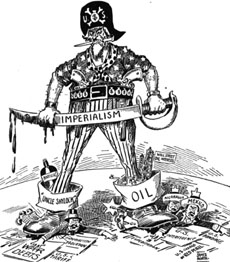
America certainly wields enormous power and influence across the world. We have the most powerful military and the largest economy. We have a military presence in something like 75-80% of the countries, and our Navy and Air Force can hold any target anywhere on the globe at risk. A few words from the president or the Chairman of the Federal Reserve can affect the fortunes of investors the world over.  We have acted imperialistically in many historical cases, but we are not fully an empire yet. The critical distinction is that we do not maintain “final authority” over other polities. In the historical cases where we had such power, we kept it only temporarily. (For example: the Philippines, Japan post WW II, Panama, Iraq.) We may not ever become an empire…unless we do descend into dictatorship. A dictator needs to accumulate power in order to keep accumulating power. An American dictator would have enormous power indeed – certainly enough to enable his or her ambition for empire.

So, to sum up this series of posts: are we a republic, a democracy, or an empire? If the answer eludes you, don’t feel bad. If you asked 100 historians or social scientists, you’d get 100 different answers.  In my opinion, we are stuck between modes of governance, that is, we have a mix of systems, and pressure is building.  “We the people” are supposed to have a republic, with representation in furtherance of protecting our rights; instead we get lip service. Where our votes are supposed to matter, instead corporate lobbyists and issue-based pressure groups buy or bully for the legislation they want and turn America against itself in the doing. Our elected leaders pass laws we don’t want, waste money that isn’t theirs on programs the Constitution doesn’t authorize, and empower armies of bureaucrats to regulate with the force of law. Then they then exempt themselves from their own handiwork. Our Supreme Court to often tries to legislate new rights out of thin air in an effort to achieve “social justice” and ignores the  Constitution, or says it’s a living document and re-interprets it to mean exactly the opposite of what it says. Ayn Rand was prescient when she wrote: “… no one’s interests are safe, everyone’s interests are on a public auction block, and anything goes for anyone who can get away with it. Such a system—or, more precisely, anti-system—breaks up a country into an ever-growing number of enemy camps, into…groups fighting one another for self-preservation in an indeterminate mixture of defense and offense, as the nature of such a jungle demands.”

If it seems like we are the most powerful nation on the planet, but that we are in decline because we can’t get our governmental act together , you are seeing things pretty clearly.