A Hard Truth About Pay

By Mike Cronin

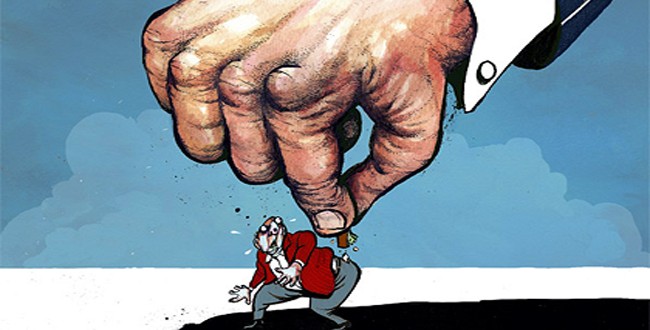
Some fields of human endeavor are inherently hard to learn. Medicine, for example. Becoming a doctor requires a person to study for eight or more years beyond the baccalaureate level and become an expert on the composition, functioning, and behavior of the human body. The sum of human knowledge on the subject increases greatly each year due to the efforts of scientists.  People who have acquired skill as a physician are relatively scarce, but because we all want to have our diseases cured and our injuries repaired, they are in high demand and they command high salaries.

On the other hand…some fields are made hard to enter by the members comprising them.  Consider: The Constitution of the United States is the ultimate law of the land.  It was written by well-educated men – in elegant prose that any reasonably literate reader can understand, even after two centuries of language drift.  It is about 17 pages long, and one need not become a lawyer to understand and apply it. Yet somehow that document can describe the limits and give operating instructions for three branches of government.   Now consider that the field of law grows every year. The vast majority of that growth is due to politicians making new laws, not by legal “scientists” discovering new truths.  And most of these new laws are written in “legalese,” which is often designed to be vague or confusing to the lay person.  Understanding modern law requires years of schooling not because it is inherently difficult, but because it is purposely made and kept so by legal practitioners. In other words, most of the difficulty in understanding law and becoming a lawyer is self-imposed by the field of law, not by the need to learn nature’s secrets.  Even so, the end result is a person who, like a doctor, has acquired a relatively rare ability set, so he or she can also command a high salary.

Some star athletes at the pinnacle of professional sports (specifically the NFL, MLB, and NBA in the US, and Soccer/”Futbol” throughout the world) get paid even more than doctors and lawyers – sometimes fantastically more.  Yet any able-bodied person can go out and play football, basketball, baseball, and soccer.  The difference is that the professional “star” athlete has a skill even more rare than medicine or law – the ability to entertain us and win championships.  Most professionals have to spend years at college to acquire the knowledge and skill to practice their trade; the star athlete had to be born with a greater degree of natural athleticism than the rest of us, and he had to learn his sport and hone his skills from elementary school through college. His career will likely be over by the time he gets to 40; the professionals in more intellectual and academic settings will just be hitting his or her stride by that point.

As difficult, or even deadly, as it is to be a teacher, or a first-responder, or a military member, or a tradesman, it is far easier to acquire the skills and knowledge to enter such professions  than it is to become a doctor, lawyer, or pro sports star.  And because they are easier fields to enter, there are lots more people qualified to enter them, and lots more people in them.  The skills, knowledge, and abilities just aren’t as rare, so the salary just isn’t as high.

We might like to think our priorities are all wrong because we pay people who put their lives at risk to protect us far less than pro athletes or entertainment stars. After all, isn’t protecting our lives more important than entertainment? Don’t teachers deserve more because they are preparing our children to be productive members of society? I think most of us would agree that our military and first-responders and teachers certainly deserve more. As a veteran, I certainly would have liked to earn more than I did, and I might have even deserved more than I got…but I didn’t get paid based on what I felt I deserved. But there is a hard, inescapable truth: No one really gets paid on the basis of what they “deserve” or on how difficult their job is. The real basis for pay is how rare and how in demand your knowledge skills, and abilities are. Those with the rarest, most in demand attributes will always be offered bigger salaries than the rest of us with more mundane skill sets.

Issues, Symptoms, and Oreos

By Mike Cronin

Most of the issues in the presidential debates are not issues at all but symptoms. How so? Let’s take an example: illegal immigration.

The real problem isn’t that the United States is racist and doesn’t want so many people coming into our country. It’s that the flood of people coming into this country illegally is a signal that other things are broken.  The mass of immigrants perceive the United States to be a better place to live and work than wherever they are from. In other words, their incentives to come here are greater than their incentives to stay home. That has always been the case with immigration to the United States. What has changed is the nature of the incentives.

Through much of the 19th and 20th centuries, the incentive to immigrate to United States was the opportunity to be free to work hard, own property, and succeed.  From the latter part of the 20th century to the present, that incentive has been morphing. There is still an incentive to come here to be free and succeed, but another incentive has been steadily taking the place of that original one.

The new incentive is to come to the United States and take part in the bounty of government benefits and handouts that we bestow on a significant portion of our population. Free K-12 education. Subsidized housing.  Free or subsidized medical care. Relatively high paying jobs (even jobs that pay immigrants less than minimum wage under the table may be paying them more than they could get in their own country.) Low risk of being deported.   Even the possibility of voting. Why stay at home and live in absolute poverty, when you can come to America and upgrade to relative poverty and dependence on Uncle Sam?

A related symptom is corporate off-shoring and outsourcing. Even as immigrants are poring in to find a better life here, companies that send jobs or work outside the United States are vilified as unpatriotic. But why do they send these jobs outside the United States? Does it have anything to do with patriotism?

Could it instead be because government interference and manipulation have incentivized them to outsource, just as it has incentivized illegal immigration?

Image result for oreo to Mexico

Consider the Oreo case.  Donald Trump vowed last year not to eat Oreos ever again because of reports that Nabisco’s parent company moved 600 jobs from Chicago to Mexico in order to lower labor costs.  What the reports left out of the equation is that the marginal tax rate and a key product ingredient (sugar) are also cheaper in Mexico than in the US.  Think about that.  A company moved 600 jobs to Mexico because operating conditions are more conducive to profitability there than they are here, the original business-friendly nation!

So what is the disease?  Government interference in the market, namely via ham-handed manipulation of incentives.

Government tells companies who to hire (Affirmative Action), how much to pay them (minimum wage), charges payroll taxes, Social Security taxes, and corporate income taxes. Government requires businesses, and many professionals, to have licenses, and it regulates everything. It makes raw materials, parts, and other materials more expensive by applying the same kinds of interference to suppliers and other business partners.  The costs of all of this are either absorbed out of company profits, or passed on to the consumer, and it drives companies to go elsewhere to do business, which kills jobs here.

In effect, our own politicians  drive unskilled and low-skilled jobs out even as they lure unskilled  and low-skilled laborers in! This drives companies to move entire production lines out, or to hire illegal immigrants and pay them under the table.  It puts drag on the entire economy with excessive regulation, excessive taxes, and excessive interference – then the politicians call the companies unpatriotic for wanting to escape.

Might the politicians be a few cookies short of an Oreo?

Taxation without Confiscation

wealth-confiscation

By Mike Cronin

With income taxes dues in a little over a month and presidential hopefuls in the news every day, now might be a good time to consider some changes to our tax code.  I’ve opined in previous posts that it is not greedy to want to keep what you earn, but it is the essence of greed to want what others have earned.  Our current tax and fiscal policy system is fueled by the greed of politicians who promise things they have no right to give, and by the people who want what those politicians are promising. The primary weapon used for the plunder is income tax withholding, i.e. the taking of your money before you ever see it. This is called confiscatory taxation – your taxes are confiscated from you.

There is a movement afoot to take the government’s power to relieve you of your hard-earned money and put it back in to your hands.  The general idea is to replace the confiscatory income tax with a consumption-based tax – which means taxing you on what you buy and consume instead of on what you make. The most notable proposal for a consumption-based tax system is called the Fair Tax.

The philosophical difference between the confiscatory system we have now and a consumption based system is stark.

The confiscatory system requires the government take money from you by force (i.e. the threat of arrest and punishment for not filing/paying).  It encourages politicians to use taxes to fund elements of the government that have no Constitutional right to exist, and worse, to use taxes to change behavior. It places a huge compliance burden on you and businesses. Lastly, and perhaps most egregiously, it fuels envy politics by allowing demagogues to cry for the rich to pay an ever-increasing portion of the tax bill, while allowing nearly half the population to consume an enormous amount of government benefits and entitlements w/o consequence or motivation to change. Worst of all, the harder you work and the more you produce, the more you are taxed. Americans have accepted this for a while, but we are beginning to wake up and see that punishing productivity is insane – if you want more productivity, jobs, and economic growth.  On the other hand, if you want power over millions, a good way to obtain it is to divide and conquer by pitting the masses with low incomes against the few with extraordinary incomes.

A consumption-based taxation system more closely aligns government revenue collection with the morality most of us follow every day.   First, it allows the taxpayer much more control over how much tax he or she will pay, and it puts the government in the role of beneficiary instead of bully.  Second, it more logically aligns with how we pay for almost everything else in life. (E.g. if we don’t buy much jewelry, then we aren’t forced to pay for jewelry).  A person (or business) with large consumption habits is presumably using more government than someone with low consumption habits. Under a consumption-based taxation system, big consumers will pay more for government than the small consumer, and income will no longer be a factor.  In short, people will pay their taxes in direct proportion to how much they consume instead of how much they make.   This will return some of the power Washington stole from us and put back in our hands. Oh, and it will mean no more 1040s and no more IRS!

Sounds eminently fair to me.

A Capital Idea: an “-ism” for Freedom

By Mike Cronin

Last week, I offered the view that adopting socialism is a recipe for disaster. Most of the political “-isms” (socialism, communism, fascism, imperialism, etc.)  “-chies” and “-cracies” (monarchy, anarchy, theocracy, democracy, plutocracy, oligarchy, etc.) sound different on paper, but they all have two things in common: the rule of one human or few humans over the rest, and the absence of individual freedom.

There is an alternative.  Our founders gave us a Constitutional republic which enshrined the rule of law and individual liberty.  The essential element of freedom is property rights, including self-ownership.  The political-economic system that arises where freedom reigns is called capitalism.  It has never been fully embraced by any country.  Our own country perhaps came the closest, which greatly contributed to the vast economic achievements and ever-increasing prosperity we came to expect as Americans.

Yet our failure to fully adopt it has had a profound effect on our history. The institution of slavery was a direct affront to the concept of freedom, and it convulsed our country from its beginnings through the Civil War and beyond. I’ve written elsewhere of slavery and unjust war as two of the four major dysfunctions that have afflicted our country.

Want some examples of how capitalism is better than socialism?

The Ukraine is a geographic bread basket, similar in productive potential to the US Midwest; yet the Union of Soviet Socialist Republics (of which Ukraine was once one of the socialist republics) had to import grain from us during the height of the cold war. Why couldn’t they produce and distribute enough to feed themselves?

Virtually every labor saving and communications device and other technological advancement since the Dark Ages was invented or perfected in the US or another semi-capitalistic country. (E.g. the electric light bulb, the car, the airplane, the microwave oven, the TV, VCR, and DVD, the laser, vaccines, etc.). Have you ever considered buying a car designed and manufactured by an Iranian or North Korean company?  Does such a thing even exist? Why aren’t such things invented in dictatorships and socialist utopias?

In most cases, landlocked nations are doomed to economic mediocrity or worse. (Examples: Afghanistan, Mongolia, and Bolivia). But a few, such as Switzerland and Lichtenstein, are incredibly well off.  What separates them? The ones that are well off have a much higher degree of individual freedom and capitalism than the others.

China was once every bit the communist leviathan that the Soviet Union was.  Why didn’t China go the same way the USSR did? Conversely, why is the US going through a decline?

China is ascending to the same degree it has adopted limited capitalistic market reforms. Our country is declining to the same degree we adopt the socialist dysfunctions that destroyed the Soviets and continues to hamper the Chinese. Imagine the productive energy that could be unleashed if 1.4 billion people enjoyed a fully free existence!

Despite the vast body of historical evidence that capitalism works and socialism doesn’t, capitalism has been given a bad name.  Individual freedom requires individual responsibility for one’s own actions and living with the consequences of one’s choices.  For that reason, capitalism will always be a hard sell compared to the free goodies and cradle-to-grave care promised by the heralds of the other “-isms.” On top of that, where capitalism has some influence, prosperity follows. Prosperous people are easy for envy-baiters to blame in order to gain an audience…and power. In virtually every human system of organization other than capitalism, anyone with wealth could only attain it by taking a bigger share of “the pie” than everyone else. Capitalism is unprecedented – it allows the productive to enlarge the pie!  But the envy mongers can’t or won’t see that.  They say capitalism fosters greed.  There’s no denying that greedy people exist,  and some of them advance quite far under semi-capitalistic economies, but socialism is absolutely powered by greed and envy!

It is easy for the prophets of utopia to blame capitalism for the sins of the other systems. The latest example is the appellation “crony” capitalism.  The proper term for companies using influence, connections, and campaign donations to get laws passed that stifle their competition is “corporatism.”  Using the coercive power of government to stifle your competition when you can’t win competitively through offering better value is not capitalism at all, though it has some capitalistic trappings (namely the privately-owned nature of the corporation).

The really ironic thing about the other “-isms?”  They need the productivity of capitalism.  A greedy socialist can’t “redistribute” wealth from the productive to the parasitic if there isn’t any wealth to start with.  He must decry capitalism even as he robs the capitalistic in order to buy votes from those he has bamboozled.

Socialism Seems Free, but You WILL Pay for it!

By Mike Cronin

No doubt you’ve heard the word socialism being bandied about a lot lately. Democratic presidential candidate Bernie Sanders is an avowed socialist. A recent poll shows that 36% of millenials favor socialism.  And whys shouldn’t they? Free education!  Free healthcare!  Subsidized housing, food, & utilities! Socialism sounds really good. But it isn’t.

It might help if we have a common understanding of what socialism really is.

Simply, socialism is a political/economic theory where all property is owned “by the people.” What could be better than a place where all property is shared and nothing is owned?  That’s the theory.  In practice, It results in the state asserting primacy in all aspects of life and individuals having few, if any, rights. It is a form of collectivism – which means the group, or collective, is prioritized over the individual. Bee hives, ant colonies, and human “communes” are collectives. Under any form of collectivism, the majority can do away with the rights (and often lives) of the minority (of which the individual is the most basic element).

Collectivism/socialism comes in various forms, such as communism, which the Union of Soviet SOCIALIST Republics (USSR) subscribed to, and “Nationalsozialismus” (the German term for National SOCIALISM, from which the term “Nazi” is derived).  Some might argue that the Nazis were in fact fascist, not socialist.  Fascism was also the system of socialism that Mussolini oversaw in Italy. (The term fascism derives from the Latin term “fasces,” a bundle of sticks with an axe protruding from it. Fasces was the Roman symbol of power.)

Some political scientists argue that communism is on the political left, while fascism is on the right, as depicted in this graphic:

I argue that the only practical difference between communist variety of socialism practiced in Soviet Russia and the fascist-flavored socialism animating Nazi Germany and Italy was that the fascists gave lip service to the idea of private property rights – as long as the property was used at the direction of the state.   There were no private property rights at all in the Soviet Union.

Whether people have no property rights at all, or have the “right” to own property in service to the state, is a distinction without a difference. Both systems had charismatic, murderous dictators in charge. Both systems had secret police, concentration camps, and mass murders. Both systems failed to create wealth; they could only steal it or destroy it. There was no freedom in either system.

Thus, a more accurate depiction of communism and fascism on the right-left political model would be to put them both on the left under socialism, with freedom and capitalism on the right.  The diagram below is closer to the truth:

Consider that every country that has adopted any form of socialism has been degraded or destroyed in direct proportion to the degree of socialism it enacted. Nazi Germany. The Soviet Union. North Korea. Cuba. Venezuela.

China and Vietnam were once in the same boat, but both have attained some limited reversal from the crushing oppression the others experienced through adoption of limited free-market economic reforms. But make no mistake, the Chinese and Vietnamese people are not free.

Consider Karl Marx’s famous aphorism: “From each, according to his ability; to each according to his needs.” It sound so wonderful, but it glosses over the essential question: Who decides what your gifts and needs are? (Newsflash – it sure isn’t going to be you!) “From each, according to his ability” means that the state will extract every bit of use out of you that it can, and your desires are irrelevant.  “To each, according to his needs” means that the state, not you, will determine what you need, and you will be lucky to get it.

So how bad is socialism?  At it’s best, socialism creates resentment and dependency; at its worst the people living under socialist governments are slaves – the ones who survived mass murder.


Government = Force

Government is not reason; it is not eloquent; it is force. Like fire, it is a dangerous servant and a fearful master. Never for a moment should it be left to irresponsible action.  - George Washington

By Mike Cronin

To commemorate President’s Day, let’s use the above quote, allegedly from George Washington, as the genesis of a thought experiment. What if we replace the word “government” with the word “force” and ask what it is properly used for?

Is force a moral way to protect yourself from violence initiated by others?  I say yes.  Therefore, by extension, using government to deter violent attack, or to retaliate for the same, is proper.  The policing, defense, and intelligence functions of government are legitimate for this reason.

Is it moral to enforce contractual agreements and hold fraudsters accountable?  Again, I say yes, and again, I say the criminal justice functions of government are legitimate for this purpose.

Is it moral to use force to entertain people?  I say no.  Government funding for the arts is immoral in this context, not to mention absurd.

Is it proper to use force to educate people?  Once again: it is the wrong tool for the job.

Is it moral to use force to prevent you neighbor from viewing material you believe to be objectionable?  I say no. By extension, it is improper to rely on government to tell us what we can and cannot view (unless that material is produced by violating the rights of others, as in the case of child pornography).

How about using force to provide people a retirement check, health insurance, unemployment compensation, or other “entitlements?”

Or using force to provide subsidies, corporate bailouts, tax “credits,” and to manipulate the economy?

I could go on, but I think you see where I am going with this. If it is wrong for an individual to initiate the use of force against his or her neighbor directly, then it is just as wrong to employ the coercive power of government to commit the same crime by proxy.

Force is not only immoral to use outside of the context of protection from violence, fraud, or other violations of our rights, it is also manifestly the wrong tool for most jobs.  Using force to educate, or entertain, or to invent and deliver entitlements, is like using a sledgehammer to wash windows. The most likely outcome will be glass shards on the floor.  Yet even if you manage to avoid  shattering the glass, you still won’t get the windows clean.

That is the reason the Founders wrote the Constitution: to restrict the forcefulness of government to only those very few functions where force is the proper response, and to prevent its absurdly destructive employment against us in every other facet of life.

Putting Polls in their Place

By Mike Cronin

Now that election season is in full swing, we are subject to a constant stream of polls and polling results in the news. Many of these polls are legitimate attempts to gauge public opinion.  But some polls, and/or the results of some polls, are put to use to shape our opinions rather than discover them.  One example I heard recently alleged to be reporting opinions on who had little or no chance of winning the presidency in November.  The polling methods might have been legitimate, but the client who ordered the poll might have had an ulterior motive.  Here’s a possible scenario:

Candidate A, or an organization in favor of Candidate A, orders a legitimate poll from a reputable firm such as Gallup or Quinipiac to find out who people think have the worst chances of getting elected. The poll is taken and the results come back that people don’t think Candidates X, Y, or Z have much chance of getting elected in the fall.  Candidate A’s organization then trumpets these results loudly and often. Had the results been inconclusive, Candidate A’s organization wouldn’t have publicized the poll at all.

Knowing that we are all influenced to some degree or another by peer pressure, the results of the poll could sow discouragement among the supporters of Candidates X, Y, and Z, and even affect the candidates themselves, potentially hastening their departure from the race and reducing the competition against Candidate A.

There are dirtier tricks in the pantheon of polling practices. One such is to use the so-called “push-poll.” A push-poll is not really a poll at all in that it doesn’t seek to find out your opinion, but to change it or reinforce it. You might have received a piece of political junk mail that seems like a poll, but the questions will be highly “loaded” or biased.  Questions from such an artifact might read something like these examples:

“Candidate B wants seniors to lose their Medicare benefits. Do you think we should allow him to get his way?”

“The ABC project will pollute the local wetlands with 10x the current level of toxic substances.  Candidate B receives campaign donations from the company behind the project.  Don’t you think we need campaign finance reform?”

In both examples, the reader is first led to be outraged. The outrage is inherently tied to a candidate, then the respondent is manipulated to respond a certain way. The client of the poll wasn’t trying to find out people’s feelings on Medicare or campaign finance; rather, he or she was trying to sully the competition. A legitimate opinion poll will word the questions in as neutral a way as possible.  For instance, the questions above might be legitimized by rewording them in the following way:

“How do you feel about Medicare?

It should be maintained         Uncertain            It should be abolished”

“What is your opinion on campaign finance?

It needs to be completely reformed       It could use some reforms           It does not need any reforms”

So how can you peek behind the curtain of the polling game? Whenever you are asked to participate in a poll, or you hear polling results, consider these questions and/or look for trouble signals:

Who took the poll?  Was it a reputable polling firm?

Who commissioned the poll? What do they stand to gain or lose from the results?

Was the sample (the group of people taking the poll) drawn at random?  (If not, the poll will results will be biased, and therefore suspect.) Something to consider: most internet or call-in polls may seem to be sampling at random, but they are not. They are surveys of people who are already interested in the topic at hand! Most often, valid polls are accomplished via random digit dialing.

Was the sample size large enough?  (If the total population is, say, “likely voters,” which might be 75 million people, a sampling of ten people is not sufficient to gauge the opinion of the whole, but a sampling of 1000 or 10,000 might be. This is what statisticians get paid the big bucks to figure out.)

Are the questions biased or neutral?

Who is touting the results of the poll? Have they focused on the results of only one question that serves their ends, while ignoring the results of other questions on the same poll?

When you understand how polls can be used and misused, you increase your immunity to being manipulated in ignorance.

10 Thoughts for 2016

By Mike Cronin

Instead of resolutions, I suggest these 10 thoughts for the New Year:

Regardless of your party preference or which side of the political spectrum you align with, remember that even the politicians you like are more concerned about getting elected (or re-elected) than they are about representing you or your interests. (props to Thomas Sowell)

Similarly, the mass media news outlets exist make profit.  They do so primarily by selling advertising air time. Keeping you hooked is the goal of their programming tactics: dramatic music, constant movement, urgent tones, “alerts,” scrolling updates, etc. None are necessary to impart information; they are hooks. Keeping you informed is less important than keeping you watching.

Supreme Court Justice Oliver Wendell Holmes popularized the idea that the Constitution is a “living document.” This notion suggests the founders meant for us to interpret their words in the context of our time, not their own.  In fact, the founders did recognize that times change and the Constitution must be adaptable to those changes.  They meant for us to be able to make those changes by the formal process of amending the Constitution.  Getting an amendment passed and ratified is very difficult – on purpose. But it is possible – that’s why there are currently 27 amendments.  It’s a good bet that any party, pressure group, or court that attempts to re-interpret the meaning of the founders words knows it could never see its agenda come to fruition though the amendment process. The Constitution is not a living document, but it is an amendable one!

Confiscatory taxation: When your neighbors and co-workers use the coercive power of government to steal money from you to pay for laws and programs you don’t want.

When you hear about waste in government spending, you are told about “pork” (e.g. ridiculous projects to study cow flatulence, install “modern art” to “beautify” some government facility, build arenas and bridges, or make payments to farmers not to grow food, etc.). Pork barrel spending is certainly wasteful, but I submit that when a politician says we need to cut waste, then offers pork projects as examples, he is attempting to distract us from the most egregious form of government waste: spending money we don’t have on entire government departments, agencies, bureaus, etc. that do not protect anyone’s rights (the only proper function of government) and thus have no legitimate reason to exist.

You cannot reason with a person who does not value logic. (Props to Sam Harris)

Now that women are allowed in every specialty in the armed forces, there have been calls to require women to register for the draft – in the name of equal rights and equal opportunity.  How about we discuss ending all draft registration and disbanding the Selective Service System instead?  The draft is a form of indentured servitude if not outright slavery. If equal rights are the motivation driving changes in military gender composition, then men should have the same right women currently enjoy: to not register for the draft and to not serve against their will!

One definition of a “license:” When the government takes away a bit of your freedom, then allows you to buy permission to do the thing you were once at liberty to do.

Presidential candidates will make all kinds of assertions and promises about what they will do for the economy or crime control or the environment – but, short of invasion or natural disaster, all he or she can legally do in those areas is make proposals, sign bills into law, and direct the executive branch. The president’s real power lies in foreign relations, not domestic ones.  This is why the Secretaries of State and Defense are more prominent than the Secretary of the Interior, for example.

Some people judge Congress by the number of laws it passes. This is absurd.  The more laws there are, the harder it becomes to be law-abiding, and the easier it becomes to inadvertently break the law.  Supposedly, ignorance of the law is not an excuse to break it – but no one can know all of the laws, because there are too many!

Kipling’s Own Filter

135742-004-C334511E

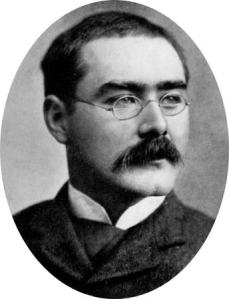
Long before Filter the Feed came to be, the famous poet Rudyard Kipling captured some lightning  in a bottle with his poem “If.” I can only hope my scribbles might one day provide such clarity:

If—

BY RUDYARD KIPLING 

(accessed from  http://www.poetryfoundation.org/poem/175772)

If you can keep your head when all about you
    Are losing theirs and blaming it on you,
If you can trust yourself when all men doubt you,
    But make allowance for their doubting too;
If you can wait and not be tired by waiting,
    Or being lied about, don’t deal in lies,
Or being hated, don’t give way to hating,
    And yet don’t look too good, nor talk too wise:
If you can dream—and not make dreams your master;
    If you can think—and not make thoughts your aim;
If you can meet with Triumph and Disaster
    And treat those two impostors just the same;
If you can bear to hear the truth you’ve spoken
    Twisted by knaves to make a trap for fools,
Or watch the things you gave your life to, broken,
    And stoop and build ’em up with worn-out tools:
If you can make one heap of all your winnings
    And risk it on one turn of pitch-and-toss,
And lose, and start again at your beginnings
    And never breathe a word about your loss;
If you can force your heart and nerve and sinew
    To serve your turn long after they are gone,
And so hold on when there is nothing in you
    Except the Will which says to them: ‘Hold on!’
If you can talk with crowds and keep your virtue,
    Or walk with Kings—nor lose the common touch,
If neither foes nor loving friends can hurt you,
    If all men count with you, but none too much;
If you can fill the unforgiving minute
    With sixty seconds’ worth of distance run,
Yours is the Earth and everything that’s in it,
    And—which is more—you’ll be a Man, my son!