Three Tips for Filtering the Feed

louie-psihoyosinforevolution-e1447273790627

By Mike Cronin

Last year I wrote about the war on Christmas. This year the election of Donald Trump has overshadowed the usual brouhaha over nativity scenes at City Hall. So this year I thought I’d go with something a little more practical. The guiding purpose of this blog is to make sense out of the vast array or “manufactured truth” that we are constantly bombarded with. Here are a few tips and tricks to deal with it every day:
201016msm

  1. Consume news skeptically: the first thing you need to remember about the news media is that their first concern is to sell advertising. Their second concern is often to reinforce a narrative or advance an ideological or even partisan agenda. Running in third place is actually informing you about the new events of the day. There has been much ado recently about fake news. Given the first and second criteria just outlined, almost all the news is fake to one degree or another. When there is some crisis happening, such as 9/11, and the news “breaks in” to tell us about the event as it’s happening, they haven’t had much time to adapt it to their preferred narrative. In those cases we are usually getting real news, even if some of the details are inaccurate while the debris is still falling or the smoke is still rising. As soon as one of these stories acquires its own theme music, it’s no longer breaking news. At that point you must start taking it with a grain of salt. In reality, the best way to glean something of the truth may be to examine headlines from multiple news sources, to include some foreign outlets such as the Economist, BBC, and perhaps even Al Jazeera or Xinhua.  Even so, while those sources may tell you what’s happening and why, they seldom articulate what it means and what will likely happen because of it. Personally, I like to scan the news headlines, but I also like to read intelligence. One of my favorite sources is StratFor; a private “intelligence” firm that uses the lens of geopolitics to explain the world.
geopolitics

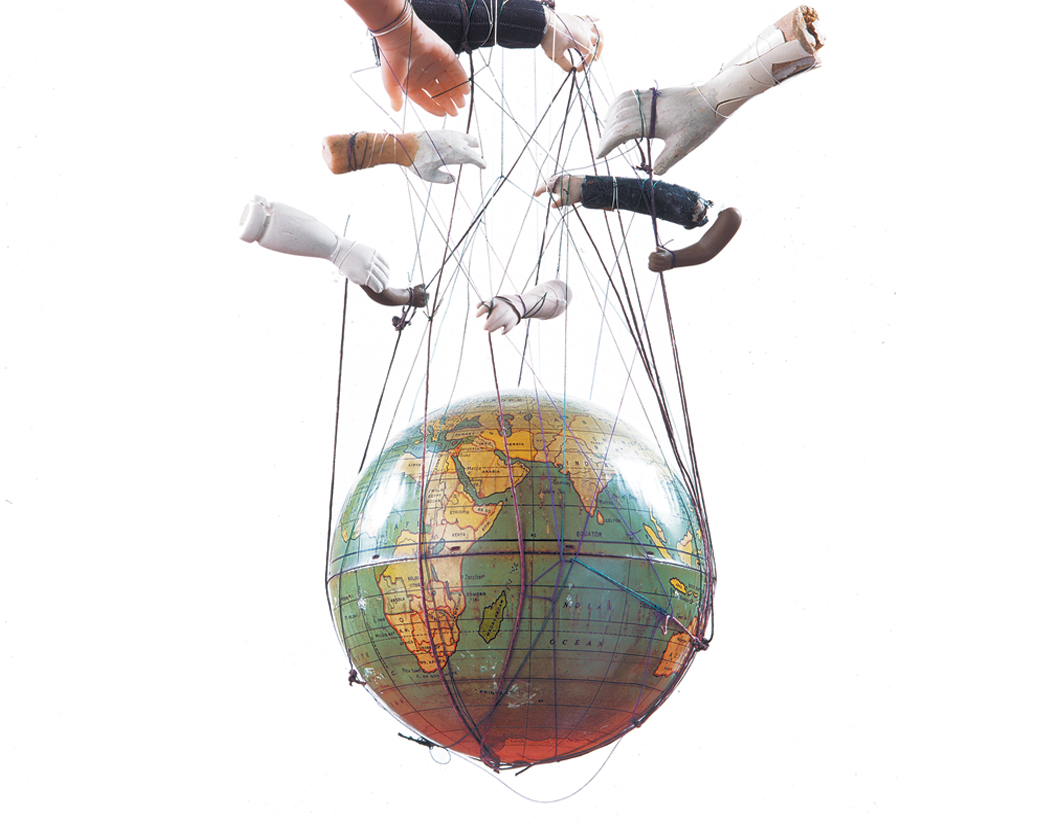
  1. Geopolitics, as you might have guessed, is not just about geography or politics, but about how geography enables or constrains political and/or economic action between nations and other actors. For example: The United States is largely regarded to have the largest economy and the most powerful military, and we are generally thought of as being the world’s only superpower. But it is not only our military might or our form of government that has led us to this condition. The United States is this way in part because of where it’s at and what it has. The most striking example of this is our river and coastal waterway system. “The Greater Mississippi Basin together with the Intracoastal Waterway has more kilometers of navigable internal waterways than the rest of the world combined. The American Midwest is both overlaid by this waterway and is the world’s largest contiguous piece of farmland. The U.S. Atlantic Coast possesses more major ports than the rest of the Western Hemisphere combined. Two vast oceans insulated the United States from Asian and European powers, deserts separate the United States from Mexico to the south, while lakes and forests separate the population centers in Canada from those in the United States. The United States has capital, food surpluses and physical insulation in excess of every other country in the world by an exceedingly large margin.” (From StratFor’s “The Geopolitics of the United States.”) Give these advantages, it would have been a shock if the US had not become an economic powerhouse! By way of contrast, consider the difficulties faced by a landlocked country. Afghanistan, for example, is estimated to have over $1 trillion worth of natural resources in the form of valuable ores and minerals. Yet owing to the difficulty of getting to and from Afghanistan and navigating within its borders, and the fractured nature of its tribal society, Afghanistan has never realized its economic potential, and is unlikely to do so in the foreseeable future. Where the United States has abundance of access, Afghanistan has a dearth. Geography has dealt a difficult hand to landlocked countries, but there is at least one way to overcome that difficulty: adopt a Western form of governance that recognizes individual rights and promotes liberty. Switzerland is the epitome of a country that can overcome geographic isolation by staying neutral in the conflicts of its neighbors and giving its people freedom.
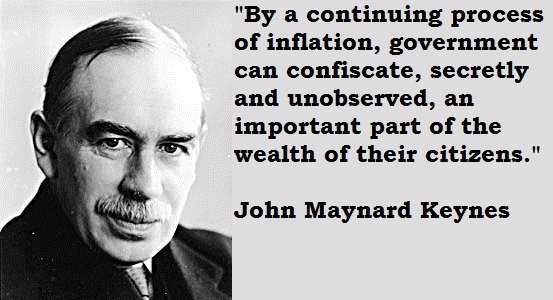
  1. Like most, I’ve had geography classes, and classes on US. Government, but I never had a “geopolitics” class per se in my formal education. Our schools are set up to teach material as discreet subjects, but our brains are not set up that way. We learn and make memories by association. Another example might be economics. The word economics conjures up thoughts of central banks, such as the Federal Reserve, changing interest rates and conducting “quantitative easing.” Those elements of economics were among the set popularized by John Maynard Keynes, and “Keynesian Economics holds sway among the vast majority of economists today.  9i7jfxdepbiuxmllhv6wxoykazrjmeynuapn20ngnu0But in a broader sense, economics is the study of human activity. This goes hand in glove with geopolitics, as does history. Come to think of it, so does psychology. What if there was a way of learning economics (and other subjects) in a way that more closely mimics the way the human brain learns? Under such a rubric, there would be far fewer barriers between what we think of as the traditional subjects. Such a field exists.  It’s called “praxeology.” In short, praxeology is the study of volitional human action, and it is a basis for the Austrian school of economic thought.  We can borrow the concept to help us understand the world without trying to become economists ourselves.
Using these three tools (skeptical news consumption, understanding how geography can enable or constrain political and economic action, and removing the artificial barriers between “subjects,” and examining human action holistically), we can better learn to Filter the Feed.

Random Matter 2

968361

By Mike Cronin

The tidal wave of angst unleashed by the election of Donald Trump is not wholly explainable by his crudity, political outsider status, media and polling industry failures, hacked emails, possible election tampering, or Hillary Clinton’s campaign style.

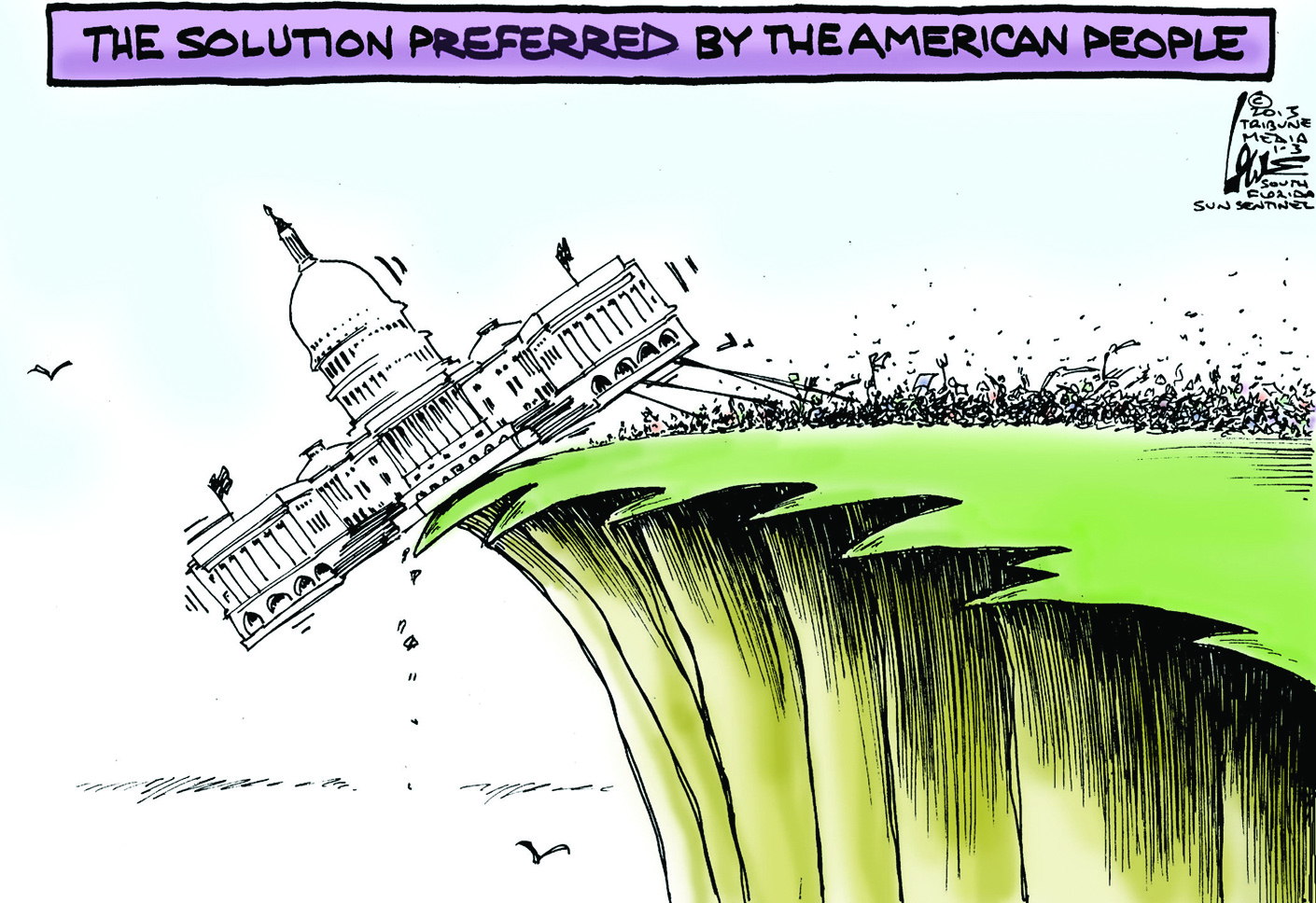
For too long, the beltway establishment has been driving this country down a two-lane country road that ends at a cliff: tyranny. When the liberals where at the wheel, the conservatives would call the cliff “socialism” and say the Democrats were racing us towards it, while the liberals would say that conservatives were steering us headlong towards the “fascism” cliff when Republicans had the wheel.

It was always the same cliff.

lowe-cliff1

Now the liberals are howling that Trump will stomp on the accelerator, and the “Never Trump” branch of the conservative establishment isn’t sure that he won’t do just that.  Nor am I.

What I am more confident of is that for perhaps only a brief moment, by electing Trump, the passengers have made ALL of the drivers slow down and take notice of the impending danger. Even if Trump turns out to be wise at the wheel, we may be in for a period of painful adjustment.

***

0094e7c2-675b-4b13-b325-e846ce30e305

Have you ever been irritated by Pecksniffian pipsqueaks who take any statement that does not absolutely validate or corroborate what they say and allege it means exactly the opposite?

Pipsqueak: We have to raise the minimum wage for the poor. (Sips his latte.)

Host: But won’t that mean there will be fewer jobs?

Pipsqueak: Hate speech! What do you have against poor people?  Are you a one-percenter? I can’t believe we still have troglodytes like you in this country!

Host:  But I was just-

Pipsqueak: I have to go. My limo is double parked, and I’m late for therapy.

***

6189757e341e0250bd04e817c3808ffe

Congress is now considering bills that would make it mandatory for females to register for the draft with Selective Service.  In my opinion, obligatory service of any kind is anathema to freedom.  You cannot protect freedom by taking it away. It is also not very effective to staff a high-tech, professional military with conscripts. It takes an inordinate amount of effort to train, motivate, and discipline people who are potentially there against their will…though it can, and has, been done.

It is far more efficient, effective, and easier to train qualified and self-motivated volunteers.

Wisely, the US stopped the draft in 1973…but unwisely kept the Selective Service, and is now taking a step in the wrong direction, IMO.  Instead of making females register, it should stop requiring anyone to register!

On the other hand, I would be in favor of examining the idea that we stop automatically conferring citizenship by birthright.  The idea that one should have to earn citizenship, with public service being one avenue to that end, has some interesting potential.

Conventional Wisdom?

36180739

By Mike Cronin

A million people can’t be wrong.  Oh, yes they can.  Look no farther than religion. There are dozens, if not hundreds in existence now, and there have been thousands throughout history.  Each believes that all the others are wrong.  They certainly can’t all be right. Don’t go there?  OK, how about: Environmentalists vs. global warming “deniers,” the medical community vs “anti-vaxers,”or “the moon landings were fake” crowd vs NASA?”   Would you believe there are still people who think the earth is flat?

If it ain’t broke, don’t fix it.  As an adage for leaving things alone that are working well enough and focusing on genuine problems, this is not bad advice.  However, when it morphs into an attitude it becomes counter-productive.  If humans all held this attitude, we’d still be sleeping in caves, picking lice off our neighbors, and dying of old age or tooth decay in our twenties and thirties.

It’s a free country.  Not as free as it’s supposed to be.  Want to open or run a business?  Get a license, or two, or ten.  Comply with state and local compensation and workmen’s comp laws. Pay estimated taxes every quarter. Want to drill a well or build an addition on your own property?  Do you have the water and mineral rights?  Got a permit? Have you thought about homeschooling your kids?  Again: do you have the right permits?  Are you following the prescribed curriculum? On and on: permits, regulations, licenses, red tape.

The police will protect me.  They don’t have to.  They have to protect society as a whole, not you as an individual. If the police had to protect all of us individually, each of us individuals would have to be a police officer.

Teachers deserve more money. The good ones do. The mediocre ones don’t.  The bad ones should be fired.  Regardless, school districts have no economically compelling reason to pay more.  It’s a simple case of supply and demand.  The overall supply of trained teachers and freshly-minted teaching candidates is roughly double the demand.

Pro athletes don’t deserve million-dollar salaries.  Then stop paying them. Once again, supply and demand is at work.  Professional-caliber athletes are exceedingly rare and highly sought-after, so they command dream-come-true salaries.  If you refuse to buy sports packages on cable, stop buying fan gear, and stop going to games, the teams will lose money and athlete salaries will drop.

We’re fighting a war on __(drugs, poverty, terrorism, obesity, etc…) No, we are not.  Wars are fought against enemies, not chemicals, circumstances, tactics, or conditions.  Generating a “war-fighting” mindset is a tactic used by people who want you to give up some of your freedom in exchange for a little more security – which they can’t really provide.

Not wanting to pay your fair share of taxes is greedy.  1. How much is a “fair share?”  Who gets to decide? 2.  If I am “greedy” solely for wanting to keep what I earn, what word applies to those who think they have even more right to take my money than I have to keep it?

I have a Constitutional right to__.  Nope.  The Constitution protects our rights by establishing a limited government; it does not grant rights.  It seems like a subtle distinction, but it is the thing that made the fledgling United States of America unique in the history of the world:  the first nation established based on the principle of limited, rights-protecting government established in the service of a free people.

Electric cars don’t emit carbon dioxide.  Not directly, but indirectly, the power plant that produced the electricity to charge the car’s batteries most likely did (unless it was nuclear)…and the industrial activity used to mine the ores and smelt the metals to make the batteries themselves sure did.

Recycling is good for the environment. Really? How much energy is saved when you have to produce double the number of plastic bins and operate twice the number of fuel-guzzling, traffic-congesting big trucks to service them? What about the recycling plant itself?

Everyone hates Congress. Then why do Congress members have such high re-election rates over time?  Apparently, we love our own Senators and Representatives and only hate the rest of Congress.

The Fake News Furor

hvb

By Mike Cronin

The comentariat would now like us to believe that Trump won the election due to fake news promulgated on social media, mainly Facebook.  To be sure, there is plenty of fake news to go around.

There are entire sites that publish nothing but fake or exaggerated news.  They craft lurid headlines that allege massive conspiracies, celebrity deaths, and imminent global crises.  They are the internet equivalent of check-out lane tabloids.  They are click-bait.

But what are we to make of the elite media machines, such as the New York Times or CNN, when they fake the news?

Sometimes, the culprit is a single reporter, such as the plagiarist Jayson Blair at the New York Times, or the embellisher Brian Williams of NBC Nightly News.

Other times, a piece of bad journalism corrupts an entire reporting team, up to and including a star anchor, such as the CBS debacle over unverified Air National Guard memos regarding then-presidential candidate George W. Bush’s background, which ultimately led to Dan Rather’s ignominious departure, or NBC’s  fabricated 1992 story about Chevy pick-up trucks that catch fire in a side impact (when the have been appropriately rigged to do so at the behest of the news crew).

Occasionally, a network reports accurate facts of a story, but gets caught creating phony drama and “atmospherics” for no discernible journalistic purpose, as when CNN was covering the Jodi Arias trial. Reporter/commentators Asleigh Banfield and Nancy Grace were televised conferring on a split-screen as if they were linked by satellite across the continent…when they were in fact mere yards apart in the same Phoenix parking lot.

Most recently, CNN “contributor” Donna Brazile introduced a new wrinkle to the fake news follies by trying to ensure a story would unfold the way it had been pre-ordained by giving debate questions to the Clinton campaign in order to help cement Hillary’s election as the first female president.

More often, though, the main-stream media is not so brazen as to completely fake the news or plagiarize stories. Yet they are still not the “fair and balanced” purveyors of fact they would have us believe. More often than they would like us to know, they are just guilty of not digging into things, or of regurgitating proffered talking points, or of going with the flow.  Why do more work than you have to?

You do so because sometimes peoples’ reputations, or even their lives, are at stake.  The Duke Lacrosse players.  The Rolling Stone – U. Va false rape case. Officer Darren Wilson of the Ferguson, MO Police Dept. Geraldo Rivera’s antics in Iraq.

Even when others’ lives aren’t at stake, the media have to know that their own credibility is.

Directing our own Evolution?

e-dna-repair-cartoon

By Mike Cronin

We have global communications and transportation. In Europe, most of the Americas, and most of Asia at least, we have enough food to eat and wondrous technological gadgetry. Anyone labeled “middle class” today lives a far more luxurious lifestyle than royalty did less than a century ago.

Some of our most basic problems, such as bigotry, racism, and other social ills have been at least partially resolved, for at least part of the world.  Will we ever be able to finish the job?

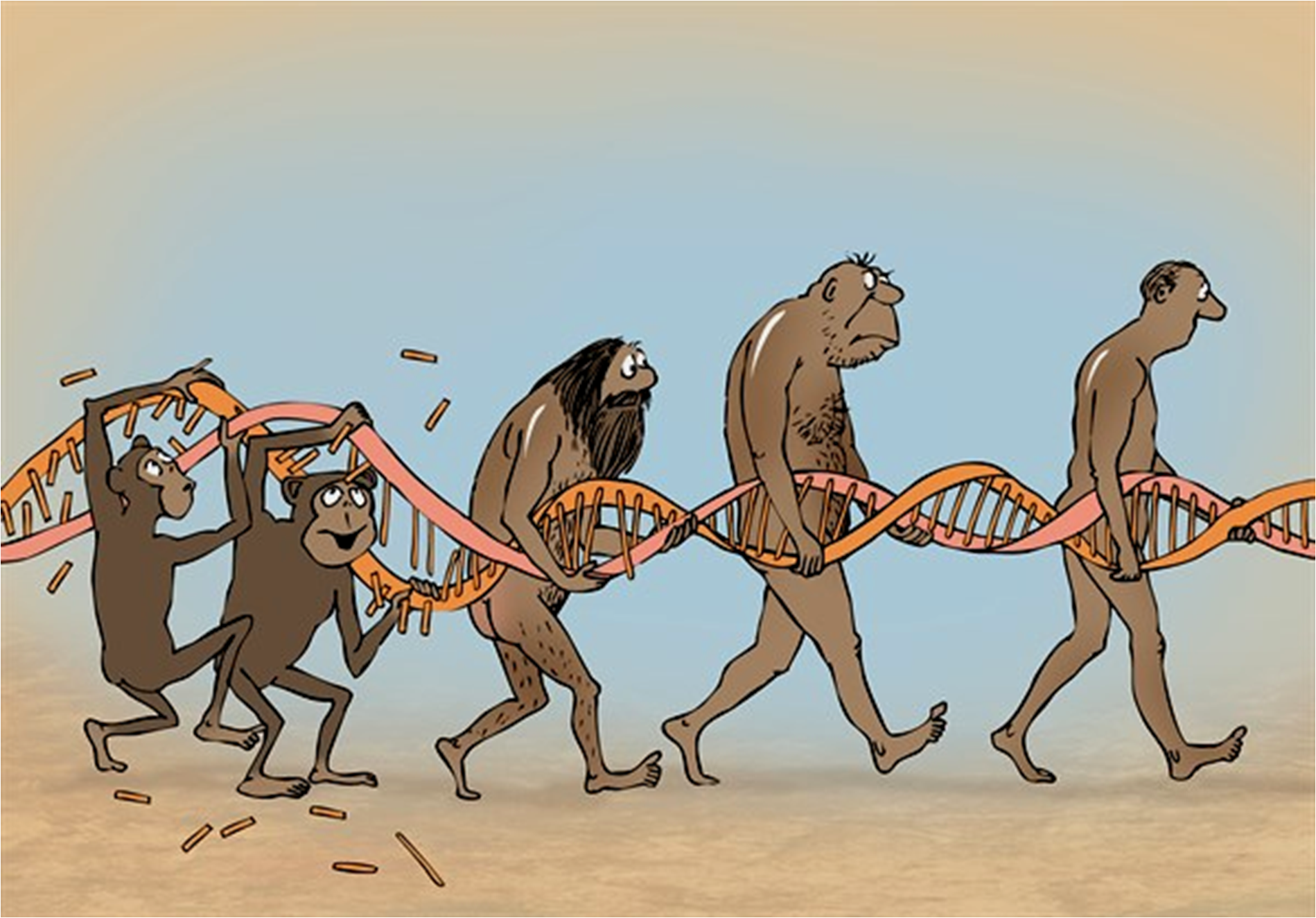
I submit the answer does not lie within the bounds of governments and politicians,  It lies in diminishing the mismatch between the relatively steady pace of evolution and the accelerating rate of technological advancement. Our species may be on the cusp of such an advancement.

Human beings evolved on the plains of Africa.  We were smaller, slower, weaker, and had less effective sensory apparatus than the alpha predators.  We didn’t even have biological “weaponry” (such as fangs, horns, or claws) to defend ourselves.  How did we achieve mastery over lions, leopards, and hyenas?

11
From “2001: A Space Odyssey:” A human ancestor learns tool usage

We lived brutal, tribal-centric lives as we evolved higher intelligence. Other animals adapt to their surroundings, humans learned to adapt their surroundings to themselves.  We learned to use fire to cook meat.  Cooking made it easier for our bodies to absorb the protein value of the meat, which allowed our brains to add more neurons per volume than our primate cousins – and other mammals with similar-sized, or even larger, brains than our own.

Other animals can use simple stick and stone tools; humans are the only species that tamed fire.  This started humans down the path of technological advancement. Fire. The wheel. Bronze. Iron. Steel. The lens. Science. Industry. Atomic energy. Space flight. Internet. But while our technology advances faster and faster, human evolution follows at a more leisurely pace…for the moment.

For example: We vilify adults who engage in any kind of sexual activity with minors, but the concept of “minor” is a modern legal distinction, not a biological one.  Girls reach physical maturity well before we consider them to be of sufficient emotional maturity to have children – because adults now live long enough to accumulate much more knowledge and wisdom from the ever-increasing store of knowledge and wisdom available that the gulf between a 25, or 35, or 55 year old man and a 13 year old girl renders a sexual relationship between them abhorrent to us.  But before the advent of civilization and the division of labor, humans that made it to 30 were elderly!  Most people died in their 20s or earlier of disease, tooth decay, or child birth.  It was necessary for a girl who was physically old enough to bear children to start doing so – for the sake of the survival of the clan or tribe.  The modern concept of maturity didn’t enter into it.  Our distant human ancestors didn’t have to worry about homework, getting a job, health insurance, paying the rent, career advancement, global warming, elections, or taxes.  They had to worry about finding food for themselves even as they sought to avoid becoming dinner for a big cat.

ALL humans lived like that as recently as 10,000 years ago – a mere eye-blink in evolutionary timescales, and a few, isolated, human cultures still live that way to this day. Culturally, we have had varying degrees of success in putting aside our physical differences in gender or coloration or belief and living together, but there is still friction, conflict, and in parts of the world, warfare over these differences. It takes enlightenment to put aside the tribalism that defined our social development for untold millennia and behave at a higher level than out stone-age ancestors, who’s DNA still forms the cornerstone of our genetic makeup.

Treating people as property, warring against competitor tribes for resources, superstitions about unseen forces that can literally blow apart a mountain, light up the sky, and move the earth, fear of the unknown – they all come from the same place – from our infancy as a sentient, sapient, speciesSome recent breakthroughs in genetic engineering may have put us on the verge of being able to routinely and casually alter our own DNA – in effect, to design our own evolution.  But we aren’t there yet.

Realizing this about ourselves may herald our transition to “toddlerhood” in the climb up the ladder of species maturity.  I gave thanks on Thursday that I don’t have to worry that my lack of fang or claw will doom me to fall prey to an animal that has them; that in fact I may live to see our species make its first self-directed evolutionary steps – if our scientists can overcome our cavemen!

Globalism vs. Trumpism

9yedzw-1

By Mike Cronin

A common thread in the alarms raised by the election of Donald Trump is the concern that his brand of nationalism/populism will turn the US isolationist, or worse, into a fascist dictatorship. Why are globalists, themselves no friends of individualism, alarmed at such a prospect?  It might help to understand more about the complexities of globalism/globalization.

According to http://www.globalization101.org/what-is-globalization/;

“Globalization is a process of interaction and integration among the people, companies, and governments of different nations, a process driven by international trade and investment and aided by information technology. This process has effects on the environment, on culture, on political systems, on economic development and prosperity, and on human physical well-being in societies around the world….

…Globalization is deeply controversial, however. Proponents of globalization argue that it allows poor countries and their citizens to develop economically and raise their standards of living, while opponents of globalization claim that the creation of an unfettered international free market has benefited multinational corporations in the Western world at the expense of local enterprises, local cultures, and common people. Resistance to globalization has therefore taken shape both at a popular and at a governmental level as people and governments try to manage the flow of capital, labor, goods, and ideas that constitute the current wave of globalization.”

Don’t get me wrong.  There is nothing inherently wrong with globalization per se.  In fact, taken at face value, it is probably a net benefit to humanity. Think about the spread of modern medicine and information technology, for example.  I think unfettered international free markets would be a great thing.  I have often presented my bias for free-market capitalism.  My bias has no border.  Unfortunately, the only unfettered free markets that exist today are the “black” markets for illicit goods, and unfortunately, human trafficking.  The rest of the global market is beset by trade imbalances, currency manipulation, defaults, sovereign debt crises, bailouts, and other “fetters.”

Given that explanation, the shape of the globalist critique against Mr. Trump (and the recent “Brexit” vote) begins to emerge.  Among the proponents of globalism are those who have been unethically enriched by manipulating matters at the diplomatic, international finance, and CEO levels.  Many of the proponents of globalism are not proponents of an unfettered free market. They seek to establish and/or perpetuate imbalances that they can profit from.  These are not productive people; they are more like vultures or parasites. These are the globalists who fear that Donald Trump’s administration, a Republican majority Congress, and a conservative Supreme Court will upend the existing “globalist” order – the globalists who have the most wealth and power to lose.

And that is why we must also examine nationalism.  The elite manipulators of international intercourse may be parasitical; but that does not make their concern over a rise in Trump-branded nationalism baseless.  Extreme nationalism has led to dark places before. Consider the word “Nazi.” It’s a German abbreviation for Nationalsozialist, i.e. “Nationalist Socialist,” hence the anti-Trump crowds’ easy conflation of Trump’s “America First” populism with fascist nationalism.

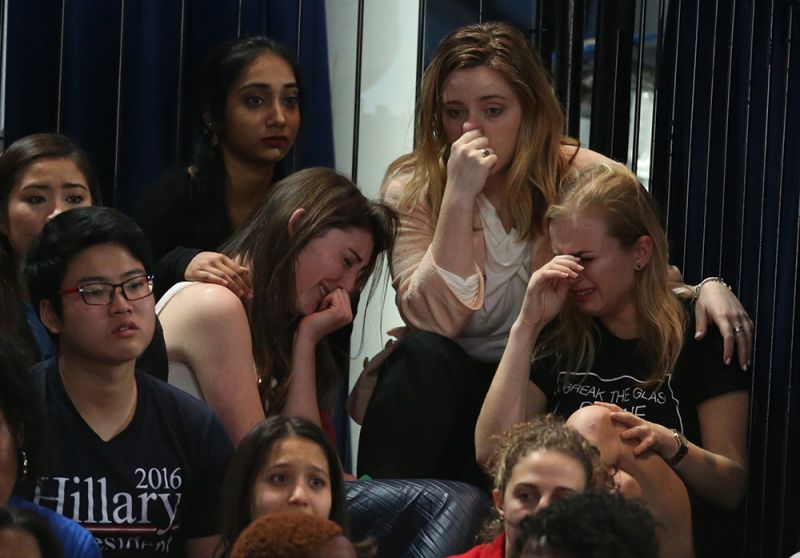
Will Mr. Trump’s brand of nationalism lead to that same dark place?  Did we just elect a tyrant-in-waiting?  Time will tell.  If Trump does become a dictator, I wonder: will the lachrymose legions lamenting Hillary’s loss begin to see the wisdom of the Second Amendment?

Ten Observations on Election 2016

hillary-clinton-supporters-cry-over-election-loss

By Mike Cronin

Donald Trump’s victory certainly stirred up a lot of clamor and noise this week.  Let’s see if we can herd some of the cats:

  1. Democracy has failed. The people chose Hillary Clinton by 200,000 votes, but the electoral victory went to Trump. Our “democracy” cannot fail if we don’t have one, which is in fact the case. We were given a federalist republic under the rule of law. We use democratic processes for some decisions to give the people a voice, but we are not supposed to have a system of straight-up majority rule. As to the electoral vote: It remains to be seen whether any electors will “go rogue” and vote against their “pledge” on Dec 19th, but it has happened before (as recently as 2004).  Of course, it’s never been by enough margin to change the outcome of an election.  In this case, at least 38 would have to be “faithless electors” to get Clinton to 270.
  2. Trump hates immigrants. He hates Mexicans. He hates Muslims. He’s racist.  We’ll, he might. Only he knows for sure.  However, he is married to an immigrant and he has people from all walks of life working for him.  He certainly doesn’t think people should be here illegally, which is not the same thing as hating the people who are or the people who want to be.
  3. Trump is a misogynist sexual predator. His caught-on-camera crudities certainly lend themselves to this narrative. There’s little actual evidence and no credible accusers that demonstrate he hates all women or has assaulted any of them, but Trump’s verbal vulgarity in this area is one of the most troubling things about him. Still, while Trump has been caught speaking like a sexual predator might; Hillary Clinton continues to aid and abet one.
  4. Trump is going to destroy all of the progress progressives have made over the last eight years. Possibly, but presidents seldom accomplish their full agendas.  Yes, Trump will have a Republican-majority Congress, but it won’t be a super-majority, and the Republican establishment doesn’t like him.  Trump bills himself as a deal maker.  He’ll have to be to get his agenda anywhere.
  5. Trump is going to elevate nationalism over globalism. Both are euphemisms for collectivism; only the boundaries are different. Neither is as good for individuals as unfettered free market capitalism.  There might possibly be temporary beneficial effects for Americans in the shift, especially if our troops come home and small businesses can thrive again.
  6. Trump is an idiot/outsider/politically inexperienced. He certainly does not articulate himself with Obama’s grace, but he is no dummy. In fact, he’s likely quite adept at persuasion (see items five and six on this list). He is certainly gifted at getting free publicity (or at least notoriety) from the very mass-media that hates him. Also, his lack of political experience, i.e. his NOT being a career politician or D.C. insider, is one of the fundamentals that led him to get elected.
  7. What happened with the polls? They consistently gave Clinton the edge! Bottom line: garbage in/garbage out.  The pollsters drew their samples from the same body of “likely voters” they always used, and in some cases “oversampled” Democrats.  The former was neglectful and led to the Democrats believing in their own invulnerability; the latter was a nefarious attempt to convince would-be Trump voters to stay home on Election Day. Once exposed, the revelation likely caused the exact opposite effect. Either way, the pollsters failed to obtain accuracy because they could not, or would not, sample validly.  
  8. FBI Director Comey’s shenanigans (i.e. his announcements regarding the on-again/off-again investigation into Clinton’s email debacle vis-à-vis Huma Abedin’s laptop) comprised the quintessential October Surprise, and it hurt Clinton. It certainly didn’t help, but it’s much more likely that Clinton’s shenanigans hurt Clinton.
  9. Why were Clinton and Trump our candidates? What secret weapon did they employ that none of their competitors had? 30-plus years of universal name recognition.
  10. What does it mean that Republicans gained more seats in Congress, strengthening their majority? They didn’t get a super majority, so there are a few (rare) actions they would have to earn Democratic support for in order to act: Impeaching the president and overriding his vetoes are two such cases. 2. Republicans will get to shape the Supreme Court for the next generation. 3. Republicans now have an opportunity to reverse much of the Democrats’ work over the last eight years. Whether they will actually do so, or get complacent and/or get caught up with internal divisions remains to be seen.

Choosing a Beekeeper?

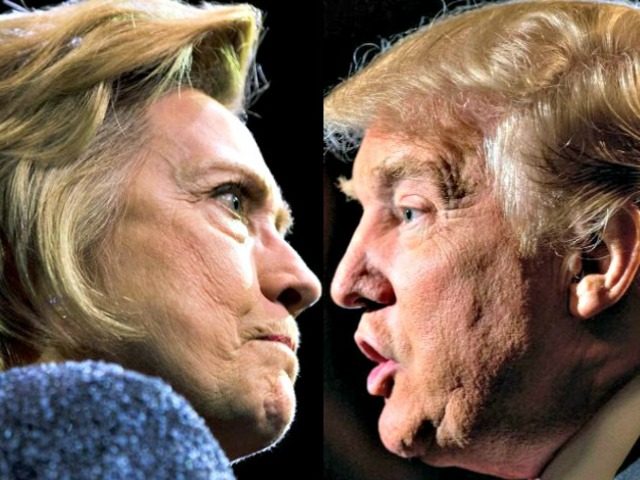
 hillary-clinton-and-donald-trump-face-off-ap-photos-640x480

By Mike Cronin

Today’s item is an update of “Will You Vote for a Beekeeper,” originally posted January 2, 2014.

The most basic (and most commonly employed) model of the political spectrum places Fascism (like Germany under Hitler and Italy under Mussolini) on the extreme right side of the scale, and Socialism or Communism (like the former Soviet Union or modern North Korea) on the extreme left side.  A government, a country, or a person’s political position can be gauged on this spectrum.

The problem with this model is that while the ideologies of Fascism and Communism may differ on the surface, in practice they result in the same conditions for the vast majority of people who live under them: subjugation. There may be distinctions between the two on paper, but in reality both ideologies are collectivist; that is, they espouse that the state, or the party, or the race, or the group, i.e. the collective, is more important than the individual, and that the individual exists to serve the larger group. In other words, both of these forms of politics, Communism and Fascism, treat humans like bees or ants, i.e. as drones (or slaves). The individual’s rights don’t matter (or even exist), only the party, or country (or hive/colony, i.e. collective), matters.

The achievement of the founding fathers was in creating a nation founded on the concept that the individual has rights that are inherent, that is, they are not granted by the state, and that the sole purpose of government is to protect those individual rights. The implementation of this idea was flawed, but still gave rise to a nation that brought more liberty and prosperity to more people than any other in history. One of the hallmarks of the system the founders built is the peaceful transition of power that has attended every presidential election and inauguration (save perhaps Lincoln’s).

One of our most contentious campaign seasons will culminate with the general election on Tuesday.  Consider: Whether a politician identifies as a liberal or a conservative, a Democrat or a Republican, does not matter as much as this: What does his or her character and voting record reveal about their understanding of individual rights?  Mrs. Clinton and Mr. Trump are remarkable as candidates in that each was chosen by their party seemingly on the strength of name recognition over any other factor.  (Both have been in the public eye on a national scale for 30+ years, far longer than any of the other candidates on either side.) They certainly haven’t been selected for their “sterling” personal attributes.  Will we elect one of them based solely on popularity (or notoriety)?  Can either of our candidates be considered defenders of our rights, or are we choosing between beekeepers?

RIGOROUS RED OR BOGUS BLUE, PT III

87971b3eb353cf89fdefdd9941bb76bb

By Mike Cronin

The focus of the last two posts was on the “blue pill” as it regards our “progressive” education system.  I have written several previous posts dealing with political prescriptions for “blue pill” thinking.  The imagery and tone of those pieces and this one may lead you to assumes I am associating all things “blue pill” with liberal/Democrat/ “blue state” politics, and red pill rigor with Republican/conservative/”red state” politics.

You would only be partially right.  Our education and media elite are certainly dominated by those who would prefer a tame, conditioned electorate, but that desire is not exclusive to the panoply of progressive poohbahs.  There is no shortage of conservatives/traditionalists that would like to impose their own brand of “blue pill” virtuality upon us using the existing, Prussian-model school system.  The pill would be “branded” quite differently, of course: Teaching of creationism/intelligent design as science and mandatory recitation of the pledge of allegiance (a loyalty oath) by children too young to understand the concept of total commitment are two ways that come readily to mind.

“In our secular society, school has become the replacement for church, and like church it requires that its teachings must be taken on faith.” ― John Taylor Gatto

So what can be done?  Ultimately, a “red pill” solution would entail the separation of school and state, in the same way and for the same reasons we have separation of church and state.

Whoa! How can you say such a thing, Cronin?!  If we don’t have public education, we’ll have a bunch of uneducated kids running around that can’t think critically, getting into mischief and gangs and criminal conduct! We won’t be competitive in the global market!

How would that be different than what we have now?

Believe it or not, before the imposition of public schooling, and especially the Department of Education, the literacy rate in this country was actually higher than it is now across many demographic groups. (Admittedly, that is a tough comparison to accept. It requires that one omit slaves from the calculation, for instance, as the first public schools appeared while slavery was still legal; teaching slaves to read was often prohibited.)

I ask you: If a thing can be done privately, what business does the government have doing it?

But if we don’t have public education, won’t the private education system be just as much of a “blue pill?”

Unlikely. The key ingredients missing from education in a system monopolized by government are competition and choice. In a competitive education market, schools would have to meet their customers’ expectations or go out of business.  Good teachers would be highly sought after and well compensated.  Bad teachers could be fired. Government is force. Government performs exceedingly well where force is the required tool to solve a problem.  At best, government achieves a desultory mediocrity at everything else it does. Is force the correct tool to use to educate our children?

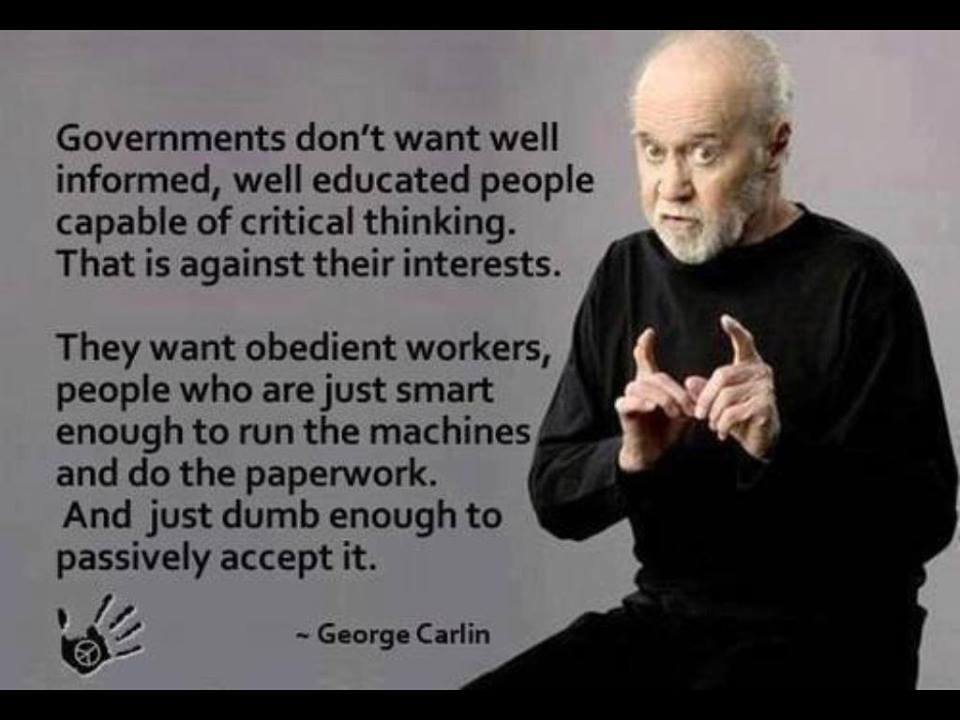
We are indoctrinated by a school system designed to mass-produce workers and consumers, “informed” by a mass media machine that continuously keeps us alarmed, and led by politicians whose only concern is getting elected or re-elected.  How could anything be wrong?

Rigorous Red or Bogus Blue? Part II

64555_333787396719890_1465346194_n

By Mike Cronin

Using the analogy of the Matrix movies, last week I posited that two philosophical traditions are vying for primacy over our minds.  One of them, the “blue pill,” offers a fantasy.  Conversely, “red pill” traditions require mental rigor.  They are not so easy to follow, but they flow from and describe the true nature of reality.

The most insidious facet of the “blue pill” is that it works best when it is proffered early in a child’s development…and its greatest efficacy lies in “armoring” the developing mind against the “red pill” before the child even knows there is an alternative. Our school system is the primary dosing mechanism for instilling “blue pill” thinking.

“Education is a system of imposed ignorance.”Noam Chomsky, Manufacturing Consent: The Political Economy of the Mass Media

How can that be? Our kids learn reading, math, and science, don’t they?  With those subjects, they are equipped to learn anything else, aren’t they?

Our schools certainly present those topics. It is in how they are presented that the crime lies. Our education system “standardizes” kids by teaching them facts and theories but neglecting context. It forces the “blue pill” on kids in several basic ways:

  • School as a state function, with attendance becoming compulsory.
  • Regimentation and Pavlovian conditioning (age segregation, dividing the day into lesson periods, sitting in rows, bells, uniforms, etc.)
  • Discouraging holistic comprehension by segmenting knowledge into disjointed subjects (reading, math, science, art, “social studies,” etc.) taught in incomprehensible order.
  • The “professionalization” of teaching. Aspiring teachers, themselves graduates (victims?) of the same system, are given to understand that it is their role to fill minds…instead of to remove obstacles and let young people be their own teachers. This lead to the decline of parent-as-mentor – and of kids who could already read before entering school at six or seven.
  • Employers and higher education institutions began demanding evidence that proved completion of the prescribed program (diplomas).

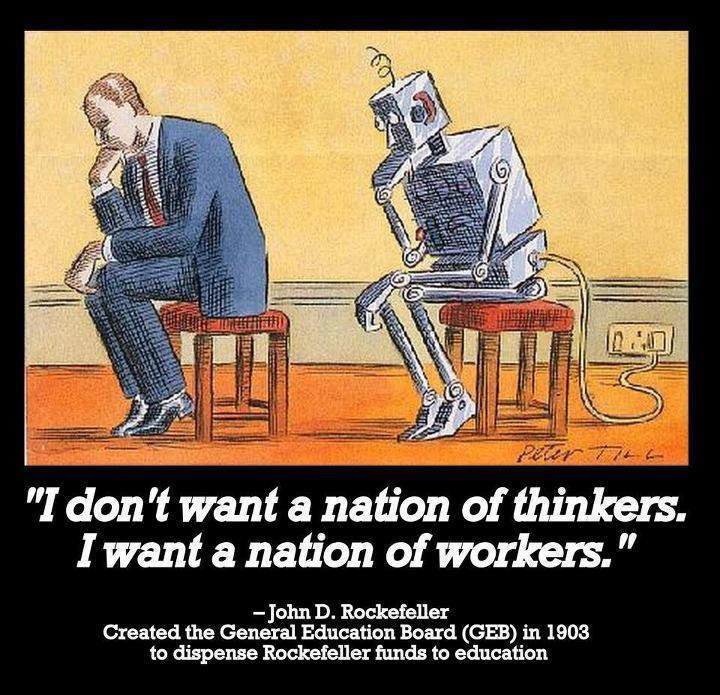
This model was imported from Prussia and/or instituted in the early-to-mid-1800s. The Prussians devised their system independent of any relationship to individual liberty or freedom.  The Prussian system had three tiers.  The vast majority (94%) of the population was to be adequately prepared to function and contribute, but not think for themselves or lead, at volksschulen.  The other 6%, those from elite families, were destined to rule or manage.  They received educations more geared to critical thinking.

In the US, the Prussian model was implemented in part to “Americanize” (i.e. instill WASP values in) the many Catholic immigrants coming in from Italy and Ireland.

According to former award-winning teacher turned public-school critic John Taylor Gatto:

“A small number of very passionate American ideological leaders visited Prussia in the first half of the 19th century; fell in love with the order, obedience, and efficiency of its education system; and campaigned relentlessly thereafter to bring the Prussian vision to these shores. Prussia’s ultimate goal was to unify Germany; the Americans’ was to mold hordes of immigrant Catholics to a national consensus based on a northern European cultural model. To do that, children would have to be removed from their parents and from inappropriate cultural influences.”

So, you know how we are often told that our kids are continually ranking lower on literacy and math than other developed nations, i.e. that our schools are failing?  That we must “invest” more public funding in the schools?

Understand that in the most basic sense our schools are not failing at all; they are doing exactly what they were designed to do: make the vast majority of kids swallow the blue pill and grow them into good consumers who are smart enough to run the machines and think what they are told to think by their betters, but not smart enough to think for themselves and run the businesses or lead the country.