5 Ways to Fight Hobgoblins

panic-button

By Mike Cronin

I often refer to H.L. Mencken’s “hobgoblins” quote: “The whole aim of practical politics is to keep the populace alarmed (and hence clamorous to be led to safety) by menacing it with an endless series of hobgoblins, all of them imaginary.” We see this every day, often with the enthusiastic pot-stirring of the main stream media.

Take today’s headlines, for example.  Rising tensions with Russia over the imbroglio in Syria. Hurricane Matthew. Gold prices. Stock prices. Jobs growth. Giving up control of the internet.  Hillary’s scandals. Trump’s crudities.  Duterte’s bombast. NFL ratings. Crazy clown sightings.

How is all of that really important? How can we ignore the hobgoblins and glean the “ground truth?”

A few rules of thumb can be useful:

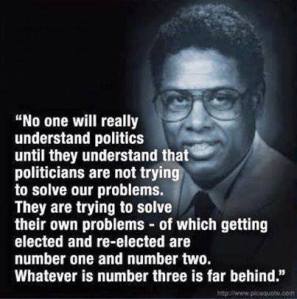
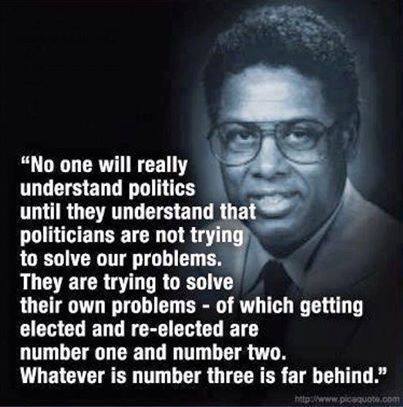
  1. Always keep Mencken’s quote in mind, together with Thomas Sowell’s observation:1931497_10156430011180515_9052930332313088412_n
  2. Get your news from a variety of sources. Journalism has evolved, or more precisely, de-volved, in the face of 24/7 cable news cycles, citizen-chroniclers, and the web.  According to the authors of Blur, the old media’s apex occurred at about the time of the Three Mile Island incident in 1979. CNN came online shortly after in 1980, and the 24/7 news cycle was born. The term spin as euphemism for truth-shaping entered the lexicon at about the same time. Consumers have had to contend with an ever more clamorous, ratings-driven media ever since. Every outlet is biased, but some do a better job of admitting what their bias is (my own, for example, is for individualism, reason, and laissez-faire capitalism) and/or mitigating for it (this reporter, for example, does a commendable job on reporting from Washington D.C. without interjecting his ideology). Alternately, check out the US news from a foreign source, such as BBC, Al Jazeera, or Xinhua.  They are biased as well, but perhaps not about the same things we are. It can be enlightening.
  3. Once the main-stream media have added unique theme music to a particular story, it’s not breaking news anymore. They are trying to turn it into a cash-cow and milk it for ratings.
  4. Most mainstream media operations lean left/liberal/progressive/Democrat, while Drudge, Breitbart, and Fox News (at least until the recent departure of Roger Ailes) tilt right/conservative/Republican – but what if both of those factions are two sides of the same coin? In order to see liberals and conservatives as opposites, you are supposed to accept a left-right political spectrum model with socialism on one end and fascism on the other. To the subjugated souls living under either, there is no practical difference. As the saying goes: All models are wrong, some models are useful.  A left-right / liberal-conservative model keeps you scared of the hobgoblins.  What if we look through a different lens? What if we put individual liberty on one end, and absolute tyranny on the other?  I contend that on such a model, “liberal” and “conservative” establishment politicians are continuously dragging us closer to the tyranny cliff, with only the flavor of tyranny at issue. Using a better model might get us closer to “ground truth.”  Who will lead us to liberty or drag us to tyranny?
  5. One kind of real hobgoblins we must watch for: luminaries with enough wattage to force the public eye to “look away.” Such wattage could come in the form of personal charm or charisma, whereby the figure is judged by their reputation instead of earning a reputation based on considered judgement (e.g. President Obama’s anticipatory Nobel Peace Prize), or via “wagging the dog” (e.g. President Johnson’s incandescent “Gulf of Tonkin” lie).
 

Trolling by Polling

funny_hillary_clinton_vs_donald_trump_election_postcard-ra42557157e2745d582361c25dfe3b9db_vgbaq_8byvr_630

By Mike Cronin

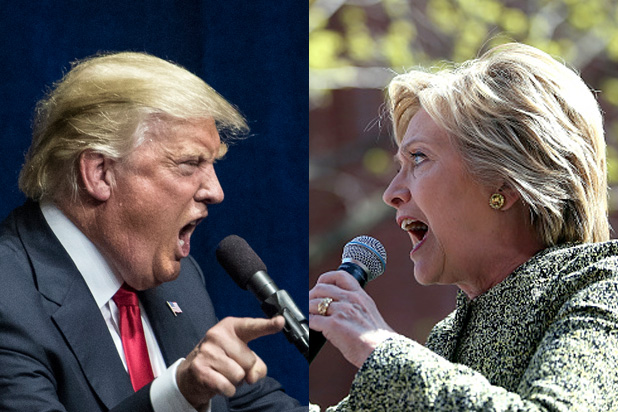
Now that the presidential campaign season is in full swing, we are being treated to the usual inundation of “demographic” polling results (i.e. how are “soccer moms,” Hispanics, gays, white men, etc. going to vote?)  Taken individually, as they are usually reported, the vast majority of these polls tell us nothing useful.  Piolls that tell us how a state will vote are getting closer to valuable.

Consider: This page at Real Clear Politics lists numerous polls with entries similar to this one:

Race/Topic: State X:         Poll : Qunipiac                Results  Trump 44, Clinton 38                            Spread: Trump +6

Trump is up by six points over Clinton in State X.  Sounds dire for Clinton, right?

You still might be getting “trolled.”

Regardless of how you’d like the race to go, we need to remember how presidents get elected: by winning the Electoral College vote.  The popular vote heavily influences the Electoral College, but the nature of that influence is determined by state laws. As we’ve seen as recently as 2000, it is possible to win the popular vote but lose the electoral vote and the election. In terms of polls: It means that generic surveys of this or that demographic, such as the one cited above, are almost useless by themselves for telling us how an election might go, especially in “solid” red or blue states. It makes no difference if a candidate’s poll numbers go up in a state that was already going to vote for them.  It makes a great deal of difference if a candidate’s numbers change in a battleground state with a lot of electoral votes, such as Florida or Ohio – such a shift could move electoral votes from one column to the other, perhaps enough to get to 270.

Thus, even taken in aggregate, “demographic” polls aren’t much of a barometer.  A much more instructive product would tell us how every state is currently trending, with caveats for the states (Nebraska and Maine) that are not “winner take all.”  Such a tool would give us a much better predictive assessment of the electoral college votes likely to go to each candidate.

Such a beast exists: http://www.270towin.com/. They have broken down the race several ways.  If we look at their map that “kluges” current polling data with expert forecasters’ opinions, Mrs. Clinton already has 272 votes in her camp, two more than are needed to win.  But  if we look at their chart that displays the accumulation of polling data only and omits “expert opinion,” then Clinton has about 200 electoral college votes in her camp (out of 270 needed to win), while Mr. Trump has 163.  Either situation sounds much more troublesome for him than “Trump up by six” sounds for Clinton, doesn’t it?

If “demographic” polls vice “electoral vote” polls do little to predict the outcome of the Electoral College race, why publish them? At least two possibilities come to mind:

  1. There’s nothing like stirring the pot in order to keep you tuned in and watching advertisements.
  2. To shape voters’ behavior in some way favorable to whomever commissioned the poll. Example one: Clinton’s current lead only translates to victory on Election Day if enough voters actually go to polling places and pull levers.  If you want Clinton to win, maybe you paint her as losing ground in the polls in order to generate a hint of doubt. Maybe that will motivate folks to go vote that might have stayed home if they felt comfortable she was going to win. Example two: If you want Trump to win, you might commission such a poll in order to generate enthusiasm by painting him as an underdog coming from behind and pulling ahead – a narrative that always does well in America.

Manifestly, Donald Trump still has an uphill battle.  In his best case scenario, he has to take 107 more votes and keep Clinton from gaining, while in his worst case he needs to take at least three of Clinton’s existing votes away!

Despite being much more instructive than run-of-the-mill poll reporting, even such tools as the “270towin” charts are not infallible, nor is the sentiment recorded today going to be the same on election day.  Clinton’s recent bout with “pneumonia,” clumsy messaging regarding her overall health, and “deplorable” commentary on Trump supporters certainly helped Trump’s polling tick up a bit, but did it affect the electoral vote trend?  Time will tell – and we still have to get through the “October Surprise.”

While such and event or revelation may yet upend the race, there is sure to be a battle over the next few weeks for the remaining available electoral votes. Poll results that don’t tell you how that aspect of the election is going are probably not worth your consideration.

Testing our Constitution

constitution-print-c10314518

By Mike Cronin

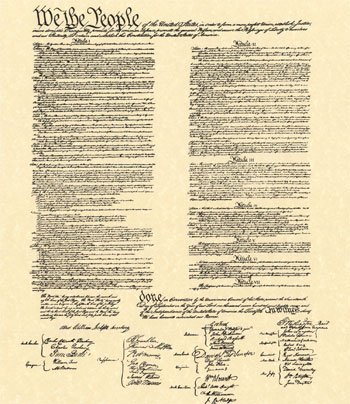
Today ought to be a national holiday.  229 years ago today, the Constitution was created.  It was ratified and became the highest law of the land two years later in March of 1789.  Contrary to popular opinion, or even popular “fact” taught in many of our schools, the Constitution didn’t give us a democracy, even though it specified certain democratic processes for electing the president and members of Congress and for proposing and enacting legislation.  It gave us a republic – a form of government where the people’s rights were protected by law and could not be voted away at the whim of the majority.  It gave us the first country in the history of mankind founded on the ideal of individual liberty and personal freedom.

The Constitution, and our republic, has been under attack, either literally or rhetorically, ever since.  Some, like Supreme Court Justice Thurgood Marshall, would have us believe the Constitution is a “living document,” i.e. open to re-interpretation through whatever cultural lens exists at a given time.  The Framers knew better than that.  They knew America would not be the same in 1887 or 1987 as it was in 1787, so they crafted a mechanism into the Constitution that would allow for it to be changed: via amendments. They deliberately made the amendment process challenging, but not impossible.  It has worked just fine at least 17 times over the last 229 years.  The most recent, the 27th Amendment, was ratified in 1992.  (Yes, there are 27 amendments, but the first ten were enacted simultaneously as the Bill of Rights, hence 17 instances the amendment process has been carried out.)

One of those amendments, the first in fact, is being tested right before our eyes today. There is a public controversy over several NFL players who are refusing to stand during the playing of the National Anthem.  As a veteran, I am in the curious position of both feeling pained and proud.  It pains me to see people disdain the anthem, because so many have fought and died to protect the freedom and liberty the flag stands for. And yet, the very first freedom protected by the Bill of Rights is the freedom of expression.  As much as it galls me to admit it, our country has not always acted in accord with its own highest law.  As I’ve mentioned elsewhere, for nearly a century after the Constitution was ratified, men could own other men in this country…if they were black. Our history has other examples of its failure to abide by the Constitution and the principles of individual freedom it protects: Confiscatory income taxes. The draft. Excessive bureaucracy and scandalous deficits and debt. Spying on citizens. Obamacare. Failures to hold officials accountable for their transgressions in office. The list is not short.

So when an NFL player refuses to stand for the National Anthem, and no government sanction ensues, I can be proud to witness an instance where the Constitution itself is being honored by the government, even if those who have given everything in its defense are being dishonored.

Of course that works both ways.  Just as those few players have the right not to stand, the fans, the teams, and the league have the right to express their displeasure at the offending players.  It would not pain me at all to see the league fine, or the teams discharge, the players in question!

The Battle Begins. How Will you Fare?

trump-clinton

By Mike Cronin

Barring a “black swan” event, the race for president is down to Trump vs. Clinton.  Who will you vote for, and why?  Will you even vote?  Will your vote matter?

There are so many marginal factors that can shape an election, but there are some basic election fundamentals that seldom get explained.

First: From 1932 to 2012, the average voter turnout has never been higher than 63% or less than 49%.  That means on average only a little over half of the eligible population votes in any given presidential election.  Of the half that votes, roughly 32% are dyed-in-the-wool liberal Democrats and will always vote for the Democrat candidate.  Roughly another 22% of the half that votes is comprised of hard-core conservative Republicans who will always vote for the Republican candidate.  These groups are the “base” for a given candidate/party.  Once you exclude the 54% of voters that are going to automatically vote D or R in any given election, the real battle takes place over the remaining half of the half of Americans who are going to vote. Expressed another way: Presidential elections hinge on the lever pulls of slightly less than 25% of the adult population!

It gets better.  Where those 25% reside is crucial.  If a majority of them reside in states that are overwhelmingly likely to vote a certain way, their votes aren’t going to mean very much.  Conversely, if the bulk of those independent voters reside in states that could go either way (the so-called battleground states), their votes could wield enormous influence!

Are you one of the independents or third party members who vote but don’t blindly punch holes for any party’s candidate (or against the other party’s!)?  Where do you live?  Will your vote count?

If you are, how will you make your decision? Party loyalty isn’t your thing, so what does it for you?  Unfortunately, some will waste their votes on frivolous criteria such as the looks, race, or gender of the candidate, or on candidate’s oratorical prowess.

To do justice to our system and not waste my vote, I’ve developed a small list of criteria that I can rate each candidate against using a survey technique called a Likert scale.  Here it is:

Rate each candidate on how you believe they would:

Honor the Oath of Office and abide by the Constitution & the laws of the land Fail Marginal Mediocre Good Exemplary
Appoint Supreme Court Justices that will uphold the Constitution Fail Marginal Mediocre Good Exemplary
Command the armed forces and employ military force only to counter serious threats to the United States Fail Marginal Mediocre Good Exemplary
Act with integrity & honesty, and demonstrate character Fail Marginal Mediocre Good Exemplary
Govern transparently Fail Marginal Mediocre Good Exemplary
Reduce dysfunction and corruption in the Executive Branch Fail Marginal Mediocre Good Exemplary
Work to reign in government spending, promote capitalism and demonize socialism Fail Marginal Mediocre Good Exemplary
Work to audit, and possibly end, the Federal Reserve Fail Marginal Mediocre Good Exemplary
Work to end, or at least lessen and simplify, the income tax Fail Marginal Mediocre Good Exemplary
Overhaul the immigration system to allow maximum freedom to enter and remain in the country  consistent with preventing criminals, terrorists, and other bad actors in and without yielding an automatic electoral advantage to any party Fail Marginal Mediocre Good Exemplary

Obviously, you might prefer different criteria than what I’ve settled on, but whatever thoughtful criteria you select can still work.  Once you establish your criteria and rate each candidate, score them thus: 1 point for each Fail, 2 points for each Marginal, 3 points for each Mediocre, 4 points for each Good, and 5 points for each Exemplary. Total up the scores and vote for the candidate that earns the highest marks.

Still, there is at least one other major contextual factor that is seldom examined during presidential elections: Congress.  We can elect a president based on the most cogent criteria, but if he or she must deal with a Congress skewed to the opposing party, it is likely they will face high resistance to carrying out their plans or their mandate.  Even if he or she gets to work with a same-party Congress, your candidate could still find it hard to make headway if, like Donald Trump, they come from outside the beltway political establishment.

There is a simple (not easy!) fix to that: Help your presidential candidate get a sympathetic, same-party Congress to work with!


Storm Warning: Orlando

06132016_Orlando_Shooting_Police_Response

By Mike Cronin

There are many aspects to the tragedy in Orlando that defy reason, but we may yet be able to put many of the chaotic elements into context and derive some small degree of understanding.

Keep in mind the following as you watch the news and listen to the pundits and demagogues:

As we’ve discussed elsewhere, the news networks’ primary job is to sell advertising. They will dwell on every aspect of this story as long as they can in order to keep you coming back to watch commercials find out the latest breaking wrinkle.

The anti-gun fanatics will exploit our fears in order to advance their agenda to ban ___ (take your pick of anything gun or gun-related).  They’ll be sure to shout that this was the worst shooting in US history.  That might be true if you discount several massacres of Native Americans and the Civil War; I don’t know.

Pro-gun zealots will exploit the fear that the left is coming to take our freedom. They will jump up and down to expose every error the anti-gunners make about the specific gun used, how it was obtained, and about how it is already illegal to have a firearm inside a place that serves alcohol in Florida, so gun bans demonstrably don’t work.

Strident religious groups will be in a hurry to tell us that what happened in Orlando was God’s punishment for the sinful behavior of the club’s clientele.  In fact, one such group, ISIS, took credit for the attack!

Let’s try to unscrew ourselves from the ceiling a bit and put some more context to this storm:

Was it the worst mass-shooting in US history?   Ever hear of Bear River (~250 dead), Sand Creek (up to 163 dead), or Wounded Knee (150 dead)? They were but three of dozens of massacres of Native Americans committed in the 1800s.  How about the various battles of the Civil War (~600,000 dead)? (Granted, some might say those events don’t count because they weren’t “crimes” or terrorist attacks; instead, they were (directly or indirectly) government operations. I think that not only do they count, they exemplify the very reason we must not give up the right to keep and bear arms!)

Was it the worst terrorist attack on US soil? No; that was 9/11. (~3000 dead).

Surely it was the worst domestic terrorist attack?  Nope. That dubious title goes to the Oklahoma City bombing. (168 dead)

Nor was Orlando the worst nightclub attack; that distinction belongs to the “Happy Land” club arson fire in the Bronx in 1990 (87 dead).

It does look like Orlando might actually be the worst attack on the LBGT community; though there was an attack nearly as bad in 1973: 32 were killed at the “Upstairs Club” arson attack in New Orleans.

To like-minded folk that believe the second amendment is under attack and should not be infringed upon any further:  Yes, the anti-gunners will shamelessly exploit mass shootings.  We don’t need to follow their example and squawk and honk at each inaccuracy or inane statement made while the tape is still around the crime scene and the blood is still on the floor.  Those rounds are largely wasted.  Save them for the letters to the editor and to your politicians.  Let the anti-gunners make their mistakes in the heat of the moment.

As for the religious condemnation: If you believe Jesus was the son of God, then ask yourself: what would Jesus do?  Would he kill homosexuals?  Would he add salt to their wounds after such a tragedy by saying they were killed because they were sinful? Most especially, would he do that just to get attention? If he wouldn’t do those things, it might be wise to follow his example.

If you are a radical Muslim jihadist, I know that nothing I write here will sway you in any way. Even so, I must say it. If you purport to be a devout member of the so-called religion of “peace,” what is peaceful about slaughtering people whose behavior you don’t approve of, either here or in Syria, or Iraq, or the rest of the world where Islam holds sway?

If ISIS was indeed ultimately behind this attack, what have you gained? All you have accomplished is to show your clients and constituents that one jihadi with a gun and a lot of ammo can kill a lot of unarmed people.  And….what? Is this supposed to terrify us? We are not terrified. Is it supposed to gain you recruits?  You’ve caused just as many, or more, to deplore your cause.

We live in an era with instant news and constant competition for our attention. We are in the middle of one of the most contentious election cycles in recent memory. We are in a shooting conflict with ISIS. The Orlando massacre served as a catalyst to energize a storm of bloviating. We can let it die down a bit so we can hear ourselves think before making hasty conclusions.

Do We Need a Dictator to Restore our Freedom?

download

By Mike Cronin

Over the last 240 years, our federal government has become a bloated monstrosity that bears little resemblance to the founder’s vision. It is so massive and tangled that there is little hope that we can restore it to a more reasonable size or constrain it from grabbing an ever-increasing share of our liberty and freedom. Even if we could elect a Congress and Presidency full of freedom- and liberty-minded politicians for a generation or more, it might not be enough to de-fang the beast and put it on a forced diet.  How can we fix it?

I have an affinity for the adage that whoever wants to be the president is not qualified to have the job. I certainly don’t want it, but if I was ever elected, people might call me the world’s first libertarian* dictator**.  If you think that’s a contradiction, you are only partially correct.  No doubt, in all of human history, the record of dictators tends towards loss of freedom.  But what if we had a dictator who used his or her power to shrink government and increase freedom?

Here’s how I would become subject to such a characterization:

After being elected and taking the oath of office, I would declare a state of emergency and impose martial law.  It would be the weirdest martial law ever, because there would be no curfews or tanks in the streets. No rationing, checkpoints, or firing squads.  Instead, I would go before the American people and explain that the emergency is that we are destroying the Republic with excessive government.  Too many bureaucrats have too much power to regulate our lives.

My first dictate would be to abolish the IRS and institute the Fair Tax plan.  We would no longer punish productivity; we would pay for government the same way we pay for everything else: according to how much we use. In the same stroke, I would put in place a plan to audit the Federal Reserve and end the use of fiat currency, and re-introduce currency exchangeable for precious metals or other suitable commodity. In these two acts alone, we would greatly curtail the power of the government by removing its prerogative to confiscate our money before we see it, and its ability to confiscate our wealth by devaluing the currency we have been allowed to keep.

I would also announce to the world that the vast bulk of our armed forces based abroad would be returning to US territory in calibrated withdrawals from foreign lands.  Our defense strategy would focus on protecting US territory and US interests in international sea- and airspace. In this way, military spending could be reduced without reducing military strength.  Indeed, such a pull-back would allow the armed forces a much-needed breather to reconstitute after decades of continuous warfare and deployments.  No doubt, some countries would not be happy with us, while others, including some adversaries, would be ecstatic.  It would certainly disrupt the balance of power in many regions…but it would not alter the fundamental truth in the global balance of power: The US has the most powerful military and the economic might to back it up.

Next, I would turn to the various departments of the executive branch.  I would call in each incumbent cabinet-level secretary/director to defend the constitutionality of the operations, or even the very existence, of their department – on the basis of how it protects the rights to life, liberty, and pursuit of happiness of the citizens.  Some would have an easy job of it, especially the Departments of Defense and Justice, and perhaps the Director of National Intelligence (though he or she would have a tough time convincing me domestic intelligence operations do more constitutional good than harm!).  Some would have a very tough time indeed, such as the Departments of Commerce, Transportation, Education, Energy, and the Interior.

Departments with unsatisfactory answers would be on the chopping block for re-organization, mission reductions, or even complete dismantlement.  The chief of every department left standing would be under orders to examine all of their operations and to de-regulate anywhere such operations do not protect the life, liberty, or property of citizens.

There are innumerable issues that would have to be addressed during such a departmental shake up:  Welfare. Social Security. Immigration. Guns. Abortion. Drugs. Trade. All manner of regulations. The list would be quite long, but always the test for each would be simple: How does a program, regulatory structure, function, etc. protect the rights of the citizens? Is the coercive power of the federal government the right way to address the issue?  If the answer to the first question is that it does not, or to the second, no, then that program would be on the chopping block for re-design, privatization, or elimination.

Of course, such a scheme (getting elected on a “libertarian dictator” platform) is pretty much a pipe dream, but the idea that it will take some unorthodox leadership to re-align the Republic to the founders’ vision and restrict the government to its Constitutional limits is very timely.

*Note that my use of the word “libertarian” (little l) should not be construed as an endorsement for the (Big L) Libertarian Party.

**There is a book by the name of “The Libertarian Dictator” (published in 2015).  I’ve never read it, but if any of the ideas I espouse in this post were first put forth in said book, I yield credit to the author.


Putting Polls in their Place

By Mike Cronin

Now that election season is in full swing, we are subject to a constant stream of polls and polling results in the news. Many of these polls are legitimate attempts to gauge public opinion.  But some polls, and/or the results of some polls, are put to use to shape our opinions rather than discover them.  One example I heard recently alleged to be reporting opinions on who had little or no chance of winning the presidency in November.  The polling methods might have been legitimate, but the client who ordered the poll might have had an ulterior motive.  Here’s a possible scenario:

Candidate A, or an organization in favor of Candidate A, orders a legitimate poll from a reputable firm such as Gallup or Quinipiac to find out who people think have the worst chances of getting elected. The poll is taken and the results come back that people don’t think Candidates X, Y, or Z have much chance of getting elected in the fall.  Candidate A’s organization then trumpets these results loudly and often. Had the results been inconclusive, Candidate A’s organization wouldn’t have publicized the poll at all.

Knowing that we are all influenced to some degree or another by peer pressure, the results of the poll could sow discouragement among the supporters of Candidates X, Y, and Z, and even affect the candidates themselves, potentially hastening their departure from the race and reducing the competition against Candidate A.

There are dirtier tricks in the pantheon of polling practices. One such is to use the so-called “push-poll.” A push-poll is not really a poll at all in that it doesn’t seek to find out your opinion, but to change it or reinforce it. You might have received a piece of political junk mail that seems like a poll, but the questions will be highly “loaded” or biased.  Questions from such an artifact might read something like these examples:

“Candidate B wants seniors to lose their Medicare benefits. Do you think we should allow him to get his way?”

“The ABC project will pollute the local wetlands with 10x the current level of toxic substances.  Candidate B receives campaign donations from the company behind the project.  Don’t you think we need campaign finance reform?”

In both examples, the reader is first led to be outraged. The outrage is inherently tied to a candidate, then the respondent is manipulated to respond a certain way. The client of the poll wasn’t trying to find out people’s feelings on Medicare or campaign finance; rather, he or she was trying to sully the competition. A legitimate opinion poll will word the questions in as neutral a way as possible.  For instance, the questions above might be legitimized by rewording them in the following way:

“How do you feel about Medicare?

It should be maintained         Uncertain            It should be abolished”

“What is your opinion on campaign finance?

It needs to be completely reformed       It could use some reforms           It does not need any reforms”

So how can you peek behind the curtain of the polling game? Whenever you are asked to participate in a poll, or you hear polling results, consider these questions and/or look for trouble signals:

Who took the poll?  Was it a reputable polling firm?

Who commissioned the poll? What do they stand to gain or lose from the results?

Was the sample (the group of people taking the poll) drawn at random?  (If not, the poll will results will be biased, and therefore suspect.) Something to consider: most internet or call-in polls may seem to be sampling at random, but they are not. They are surveys of people who are already interested in the topic at hand! Most often, valid polls are accomplished via random digit dialing.

Was the sample size large enough?  (If the total population is, say, “likely voters,” which might be 75 million people, a sampling of ten people is not sufficient to gauge the opinion of the whole, but a sampling of 1000 or 10,000 might be. This is what statisticians get paid the big bucks to figure out.)

Are the questions biased or neutral?

Who is touting the results of the poll? Have they focused on the results of only one question that serves their ends, while ignoring the results of other questions on the same poll?

When you understand how polls can be used and misused, you increase your immunity to being manipulated in ignorance.

America: Republic, Democracy, or Empire? Part II

download (2)

By Mike Cronin

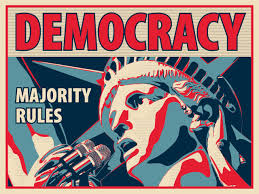
In modern usage, the original meaning of the word “democracy” has been camouflaged. Whereas most folks understand it to mean electing our leaders and having a say in the affairs of our government, that is not what democracy means.  The hard reality is more insidious: the word democracy comes from the Greek word dēmokratiā, which was coined from dēmos (“people”) and kratos (“rule”). Democracy literally means “the peoplerule.”  We interpret that as “majority rule.” That sounds pretty good, right?  Isn’t that what we are supposed to have in America?

“Democracy is two wolves and a sheep voting on what’s for dinner. In a republic, the sheep is well armed and able to contest the vote.” – multiple attributions.

But what if you are not in the majority?  Especially for an issue that has to do with your rights?  Should the majority be able to dispense with your rights just because they are the majority? The founding fathers didn’t think so; through the Constitution, they gave us the rule of law and a republic, not the rule of the majority. Our Constitution is designed to protect our rights – both from the government and from any majority who might wish to “democratically” vote them away. It does so via the techniques of splitting the government into three branches (legislative, executive, judicial) and by placing various checks and balances against them. For example, we elect our leaders, but they can’t legally impose any law on us that violates the Constitution. To make those laws requires great effort. First, both sides of Congress can pass proposed legislation, i.e. bills, by a simple majority vote, but they don’t become law unless the president signs.  If the president vetoes a bill, Congress can try again, but it takes a two-thirds majority to overcome the veto.  Meanwhile, if a law comes into dispute, the Supreme Court can rule it unconstitutional and order it struck down. In our system, the people are supposed to get their say by electing their representatives; the people don’t get a direct vote on legislation, and neither “we the people” nor our elected representatives can legally bypass the structures and processes our Constitution imposes on the government. Thus, we are supposed to have the rule of law, not a democracy (in the strict sense of the word).  In fact, believe it or not, the word “democracy” does not appear in either the Constitution or the Declaration of Independence! But  why shouldn’t we have a democracy? I’ll let historian Alexander Frazier Tyler explain:

“A democracy cannot exist as a permanent form of government. It can only exist until the voters discover that they can vote themselves money from the public treasury. From that moment on, the majority always votes for the candidates promising the most benefits from the public treasury with the result that a democracy always collapses over loose fiscal policies, always followed by a dictatorship. The average age of the world’s greatest civilizations has been 200 years.” 

Well, judging by the state of 237-year-old America today, it looks to me like the republic is giving way to democracy, but the transition is not complete, nor assured. Will we complete the transition and give in to dictatorship, or will “we the people” restore the republic?

Will You Vote for a Beekeeper?

1560419_10153711810335515_1801873282_n

Image from https://www.facebook.com/Capitalists

By Mike Cronin

The realm of politics is huge, and it can be confusing. Pundits are always talking about liberals & conservatives, Democrats & Republicans, ideologues & demagogues, and many other terms.  How can we make sense of it? In basic social studies or political science classes, teachers may introduce and discuss a model called the political spectrum. If you “google” images for “political spectrum,” dozens, if not hundreds, of different models will be displayed.  The most basic (and most commonly employed) model places Fascist totalitarianism (like Germany under Hitler) on the extreme right side of the scale, and Socialism or Communism (like the former Soviet Union or modern North Korea) on the extreme left side.  A government, a country, or a person’s political position can be gauged on this spectrum.

The problem with this model is that while the ideologies of Fascism and Communism may differ on the surface, in practice they result in the same conditions for the vast majority of people who live under them: tyranny, fear, and poverty. There may be distinctions between the two on paper, but in reality both ideologies are collectivist; that is, they believe that the state, or the party, or the race, or the group, i.e. the collective, is more important than the individual, and that the individual exists to serve the larger group. In other words, both of these forms of politics, communism and fascism, treat humans like bees or ants, i.e. as drones (or slaves). No individual is important, only the party, or country (or hive/colony, i.e. collective), matters.

The achievement of the founding fathers was in creating a nation founded on the concept that the individual has rights that are inherent, that is, they are not granted by the state, and that the purpose of the state is to protect those individual rights.

So, with mid-term elections coming this November, consider this: Whether a politician identifies as a liberal or a conservative, a Democrat or a Republican, does not matter as much as this: What does his or her character and voting record reveal about their understanding of individual rights?  Will you elect a defender of your rights, or a beekeeper?