When Everything is a Crisis, Nothing is a Crisis

248769_318723208232720_678404428_n

By Mike Cronin

Dear politicians, intellectuals, pressure-group leaders, and media mouths,

All day every day you bombard us with crisis after crisis. Drugs. Guns. War. Climate. Celebrity drama. International tensions. Rape culture. Income inequality. Racism. Sexism. Immigration. Political correctness. The list goes on ad-nauseam. Most are real issues that need reasoned efforts to solve or mitigate, but you spin them into crises, then you anoint yourselves as experts and saviors that can save us – if only we turn over our rights, our money, or our reason (or all three!) to you.

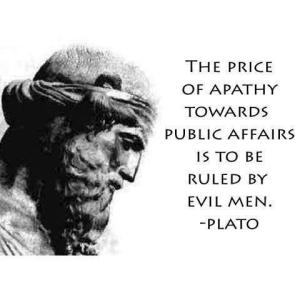
We understand that at some level you have to market and advertise your issue, your ideals, your narrative.  On the other hand, you need to understand that at some point we will succumb to crisis fatigue and stop caring about your cherry-picked and manicured emergencies.  We will become apathetic.  Most of you don’t want that; you want your pet cause to be solved or cured. But some of you do want an apathetic populace.  An apathetic populace is ripe for manipulation by a charismatic tyrant.

If you are one of the public figures I opened this letter to, and you genuinely want your problem solved, dial down the urgency settings on your rhetoric or you will defeat yourself!

If you are a tyrant in waiting:  know that your tactic is exposed.  You are not fooling anyone.

That is all.

Four Branches of Dysfunction in US Government, Part II

War

By Mike Cronin

“What’s the point of having this superb military that you’re always talking about if we can’t use it?” Secretary of State Madeleine K. Albright in 1993, to then Chairman of the Joints Chiefs of Staff Gen. Colin Powell, in reference to Bosnia

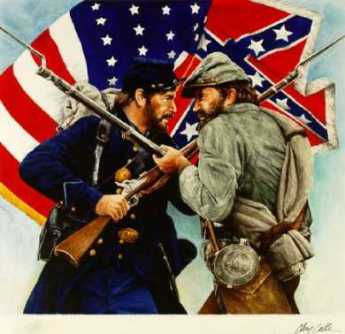
In Part I, I opined that slavery was the first of four major branches of dysfunction that plague our government, and that slavery led us to the worst instance of the second: the Civil War. George Washington once compared government to fire: “Government is not reason; it is not eloquent; it is force. Like fire, it is a dangerous servant and a fearful master.” Government attracts the power hungry, and war is the most attractive method for the power hungry to exercise their power. War negates reason, and provides a fertile field for yet more power to accrue to the government.  It changes the balance of power in the relationship between people and government – war gives unjust power to the government, powers NOT derived from the consent of the governed.

It is to America’s credit, and to the genius of the founders, that for the most part our government’s powers have retracted somewhat after our wars, but it is to our detriment that that power has never ebbed to the level it was at before each war.  In other words, our government assumes new and greater powers with each war, and then sheds some measure of the accrued power after the war, but never all of it. Hence, with each succeeding war, our government grows and become more intrusive.

Certainly, some wars are more just than others, and our nation must be prepared to them. I felt strongly enough about that to serve in the military, but not blindly. Which wars are just?  Smashing Al-Qaeda was (and remains) a national defense imperative. Going after Saddam Hussein was just, but appears to have also been unwise. Was the Spanish-American war just and wise? It put America on map as a great power, but was it necessary to the defense of the nation?  We weren’t attacked or threatened by Spain.  Historians have alleged that President Roosevelt pressured and goaded the Japanese in to attacking us in order to get us into WW II. We probably would have been drug into the war at some point, regardless, but, if true, was it just and wise to encourage and hasten it? If the Spanish-American War put us on the map as a great power, WW II left us (briefly) as the only superpower, and the Cold War left us alone on the superpower stage. It may be good to be the king, but is it wise to be the largest target in a hostile world?

Slavery and war have exposed us to several virulent strains of hypocrisy: Our founders held that all men were created equal…unless one didn’t count as a man. We abolished the chattel slavery of Africans and their descendants in the south, but periodically enslaved men of all colors and creeds through conscription until the 1970s.  We want to bring peace and freedom and prosperity to the world, but we have allowed (or engineered) ourselves to engage in the biggest wars in history, and suffered internal paroxysms as a result.  If there can be such a thing as a national psyche, these dichotomies are not conducive to its health.

Four Branches of Dysfunction in US Government, Part I

civilwar

By Mike Cronin

Ronald Reagan once said that government is not the solution to our problems, government is the problem. What did he mean by that? After all, he was president at the time; surely he must have felt that at least some government is good and necessary. As I have expressed in previous posts, our government has become dysfunctional. Just as cancers are flawed cells that grow uncontrollably, consume resources, and displace healthy tissue, dysfunctional government supplants healthy government.  This is what Reagan was referring to.  How is our government dysfunctional? In my opinion, there are four major, interlocking branches of dysfunction: Slavery, war, confiscatory taxes, and currency debasement. In turn, these branches of dysfunction are fueled by ignorance and ambition to power.

Our government was established to protect our rights to life, liberty, and the pursuit of happiness, but dysfunction was present right from the start. The founders articulated the notion that all men are created equal – but they didn’t recognize slaves as wholly men. Slaves counted only as 3/5ths of a person. Our nation began its life trying to cope with a terrible cognitive dissonance and human injustice – one that would cause arguably the greatest existential crisis it has yet faced: the Civil War.

You might argue that the Civil War was about states’ rights, not slavery. Well, there was one “state right” in particular that the South’s economy relied on: slavery. The Southern States seceded in order to hang on to the institution of slavery, but President Lincoln would not tolerate the dissolution of the union, so the first dysfunction led to the second: war. While Lincoln is widely hailed as the Great Emancipator and one of our best presidents, he assumed virtually dictatorial powers during the war, and expressly violated the Constitution and the Bill of Rights, thus setting precedent to his successors that might wish to do the same. One example: Lincoln ordered two newspapers critical of him to be shut down and had their owners and editors arrested for disloyalty.

While the aftermath of the Civil War may have seen the restoration of the country and the abolition of one form of slavery, it did not absolve us of the original dissonance slavery caused. It took another hundred years before the law and most of the nation accepted the full humanity of blacks, but vestiges of racism still haunt us, and our presidents still exercise more power than the Constitution allots them.