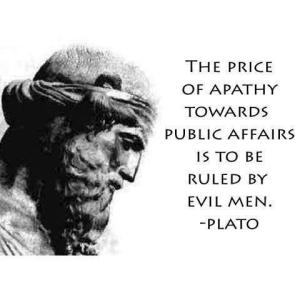
Are You Principled or Ruled?

By Mike Cronin

“If you want to be ruled, follow the rules. If you want to be principled, follow principles.”  I don’t know who said those words, but they are profound.  An admired man or woman is often said to be “of principle.”  If you think about heroes, famous statesmen, positive historical figures, leading thinkers, or other notable people, you will seldom, if ever, find that such figures are admired for following the rules.  So what is the difference, and why is one better than the other?

A rule dictates from external authority; a principle guides from reason.  Rules demand: You must (or must not) take such and such an action, or possess some item, or allow some condition. The primary consideration of the rule-follower is for first-order effects only:  to avoid suffering the imposed consequences for disobedience.  Rules often fail to allow for context or circumstances.  Indeed, governments often thoughtlessly pile up so many rules that it becomes impossible to know or follow them all. It’s even likely that as rules multiply, we will be simultaneously  obligated and prohibited from doing some action!

Principles consider second- and thirdorder effects:  “If I do ___, then someone else’s rights might be violated.  If I allow some condition, someone else might be harmed. I don’t want my own rights violated or to be harmed by poor conditions, so I will not perpetuate those things myself.” The deeper consideration of the principled person is for the maintenance of civilized society and the consequences to his or her own integrity and character for a given act or omission. Principles can be adapted to circumstances, and they are not produced by dictators, monarchs, presidents, or legislatures.

By no means does this suggest one should disobey rules on a whim.  Some rules exist for a legitimate purpose – indeed, they are based on constructive principles.  For example: laws that prohibit the initiation of force against others generally derive from a just principle, and ought to be obeyed, whereas laws that demand the initiation of force against others are probably unjust.

Obeying rules set by others doesn’t take any thought.  Deriving your own principles or incorporating principles learned from others into your life requires some deeper consideration for the consequences of your actions (or lack of same). Adhering to principles require the exercise of judgement. Adhering to principles sometimes means proudly accepting the consequences of breaking the rules – Dr. Martin Luther King exemplified this during his civil rights movement in the 1960s.

Consider this: Some Germans who followed the rules obeyed their masters and slaughtered six million Jews during the Nazi reign. Some British colonists who followed principles disobeyed the rules, rebelled against their ruler, and gave birth to the United States.

Do you want to give up your heritage as a human being and revert to animal status?  Be an obedient, unthinking rule follower.  If you want to perpetuate civilization, think for yourself – especially about the ramifications of your actions (or omissions). Adopt or derive the best principles you can, then live by them!

Random Absurdities– Pt I.

By Mike Cronin

sisyphus

Businesses can come under suspicion of discrimination if they don’t hire minorities and the “differently oriented” in proportion to the surrounding population…but they dare not ask what an applicant’s orientation, religion, race, ethnicity, etc. might be, because that could indicate an intent to discriminate.

If you want to keep what you earn, you’re greedy, but if you want to take what isn’t yours so you can buy votes you don’t deserve, you can get elected to high office.

Common Core in math is akin to asking a baby on the verge of walking to learn all of the anatomy and physiology of his little legs and having him explain to you what processes are going on with his muscles, bones, and balance while he is taking his first steps.

The tariffs and taxes on sugar make it twice as expensive here as in other countries.  The tariffs are meant to protect jobs in the sugar-raising industry. Instead, they cause loss of jobs in the industries that use the refined sugar, or force them to switch to high fructose corn syrup.

Ignorance of the law is no excuse…but no one can know of all the laws, because there are more than a person can read.  Worse yet:  even if you are aware of and follow a given law, you may be violating a different, contradicting law.  There is no law that obligates Congress to check whether proposed legislation might contradict current statutes.

Many people have to prove they do not take illegal drugs in order to get hired for a job. Once employed, they will have income taxes confiscated from their paychecks.  Money from those taxes will then be transferred to people relying on “government” assistance to make ends meet – people who don’t have to prove they are drug-free.  In fact, for some, the very reason they are receiving government assistance is because they have destroyed their employment eligibility through illegal drug use!

We send people to prison, comforting ourselves that the guilty are being punished for their crimes.  They will certainly not enjoy their stay, but while they are in, all too often they will learn to be even more ruthless, violent, and/or skilled at criminal activity.  Then they will get out and go right back to their predatory ways – but with a far greater degree of criminal impact.

Government-backed student loans, financial aid, and Pell grants are meant to help students cope with the high costs of post-secondary education.  Instead, by making it easier for more people to pay for school, the demand for higher education goes up…which drives the prices up. Put another way: even as Johnny gets his college loan and pays for school this year, the school raises its rates for next year.  Now Sally gets a bigger loan and pays for the higher tuition. The school raises its rates for next year. Now Jenny gets a bigger loan…lather, rinse, repeat.

We are supposed to equate “rich” with “high income,” resent high income earners, and demand that they pay higher taxes. People with high salaries have to pay high income taxes, but people with high net worth can live quite well off of the gains their investments make, and pay capital gains taxes instead of income taxes. (Capital gains taxes are much lower than the highest income tax bracket.) For example, the highest income tax rate is 35%, but the long term capital gain tax rate is 20%.  This can lead to a situation where a person who works his buns off and makes $500,000 in income (a cardiologist, perhaps) pays $175,000 in federal income tax, leaving $325,000. (This scenario is only about federal income tax vs capital gains tax – we’ll leave social security, states taxes, deductions, etc., out of the equation for simplicity’s sake). Now consider a person with $5 million in net worth invested wisely. Perhaps this person inherited the money.  Suppose this person makes capital gains of 10% per year – pretty good in this economy.  10% of $5 million is $500,000 – the same as our doctor’s income.  But capital gains taxes are only 20% ($100,000), not 35%.  That means the wealthy guy living a life of leisure off his investments pays $75,000 per year less taxes than the “rich” guy who worked his rear end off…on the same amount of taxable income!


Issues, Symptoms, and Oreos

By Mike Cronin

Most of the issues in the presidential debates are not issues at all but symptoms. How so? Let’s take an example: illegal immigration.

The real problem isn’t that the United States is racist and doesn’t want so many people coming into our country. It’s that the flood of people coming into this country illegally is a signal that other things are broken.  The mass of immigrants perceive the United States to be a better place to live and work than wherever they are from. In other words, their incentives to come here are greater than their incentives to stay home. That has always been the case with immigration to the United States. What has changed is the nature of the incentives.

Through much of the 19th and 20th centuries, the incentive to immigrate to United States was the opportunity to be free to work hard, own property, and succeed.  From the latter part of the 20th century to the present, that incentive has been morphing. There is still an incentive to come here to be free and succeed, but another incentive has been steadily taking the place of that original one.

The new incentive is to come to the United States and take part in the bounty of government benefits and handouts that we bestow on a significant portion of our population. Free K-12 education. Subsidized housing.  Free or subsidized medical care. Relatively high paying jobs (even jobs that pay immigrants less than minimum wage under the table may be paying them more than they could get in their own country.) Low risk of being deported.   Even the possibility of voting. Why stay at home and live in absolute poverty, when you can come to America and upgrade to relative poverty and dependence on Uncle Sam?

A related symptom is corporate off-shoring and outsourcing. Even as immigrants are poring in to find a better life here, companies that send jobs or work outside the United States are vilified as unpatriotic. But why do they send these jobs outside the United States? Does it have anything to do with patriotism?

Could it instead be because government interference and manipulation have incentivized them to outsource, just as it has incentivized illegal immigration?

Image result for oreo to Mexico

Consider the Oreo case.  Donald Trump vowed last year not to eat Oreos ever again because of reports that Nabisco’s parent company moved 600 jobs from Chicago to Mexico in order to lower labor costs.  What the reports left out of the equation is that the marginal tax rate and a key product ingredient (sugar) are also cheaper in Mexico than in the US.  Think about that.  A company moved 600 jobs to Mexico because operating conditions are more conducive to profitability there than they are here, the original business-friendly nation!

So what is the disease?  Government interference in the market, namely via ham-handed manipulation of incentives.

Government tells companies who to hire (Affirmative Action), how much to pay them (minimum wage), charges payroll taxes, Social Security taxes, and corporate income taxes. Government requires businesses, and many professionals, to have licenses, and it regulates everything. It makes raw materials, parts, and other materials more expensive by applying the same kinds of interference to suppliers and other business partners.  The costs of all of this are either absorbed out of company profits, or passed on to the consumer, and it drives companies to go elsewhere to do business, which kills jobs here.

In effect, our own politicians  drive unskilled and low-skilled jobs out even as they lure unskilled  and low-skilled laborers in! This drives companies to move entire production lines out, or to hire illegal immigrants and pay them under the table.  It puts drag on the entire economy with excessive regulation, excessive taxes, and excessive interference – then the politicians call the companies unpatriotic for wanting to escape.

Might the politicians be a few cookies short of an Oreo?

Government = Force

Government is not reason; it is not eloquent; it is force. Like fire, it is a dangerous servant and a fearful master. Never for a moment should it be left to irresponsible action.  - George Washington

By Mike Cronin

To commemorate President’s Day, let’s use the above quote, allegedly from George Washington, as the genesis of a thought experiment. What if we replace the word “government” with the word “force” and ask what it is properly used for?

Is force a moral way to protect yourself from violence initiated by others?  I say yes.  Therefore, by extension, using government to deter violent attack, or to retaliate for the same, is proper.  The policing, defense, and intelligence functions of government are legitimate for this reason.

Is it moral to enforce contractual agreements and hold fraudsters accountable?  Again, I say yes, and again, I say the criminal justice functions of government are legitimate for this purpose.

Is it moral to use force to entertain people?  I say no.  Government funding for the arts is immoral in this context, not to mention absurd.

Is it proper to use force to educate people?  Once again: it is the wrong tool for the job.

Is it moral to use force to prevent you neighbor from viewing material you believe to be objectionable?  I say no. By extension, it is improper to rely on government to tell us what we can and cannot view (unless that material is produced by violating the rights of others, as in the case of child pornography).

How about using force to provide people a retirement check, health insurance, unemployment compensation, or other “entitlements?”

Or using force to provide subsidies, corporate bailouts, tax “credits,” and to manipulate the economy?

I could go on, but I think you see where I am going with this. If it is wrong for an individual to initiate the use of force against his or her neighbor directly, then it is just as wrong to employ the coercive power of government to commit the same crime by proxy.

Force is not only immoral to use outside of the context of protection from violence, fraud, or other violations of our rights, it is also manifestly the wrong tool for most jobs.  Using force to educate, or entertain, or to invent and deliver entitlements, is like using a sledgehammer to wash windows. The most likely outcome will be glass shards on the floor.  Yet even if you manage to avoid  shattering the glass, you still won’t get the windows clean.

That is the reason the Founders wrote the Constitution: to restrict the forcefulness of government to only those very few functions where force is the proper response, and to prevent its absurdly destructive employment against us in every other facet of life.

Putting Polls in their Place

By Mike Cronin

Now that election season is in full swing, we are subject to a constant stream of polls and polling results in the news. Many of these polls are legitimate attempts to gauge public opinion.  But some polls, and/or the results of some polls, are put to use to shape our opinions rather than discover them.  One example I heard recently alleged to be reporting opinions on who had little or no chance of winning the presidency in November.  The polling methods might have been legitimate, but the client who ordered the poll might have had an ulterior motive.  Here’s a possible scenario:

Candidate A, or an organization in favor of Candidate A, orders a legitimate poll from a reputable firm such as Gallup or Quinipiac to find out who people think have the worst chances of getting elected. The poll is taken and the results come back that people don’t think Candidates X, Y, or Z have much chance of getting elected in the fall.  Candidate A’s organization then trumpets these results loudly and often. Had the results been inconclusive, Candidate A’s organization wouldn’t have publicized the poll at all.

Knowing that we are all influenced to some degree or another by peer pressure, the results of the poll could sow discouragement among the supporters of Candidates X, Y, and Z, and even affect the candidates themselves, potentially hastening their departure from the race and reducing the competition against Candidate A.

There are dirtier tricks in the pantheon of polling practices. One such is to use the so-called “push-poll.” A push-poll is not really a poll at all in that it doesn’t seek to find out your opinion, but to change it or reinforce it. You might have received a piece of political junk mail that seems like a poll, but the questions will be highly “loaded” or biased.  Questions from such an artifact might read something like these examples:

“Candidate B wants seniors to lose their Medicare benefits. Do you think we should allow him to get his way?”

“The ABC project will pollute the local wetlands with 10x the current level of toxic substances.  Candidate B receives campaign donations from the company behind the project.  Don’t you think we need campaign finance reform?”

In both examples, the reader is first led to be outraged. The outrage is inherently tied to a candidate, then the respondent is manipulated to respond a certain way. The client of the poll wasn’t trying to find out people’s feelings on Medicare or campaign finance; rather, he or she was trying to sully the competition. A legitimate opinion poll will word the questions in as neutral a way as possible.  For instance, the questions above might be legitimized by rewording them in the following way:

“How do you feel about Medicare?

It should be maintained         Uncertain            It should be abolished”

“What is your opinion on campaign finance?

It needs to be completely reformed       It could use some reforms           It does not need any reforms”

So how can you peek behind the curtain of the polling game? Whenever you are asked to participate in a poll, or you hear polling results, consider these questions and/or look for trouble signals:

Who took the poll?  Was it a reputable polling firm?

Who commissioned the poll? What do they stand to gain or lose from the results?

Was the sample (the group of people taking the poll) drawn at random?  (If not, the poll will results will be biased, and therefore suspect.) Something to consider: most internet or call-in polls may seem to be sampling at random, but they are not. They are surveys of people who are already interested in the topic at hand! Most often, valid polls are accomplished via random digit dialing.

Was the sample size large enough?  (If the total population is, say, “likely voters,” which might be 75 million people, a sampling of ten people is not sufficient to gauge the opinion of the whole, but a sampling of 1000 or 10,000 might be. This is what statisticians get paid the big bucks to figure out.)

Are the questions biased or neutral?

Who is touting the results of the poll? Have they focused on the results of only one question that serves their ends, while ignoring the results of other questions on the same poll?

When you understand how polls can be used and misused, you increase your immunity to being manipulated in ignorance.

10 Thoughts for 2016

By Mike Cronin

Instead of resolutions, I suggest these 10 thoughts for the New Year:

Regardless of your party preference or which side of the political spectrum you align with, remember that even the politicians you like are more concerned about getting elected (or re-elected) than they are about representing you or your interests. (props to Thomas Sowell)

Similarly, the mass media news outlets exist make profit.  They do so primarily by selling advertising air time. Keeping you hooked is the goal of their programming tactics: dramatic music, constant movement, urgent tones, “alerts,” scrolling updates, etc. None are necessary to impart information; they are hooks. Keeping you informed is less important than keeping you watching.

Supreme Court Justice Oliver Wendell Holmes popularized the idea that the Constitution is a “living document.” This notion suggests the founders meant for us to interpret their words in the context of our time, not their own.  In fact, the founders did recognize that times change and the Constitution must be adaptable to those changes.  They meant for us to be able to make those changes by the formal process of amending the Constitution.  Getting an amendment passed and ratified is very difficult – on purpose. But it is possible – that’s why there are currently 27 amendments.  It’s a good bet that any party, pressure group, or court that attempts to re-interpret the meaning of the founders words knows it could never see its agenda come to fruition though the amendment process. The Constitution is not a living document, but it is an amendable one!

Confiscatory taxation: When your neighbors and co-workers use the coercive power of government to steal money from you to pay for laws and programs you don’t want.

When you hear about waste in government spending, you are told about “pork” (e.g. ridiculous projects to study cow flatulence, install “modern art” to “beautify” some government facility, build arenas and bridges, or make payments to farmers not to grow food, etc.). Pork barrel spending is certainly wasteful, but I submit that when a politician says we need to cut waste, then offers pork projects as examples, he is attempting to distract us from the most egregious form of government waste: spending money we don’t have on entire government departments, agencies, bureaus, etc. that do not protect anyone’s rights (the only proper function of government) and thus have no legitimate reason to exist.

You cannot reason with a person who does not value logic. (Props to Sam Harris)

Now that women are allowed in every specialty in the armed forces, there have been calls to require women to register for the draft – in the name of equal rights and equal opportunity.  How about we discuss ending all draft registration and disbanding the Selective Service System instead?  The draft is a form of indentured servitude if not outright slavery. If equal rights are the motivation driving changes in military gender composition, then men should have the same right women currently enjoy: to not register for the draft and to not serve against their will!

One definition of a “license:” When the government takes away a bit of your freedom, then allows you to buy permission to do the thing you were once at liberty to do.

Presidential candidates will make all kinds of assertions and promises about what they will do for the economy or crime control or the environment – but, short of invasion or natural disaster, all he or she can legally do in those areas is make proposals, sign bills into law, and direct the executive branch. The president’s real power lies in foreign relations, not domestic ones.  This is why the Secretaries of State and Defense are more prominent than the Secretary of the Interior, for example.

Some people judge Congress by the number of laws it passes. This is absurd.  The more laws there are, the harder it becomes to be law-abiding, and the easier it becomes to inadvertently break the law.  Supposedly, ignorance of the law is not an excuse to break it – but no one can know all of the laws, because there are too many!

When Everything is a Crisis, Nothing is a Crisis

248769_318723208232720_678404428_n

By Mike Cronin

Dear politicians, intellectuals, pressure-group leaders, and media mouths,

All day every day you bombard us with crisis after crisis. Drugs. Guns. War. Climate. Celebrity drama. International tensions. Rape culture. Income inequality. Racism. Sexism. Immigration. Political correctness. The list goes on ad-nauseam. Most are real issues that need reasoned efforts to solve or mitigate, but you spin them into crises, then you anoint yourselves as experts and saviors that can save us – if only we turn over our rights, our money, or our reason (or all three!) to you.

We understand that at some level you have to market and advertise your issue, your ideals, your narrative.  On the other hand, you need to understand that at some point we will succumb to crisis fatigue and stop caring about your cherry-picked and manicured emergencies.  We will become apathetic.  Most of you don’t want that; you want your pet cause to be solved or cured. But some of you do want an apathetic populace.  An apathetic populace is ripe for manipulation by a charismatic tyrant.

If you are one of the public figures I opened this letter to, and you genuinely want your problem solved, dial down the urgency settings on your rhetoric or you will defeat yourself!

If you are a tyrant in waiting:  know that your tactic is exposed.  You are not fooling anyone.

That is all.

Some Thoughts on Mass Shootings

download

By Mike Cronin

In my last post, I tried to moderate the gun debate by debunking the myths that 1.) Shootings and violence are on the rise; 2. The police can and must protect you; and 3). The 2nd Amendment does not protect an individual’s right keep and bear arms.

A sharp-eyed commenter pointed out that I was largely silent on the sub-issue of mass shootings, so I thought I’d have a go at trying to cut through some of the alarmism* emanating from the media and gauge how bad the problem really is. Let’s take a look:

According to Mass Shooting Tracker, there were 363 mass shootings in 2013, 339 in 2014, and 353 in 2015 as of Dec 6.  Mass Shooting Tracker doesn’t articulate their criteria for what exactly a mass shooting is, though they do state that their mission is “providing unbiased, raw statistics, all with verified sourcing to inform society of the number of Mass Shootings that occur in the United States each year, no matter the cause or intent of the toll of victims.”

Nearly one mass shooting per day sounds horrific, right?  But the folks at Pew research recently published an article that shows that gun homicides have been going down since the 90s.

But wait! In June of this year, President Obama recently started “that this type of mass violence does not happen in other advanced countries. It doesn’t happen in other places with this kind of frequency.”

And this Wall Street Journal article screams that the US leads the world in mass shootings.

So what gives?  Gun homicide has been going down, yet mass shootings are an almost daily occurrence?

We certainly have gun violence and mass shooting in this country; there is no denying that.  But is the problem really a crisis spiraling out of control?  Are we really the worst place among developing nations, or have we run across a vast case of weasel-ese?

chluke “What we’ve got here is a failure to communicate.”

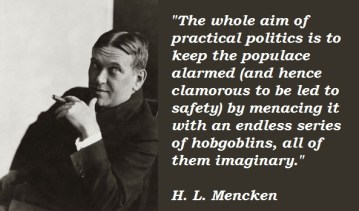
We are being fed a tangled web of facts and data woven to further an agenda by spinners adept at using truth to lie or mislead or to “shape a narrative.”

My own agenda is to try to help people understand the world through the use of reason and rationality.  I am biased in favor of freedom, individual rights and liberty, free markets, and capitalism.  I took an oath to support and defend the Constitution of the United States.  Once I did that wearing a uniform, now I’m trying to do it in part with this blog.  To that end, when I cite references or statistics or other data, you can bet I tried to find sources or data that support my point…but I also will tell you that.

The leading adversaries in the gun control/gun rights debate do the same thing, except that they are much less likely to tell you their bias or agenda like I just did. The people who want more gun control, or even full confiscation, know that they are up against the 2nd Amendment.  They will use, or misuse, every statistical trick, fact, and rhetorical tactic in a way that makes gun violence in America seem as bad as possible.
mencken

Conversely, there are people who would have us believe that the entire mass media is hell-bent on eradicating guns from America, or that Liberals just don’t get the concept that making something illegal won’t make it go away. They will also use, or misuse, sources and data to back up their positions.

Here are  a couple of tricks spin-meisters like to use:

Use absolute numbers vs rates to make a comparison between populations. The Wall Street Journal article does this.  It claims the US leads the world in mass shootings.  They are using absolute data to back that claim.  It is a fact that the US has more mass shootings than any other developed nation…but that is not the whole story. The US has more people and more guns than the rest of the developed countries, so of course we will have more mass shootings and more deaths, in absolute terms.  But do we have the highest death rate from mass shootings?  Nope.  We’re somewhere in the upper- middle. So which country is the worst? Would you believe it is statistically more likely that someone in Norway (?!) will die in a mass shooting than in any other developed country? That makes President Obama’s June assertion incorrect. Mass shootings do happen in some other developed countries with as much or more frequency per capita than in the US.

Omit context:  How many of the mass shootings in the US are justified self-defense (i.e. not a crime)?  We are not told.  How many are being committed by perpetrators with weapons that are already illegal to possess? We are not told. How many perpetrators were in the country illegally? How many were crazies off their meds who should not even be in public unsupervised? We are not told. How many happened at places where it was already illegal to have a gun at all (i.e. so-called “gun-free zones”)? We are not told. How many were attacks by terrorists? We are not told.  It is factual, but misleading, to merely count up incidents and report them without providing any context.

Another way to omit context: Make a crisis out of some aspect of a problem that supports your point, while ignoring or evading that the larger problem is within normal bounds. Mass shootings are but a subset of shootings, which are but a subset of violence, which is but a subset of causes of death.

Is there some other cause of death that is more of a problem than mass shootings? If so, why isn’t it getting as much attention?

In fact, there are several. The top ten causes are various diseases, accidents, and suicide. The homicide rate is roughly only half the suicide rate. Sadly, Heart attacks, cancer, accidents, diabetes, and suicide are not very newsworthy in and of themselves, but a killing spree is high drama.

So is the mass shooting problem as bad as we are led to believe? I’ve given you a peek behind the curtain, but you’ll have to decide that for yourself.

*Here is a mild example of the kind of alarmism I am referring to:  The Mass Shooting Tracker data listed above clearly indicate there are very nearly enough mass shootings (according to their unstated definition of mass shooting) to equal one per day over the last three years.  A PBS article citing this very same source ran with the headline “More than one mass shooting happens per day in the U.S., data shows.” Call me guilty of splitting hairs, but claiming a source indicates “more than one per day” when the data show “nearly one per day” is either sloppy exaggeration, ignorance of the length of a year, or irresponsible sensationalism.

Moderating the Chain-Reaction Gun Debate

guns

By Mike Cronin

The recent shootings in Paris, San Bernardino, and Colorado Springs have brought out the usual heated debate over guns and gun control.  Perhaps we can moderate the chain-reaction with a bit of reason by dispelling a few myths:

Myth: Gun violence is exploding in America. Mass shootings are up, and more people than ever are being killed by guns.

Fact 1: Not true. It’s very hard to find source material on this issue that is reasonably free from bias – either liberal or conservative.  The least-biased source I found, Pew Research, shows that “National rates of gun homicide and other violent gun crimes are strikingly lower now than during their peak in the mid-1990s, paralleling a general decline in violent crime, according to a Pew Research Center analysis of government data.

Fact 2: Even if we set aside any policy or philosophical agenda on the part of the media, consider that news organization select stories based on several factors of “newsworthiness.”  “Mass shootings” fit several of these criteria.  They are sensational stories. It is good business to hype sensational stories; ergo killing sprees get lots of coverage…and perpetuate a sense of dread or crisis.   It’s just not as sexy to report that “no one was shot today” when an armed citizen deterred a gunman from committing a violent act.

Myth: Why do you need a gun when you can just call the police?

Fact: The average number of police officers in cities with 50,000 or more residents is 17 cops per 10,000 people.  When you account for shift work, days off, and detectives, supervisors, and special teams (like SWAT), one quarter or less of those 17 will be uniform-wearing officers “on the street” available to respond at any given time.  You might be able to call the police, but it’s very unlikely they will arrive in time to get between you and whatever or whoever is threatening you.

Myth: The police have to protect me.

Fact: No they don’t.  They are obligated to protect society as a whole via the deterrent value of investigating crimes and arresting criminals, not protecting you as an individual.  Don’t take my word for it; the Supreme Court has maintained this position over several cases dating to at least 1981, including Castle Rock v. Gonzales and Warren v. District of Columbia.

Myth: The Second Amendment was about arming the militia, not the average citizen.

Fact:  The Supreme Court ruled in D.C. v. Heller that the 2nd Amendment affirms the individual right to keep and bear arms.  The founders themselves made clear in their writings independent of the Constitution and Bill of Rights that the people must not be prevented from owning and bearing firearms. Consider these few examples from some of the most prominent founders:

“Firearms stand next in importance to the constitution itself. They are the American people’s liberty teeth and keystone under independence … from the hour the Pilgrims landed to the present day, events, occurences  (sic) and tendencies prove that to ensure peace security and happiness, the rifle and pistol are equally indispensable … the very atmosphere of firearms anywhere restrains evil interference — they deserve a place of honor with all that’s good.” -George Washington

“The supposed quietude of a good man allures the ruffian; while on the other hand arms, like laws, discourage and keep the invader and plunderer in awe, and preserve order in the world as property. The same balance would be preserved were all the world destitute of arms, for all would be alike; but since some will not, others dare not lay them aside … Horrid mischief would ensue were the law-abiding deprived of the use of them.” -Thomas Paine

“The great object is that every man be armed.” and “Everyone who is able may have a gun.” -Patrick Henry

“Those who hammer their guns into plowshares will plow for those who do not.” -Thomas Jefferson

“The constitutions of most of our States assert that all power is inherent in the people; that … it is their right and duty to be at all times armed; … ” –Thomas Jefferson

“The best we can help for concerning the people at large is that they be properly armed.” -Alexander Hamilton

The bottom line: 1. Gun violence, though dreadful, is not as bad as you are lead to believe. 2. You are responsible for your own self-defense, not the police!  3. The right of the individual to own a firearm is absolutely what the founders intended to protect, and what the Supreme Court has upheld, in the 2nd Amendment.

Disagree?  let’s hear it!

Got Reason?

By Mike Cronin

It’s hard to know what to believe these days.  The mainstream media cares about ratings more than veracity or depth, so there’s always an undertone of urgency to the news.  Likewise, pundits are out to sell books, increase circulation of their columns, and keep their names on the air, so they make a living off of controversy.  Worst of all, sophisticated ideologues are adept at hijacking issues or movements and turning them to their own purposes.

How can we filter this constant stream of misinformation and disinformation and get to something resembling the truth?

We could do worse than to try using reasoned thought.   Here are a two examples:

The controversy:  Vaccines.  On the one hand, people argue that vaccines are safe and effective, and that not getting vaccinated puts not only the unvaccinated person at risk of contracting various diseases, but the vaccinated as well.  On the other hand, people argue that vaccines are not nearly as safe as they are touted to be, and they can cause more harm than the disease they are meant to protect us from.

A dose of reason:  Vaccines have proven highly effective (but not perfect) at greatly curtailing diseases such as Polio, Mumps, Measles, Small Pox, Typhoid, and Rubella.  Very few people, (but not zero) suffer any ill effects from receiving FDA-approved vaccines (unproven, or experimental vaccines, are a subject for another post).  A mercury-based preservative called thimerosal is used in some vaccines, but it was phased out of vaccinations meant for children beginning in 1999.  A sampling of anti-vaccine literature would have us believe thimerosal and other substances in vaccines can cause autism or other ill effects. There is no hard proof of this.

Bottom line: On balance, vaccines are an overall benefit, though they are imperfect. We should not disregard the good just because it is not perfect, especially if “good” is the best we have. The extreme low risk of side effects compared to the very real risk of contracting a disease suggest that it is generally safer to get vaccinated than to refuse to do so – but do your homework.

The controversy: Climate Change.  I have remarked on this in previous posts, so I will not go into it deeply here other than to sum up:  The climate may be changing, and human activity, especially carbon emissions, may be the main contributor, but that is far from proven.   To paraphrase Carl Sagan: if you intend to prove an extraordinary claim, you must exhibit extraordinary evidence.  You cannot do that when:

  1. Your change your theory to fit the times, but not the facts (the fear was global cooling in the 70s, then it became global warming in the 90s, now it’s “climate change”)
  2. You change your facts to fit your theory (Climategate)
  3. You vilify critics as heretics (aka “deniers”) instead of countering their arguments
  4. You use muddied language (e.g. “Consensus: 97% of climate scientists agree”). That’s the same as saying “the scientists that agree, agree. Those who don’t, disagree.” In other words, there is no consensus among climate scientists!
  5. Your organizing body is political, not scientific (IPCC)
  6. The “solutions” you propose penalize carbon-emitting activities in developed countries and allows the same activities in undeveloped countries – as if the climate recognizes borders or economics (e.g. Kyoto Protocol)

A reasoned view: Human-caused climate change may be real, but the “science” used to prove that is far from “settled,” and the implied catastrophe is far from certain. In fact, climate science is driven far more by politics and funding than by the desire to know the objective truth.

Bottom line: Take dire warnings of climate catastrophe with a grain of salt and don’t feel guilty for enjoying your modern standard of living, but don’t grossly pollute through sheer neglect or wanton disregard for the environment.