Not so Random Matter?

hqdefault

By Mike Cronin

I started out thinking I had several disparate items for this week’s post, but they all seemed to tie together:

It’s science-project season at my son’s school.  He brought home an information/instruction packet.  He had to get a parent to sign the first page – which is a letter to parents explaining that the kid has to do the science work on his own, but parents can help with the non-process portions of the project (e.g. helping the kid get materials) etc., etc. On the reverse of the first page is a progress tracker.  The kid has to get his parents to sign each time he hits a milestone on the project.  My son got dinged on the first milestone because I didn’t sign it.   The first milestone is to have a parent sign the letter to parents.  Yes, that’s right: The purveyors of the science project’s hand-out material failed to notice they are requiring a parent sign the back of a form in order to certify that the parent signed the front of the form…and they make the kid take the hit if the parent doesn’t jump through the hoop.  On a science project. You know, Science?  The subject where they teach kids logic, critical thinking, precision, peer review, attention to detail, right? Little things like that.

Speaking of science, I work in a small office with five other people. All five are scientists and/or engineers. Our office serves as a kind of internal think-tank. We do quantitative and qualitative analysis, among other things. I am the only one in the office who does not have a degree in science, technology, engineering, or math (STEM).  My colleagues can run rings around me on any kind of math-based reasoning or problems.  On the other hand, I usually get the better of them when it comes to verbal expression.  I like to tease them that they are all experts at qualitative reasoning, while I am the quality. At any rate, our work sometimes involves (mathematical) models and simulations. Someone in the field once quipped that “all models are wrong, but some models are useful.”

Given the public’s current fascination with the phenomena of “fake news,” I think an adaptation of the “models” aphorism is apropos as a guidepost for judging the efficacy of anything in the media: “All news is fake, but some news is useful.” Two cases in point:

Some right-wing media sources are reporting that Christiana Figueres, Executive Secretary of U.N.’s Framework Convention on Climate Change, as much as revealed that the UN’s plans to combat climate change are really a set of blinders to hide the real agenda: the destruction of capitalism. While the UN is no friend of capitalism, context matters, as does the thing that is not being said.  Figueres undeniably advocates for the alteration of the global economy when she says:

“This is the first time in the history of mankind that we are setting ourselves the task of intentionally, within a defined period of time, to change the economic development model that has been reigning for at least 150 years, since the Industrial Revolution,”

Note that she stops short of stating that the current global economic development model that must be changed is capitalism (it isn’t, by the way – it’s a mix of capitalism and controls), or describing what model should obtain.  I would not be surprised to learn that Figueres is indeed anti-capitalist, nor would I be surprised to learn that UN efforts to combat global warming are indeed a smokescreen to hide the destruction of capitalism, but Figueres’s statements fall short of being a smoking gun – more like an eyebrow-raiser. The subject bears watching.

Meanwhile, on the left side of the fake news spectrum, we have the New York Times’ headlines for Friday’s attack at the Louvre in Paris by a “lone wolf” Islamic jihadist. Their first headline read: “Louvre Museum Evacuated after French Soldier Opens Fire.” At best, this headline leads you to believe the incident revolved around the actions of a French soldier. At worst, it leads you to believe a French soldier went nuts and started shooting up the Louvre.  A few hours later, the headline had changed to read: “Assailant Near Louvre Is Shot by French Soldier” Again, the French soldier’s actions seem to be the focus.  As mentioned previously, context matters, and what is not being said matters. What the vaunted New York Times neglected, or purposely refused to highlight in their headlines, was that a man shouting “allahu ackbar!” (i.e. “God is great” in Arabic) and wielding knives attacked some French soldiers and was shot by one of them in response.

It would not do to depart from The Narrative by highlighting yet another attack by a Muslim against Western targets, even as the militant arm of the “tolerant” left is convulsing over President Trumps’ recent “anti-Muslim” immigration restrictions, now would it? Instead, the “Newspaper of Record” felt it must mislead readers with deceptive headlines. I’m not suggesting the Times should have gone with “Islamo-Fascist Nut-Job Takes Knives to a Gun Fight in Paris; Wins Darwin Award Nomination,” but something like “Assailant Shouting in Arabic Shot by Soldier At Louvre” might have hit the right balance between not jumping to conclusions about the attacker’s religion, intentions, and connections, and the response of the soldiers.  All news is fake, some news is useful.

Another Crack at Illegal Immigration

170126-mexico-us-border-wall-1214p_b70d64f76c9ced7e1290cdbc853a4d16-nbcnews-ux-600-480

Mike Cronin

This is a revision of my post dated November 23, 2014.

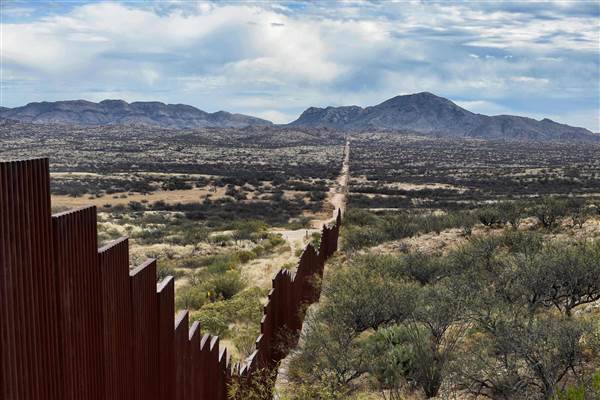
President Trump has partially fulfilled one of his most controversial campaign promises.  Earlier this week, he signed an executive order to build a wall along the Mexican border, and his administration floated the idea of a 20% tax on Mexican imports to pay for the construction.  The mainstream media is predictably up in arms.

While I am encouraged by Mr. Trump’s attention to the illegal immigration issue, I find myself in disagreement that a wall is the right solution – but not for the same reasons as the crowds of critics assailing the president.  I’ll explain in a bit, but let’s untangle the knot a little first:

If you are an elected Democrat, the illegal immigration “problem” is: how to make it legal for illegal immigrants to vote? There are millions potential voters out there who cannot legally participate in national elections. How to solve that problem? Adopt narratives that simultaneously paint the illegal immigrants as victims who need rescuing and those who see things differently as racists. Then legalize the immigrants (or some portion of them) somehow, and/or prevent the passing of laws that require voters to produce a photo ID proving their eligibility.

If you are in one camp of elected Republicans, the illegal immigration problem is that there are millions of potential Democratic voters out there who might vote illegally or who might become legal voters at the stroke of a pen. How to solve that problem? Adopt narratives that illegal immigrants are by definition criminals just for being here, and who steal jobs from American citizens, who vote illegally, and who cost us a lot of money in “stolen” benefits and entitlements.

If you are in another camp of Republican lawmakers, the problem of illegal immigration is that you are fearful of alienating constituents of Latino or Hispanic origin, so you go along with Democrats on immigration issues.

If you are in yet a third camp of elected Republicans, the illegal immigration problem is that you receive significant campaign funds from donors who employ illegal immigrants, so you also tend to vote along Democratic lines on immigration.

If you run a manual-labor intensive business that can’t afford to pay the minimum wage, paying an illegal immigrant in cash under the table is an attractive option.

If you are a desperate person from Mexico or an impoverished country to our south, getting to America for the opportunities and freebies is an attractive option.

If you are a cunning and morally flexible person, exploiting the stream of immigrants headed north is an attractive option.

I believe the real problem with illegal immigration is: too much government.  Here’s what I mean:

  1. Our federal and state governments blatantly disregard current immigration law via policies like “Catch and Release,” “sanctuary cities,” and the “Deferred Action for Childhood Arrivals” directive (i.e. President Obama’s executive order that established the so-called “Dreamers”). Our federal government maintains at least two federal police agencies (Immigration and Customs Enforcement and Customs and Border Patrol) charged with enforcing those same laws. In so doing, our lawmakers are essentially telling our protectors: “Your written job description says ‘enforce the law,’ but your real job is just to have a job so that I can tell voters I did my job by creating your job.” How dysfunctional is that?
  2. In addition, our current immigration law is too byzantine and restrictive. Currently, it’s fairly easy to visit the US, but unless one can claim to be one of the “Three R’s” (Related to a citizen, Rich, or Remarkable), it is extremely difficult to attain a green card or citizenship.

I think Mr. Trump’s actions show promise for resolving the dysfunctional aspect of immigration enforcement, but a wall is too dystopian, sinister, and unnecessary. Functional enforcement policies and increased presence all along the border will reduce the flood of illegal immigrants to a trickle. On the other hand, the bureaucratic burden to those aspiring to remain here longer than a visa allows still remains to be addressed.

So how do we solve such a multi-faceted problem?  With a multi-pronged strategy that is consistent with limited government:

  1. Enforce existing law
  2. Control the border via increased presence
  3. Update the law to minimize bureaucracy and maximize freedom – by addressing all of the competing interests and reducing or eliminating the motivations that lure our government into violating its own laws:
    • Make it much easier to become a legal “permanent resident” and moderately easier to become a citizen. This benefits immigrants wishing to live and work here permanently, and it would benefit lawmakers in both parties who represent immigrant constituencies.
    • Create a migrant worker visa AND migrant worker wage scale & tax status. This legitimizes hiring migrant workers and paying them less-than-minimum wages. This would benefit migrant workers by making it legal (and safer) to do what they are already doing, and it would benefit industries that can’t be profitable paying the regular minimum wage to unskilled workers. It will be perceived and promoted as a threat to citizen minimum-wage earners…but that is another Gordian knot – which I addressed here.

The Network Revolution

global-network

By Mike Cronin

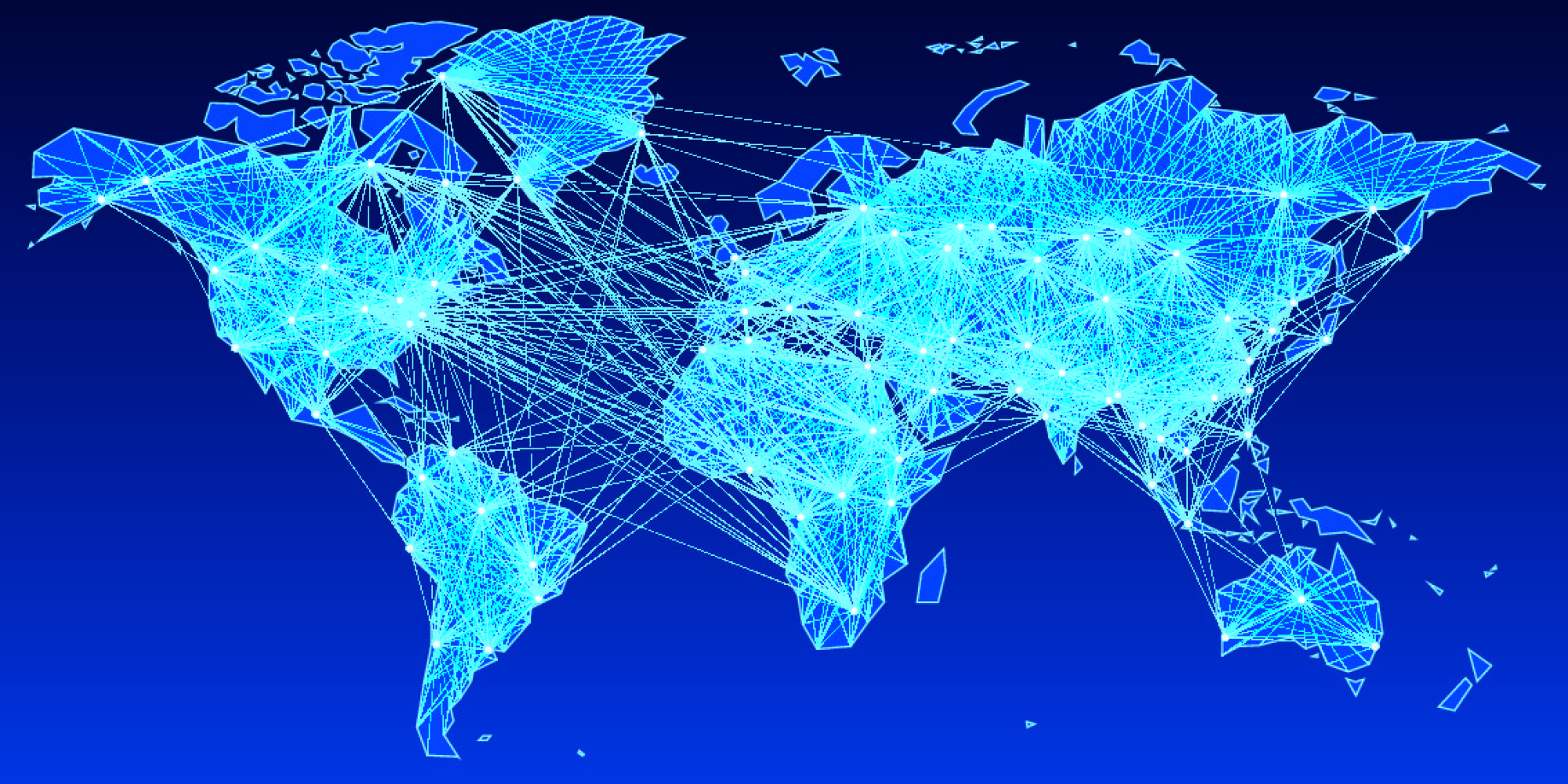
Every so often you come across a book that leads you to multiple epiphanies.  “The Seventh Sense” by Joshua Cooper Ramo is turning out to be such a book for me (I haven’t finished it yet). Ramo’s theme:  Networks are the next revolution, are you ready to capitalize on that?  This post is not quite a book review – it’s more a chronicle of some of the thoughts it has prompted so far.

Historians, archaeologists, and geologists like to describe history and pre-history in terms of epochs, periods, and ages, such as the Cretaceous Period, the Jurassic Period,  the Stone Age, the Iron Age, the Space Age, etc.  In human history, the Renaissance, the Age of Reason, and the Enlightenment brought Western Civilization out of the Dark Ages and mark the beginning of the increasing pace of change. They signaled the advancement from superstition to science.  Those who best understood the power of reason over tradition were best –positioned to become the elite.  The Industrial Revolution marked a similar point – those who best understood the promise of industrializing were best positioned to become the elite: Getty, Rockefeller, Carnegie, etc.

Since that time we’ve had the Gilded Age, Progressive Era, the Space Age, and the Information Age; and again, those who could best foresee the advantages of the advancements of their time became the elites. Howard Hughes. Bill Gates. Michael Dell.

The next historical paradigm shift may very well be centered on harnessing the power of networks. Human networks started small with clans and tribes, and then grew into cities and nations and empires…which built physical networks of trade routes and roads.  Trans-oceanic shipping started to tie the nations, cities and empires together across and around the globe, but the connection speed was very slow – weeks or months, or even years.

Steam power shrunk that time to days or weeks across the oceans…and continents, on rail networks. The telegraph and radio and television accelerated message transmission to the speed of light, but the bandwidth was still very narrow.

Along came computers and the internet, and advanced us to the current state of affairs: instant, high-bandwidth communication to almost anywhere on the globe.  Here’s where Ramos comes in: We are nodes in networks, be it human, mechanical, or electronic.  The people who best understand networks and how to leverage their advantages are becoming, or are poised to become, the next generation of elites. Jeff Bezos. Mark Zuckerberg. Sergey Brin.

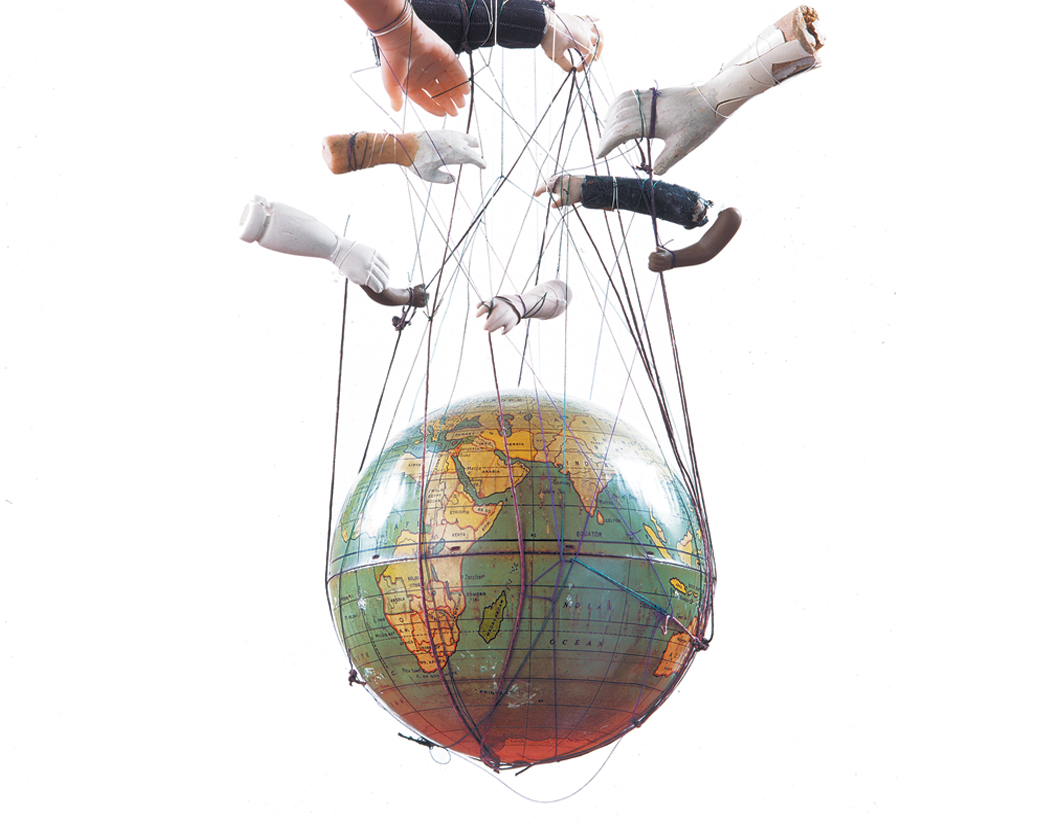
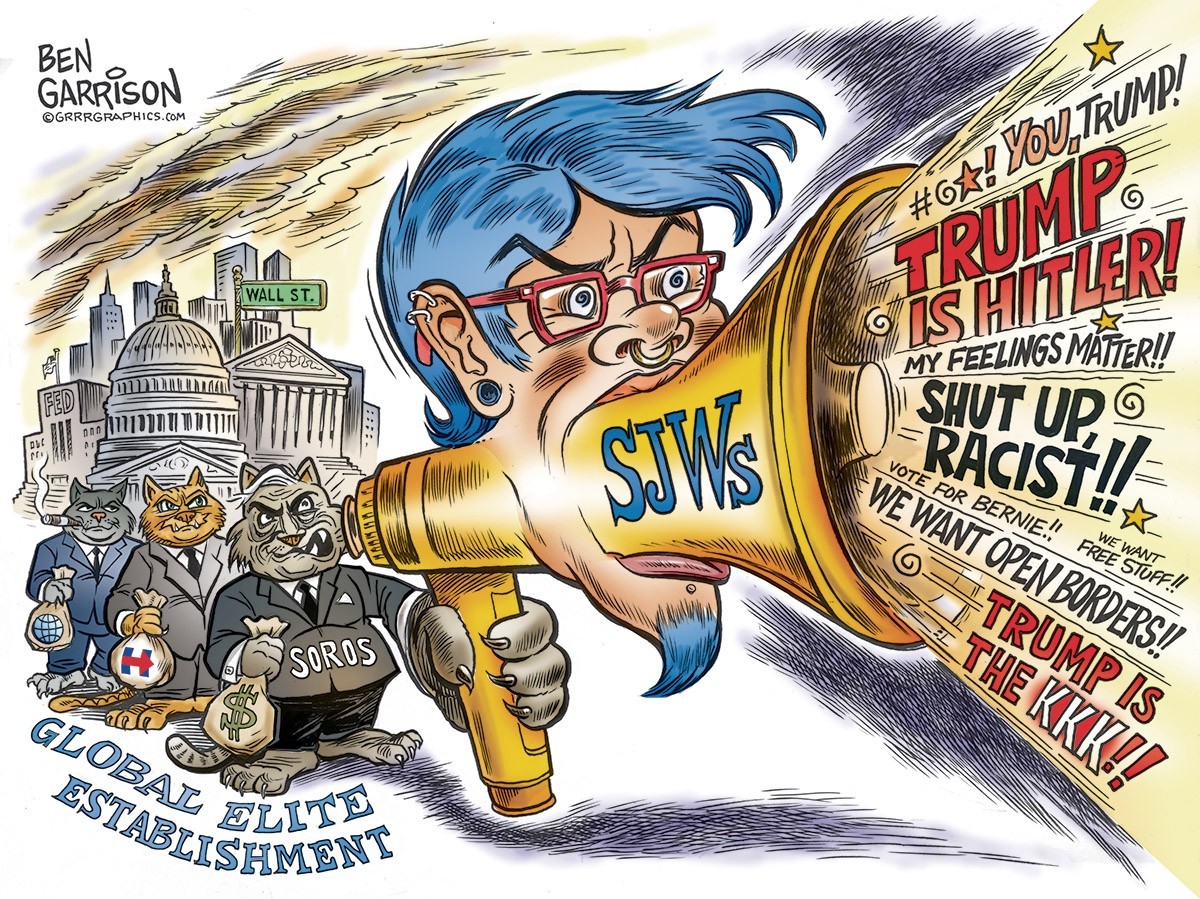
In my view, such a radical paradigm shift could lead to the replacement of the nation-state (i.e. country) as the model for organizing human geopolitical affairs.  Instead of a world divided into hundreds of countries with hundreds of governments, imagine two global entities: The connected world, and the isolated world. The so-called Globalists may be onto this concept, but they generally have been going about achieving it the wrong way.  Some of them were (or still are) putting the cart before the horse.  They had already attained some measure of “elite-ness” in the existing Space Age and Information Age paradigms, then anointed themselves as our betters and purported to tell us how we were to usher in their vision of things – with themselves on the top, people like George Soros.  Many such globalists miscalculated badly with the US election, while President Trump’s campaign team represents an effective example of the new paradigm.  Trump’s message may smack of nationalism, but his campaign strategists still shrewdly demonstrated a facility with the power of networks that eluded the globalist elites.  The Trump campaign spent half as much money as Hillary Clinton’s, yet it harnessed the power of social media networks to connect “nodes” the Clinton campaign ignored and to bypass the mainstream media.  This strategy was at least partially responsible for Trump’s electoral win.

Time will tell whether his Cabinet and other advisers will show the same prescience as his campaign strategists.  Meanwhile, you and I and our children must learn to harness the power of networks if we are to remain relevant in the coming Network Revolution.

Three Tips for Filtering the Feed

louie-psihoyosinforevolution-e1447273790627

By Mike Cronin

Last year I wrote about the war on Christmas. This year the election of Donald Trump has overshadowed the usual brouhaha over nativity scenes at City Hall. So this year I thought I’d go with something a little more practical. The guiding purpose of this blog is to make sense out of the vast array or “manufactured truth” that we are constantly bombarded with. Here are a few tips and tricks to deal with it every day:

201016msm

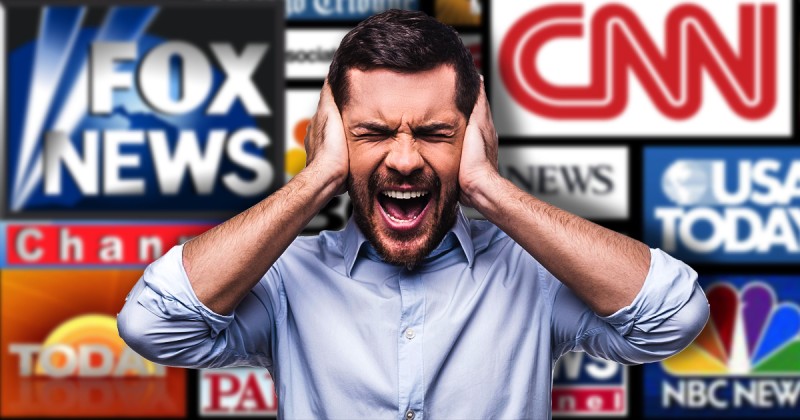
  1. Consume news skeptically: the first thing you need to remember about the news media is that their first concern is to sell advertising. Their second concern is often to reinforce a narrative or advance an ideological or even partisan agenda. Running in third place is actually informing you about the new events of the day. There has been much ado recently about fake news. Given the first and second criteria just outlined, almost all the news is fake to one degree or another. When there is some crisis happening, such as 9/11, and the news “breaks in” to tell us about the event as it’s happening, they haven’t had much time to adapt it to their preferred narrative. In those cases we are usually getting real news, even if some of the details are inaccurate while the debris is still falling or the smoke is still rising. As soon as one of these stories acquires its own theme music, it’s no longer breaking news. At that point you must start taking it with a grain of salt. In reality, the best way to glean something of the truth may be to examine headlines from multiple news sources, to include some foreign outlets such as the Economist, BBC, and perhaps even Al Jazeera or Xinhua.  Even so, while those sources may tell you what’s happening and why, they seldom articulate what it means and what will likely happen because of it. Personally, I like to scan the news headlines, but I also like to read intelligence. One of my favorite sources is StratFor; a private “intelligence” firm that uses the lens of geopolitics to explain the world.

geopolitics

  1. Geopolitics, as you might have guessed, is not just about geography or politics, but about how geography enables or constrains political and/or economic action between nations and other actors. For example: The United States is largely regarded to have the largest economy and the most powerful military, and we are generally thought of as being the world’s only superpower. But it is not only our military might or our form of government that has led us to this condition. The United States is this way in part because of where it’s at and what it has. The most striking example of this is our river and coastal waterway system. “The Greater Mississippi Basin together with the Intracoastal Waterway has more kilometers of navigable internal waterways than the rest of the world combined. The American Midwest is both overlaid by this waterway and is the world’s largest contiguous piece of farmland. The U.S. Atlantic Coast possesses more major ports than the rest of the Western Hemisphere combined. Two vast oceans insulated the United States from Asian and European powers, deserts separate the United States from Mexico to the south, while lakes and forests separate the population centers in Canada from those in the United States. The United States has capital, food surpluses and physical insulation in excess of every other country in the world by an exceedingly large margin.” (From StratFor’s “The Geopolitics of the United States.”) Give these advantages, it would have been a shock if the US had not become an economic powerhouse! By way of contrast, consider the difficulties faced by a landlocked country. Afghanistan, for example, is estimated to have over $1 trillion worth of natural resources in the form of valuable ores and minerals. Yet owing to the difficulty of getting to and from Afghanistan and navigating within its borders, and the fractured nature of its tribal society, Afghanistan has never realized its economic potential, and is unlikely to do so in the foreseeable future. Where the United States has abundance of access, Afghanistan has a dearth. Geography has dealt a difficult hand to landlocked countries, but there is at least one way to overcome that difficulty: adopt a Western form of governance that recognizes individual rights and promotes liberty. Switzerland is the epitome of a country that can overcome geographic isolation by staying neutral in the conflicts of its neighbors and giving its people freedom.
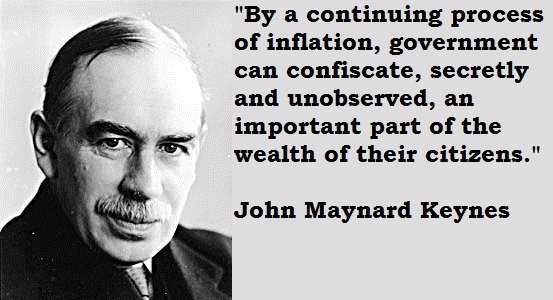
  1. Like most, I’ve had geography classes, and classes on US. Government, but I never had a “geopolitics” class per se in my formal education. Our schools are set up to teach material as discreet subjects, but our brains are not set up that way. We learn and make memories by association. Another example might be economics. The word economics conjures up thoughts of central banks, such as the Federal Reserve, changing interest rates and conducting “quantitative easing.” Those elements of economics were among the set popularized by John Maynard Keynes, and “Keynesian Economics holds sway among the vast majority of economists today.  9i7jfxdepbiuxmllhv6wxoykazrjmeynuapn20ngnu0But in a broader sense, economics is the study of human activity. This goes hand in glove with geopolitics, as does history. Come to think of it, so does psychology. What if there was a way of learning economics (and other subjects) in a way that more closely mimics the way the human brain learns? Under such a rubric, there would be far fewer barriers between what we think of as the traditional subjects. Such a field exists.  It’s called “praxeology.” In short, praxeology is the study of volitional human action, and it is a basis for the Austrian school of economic thought.  We can borrow the concept to help us understand the world without trying to become economists ourselves.

Using these three tools (skeptical news consumption, understanding how geography can enable or constrain political and economic action, and removing the artificial barriers between “subjects,” and examining human action holistically), we can better learn to Filter the Feed.

Random Matter 2

968361

By Mike Cronin

The tidal wave of angst unleashed by the election of Donald Trump is not wholly explainable by his crudity, political outsider status, media and polling industry failures, hacked emails, possible election tampering, or Hillary Clinton’s campaign style.

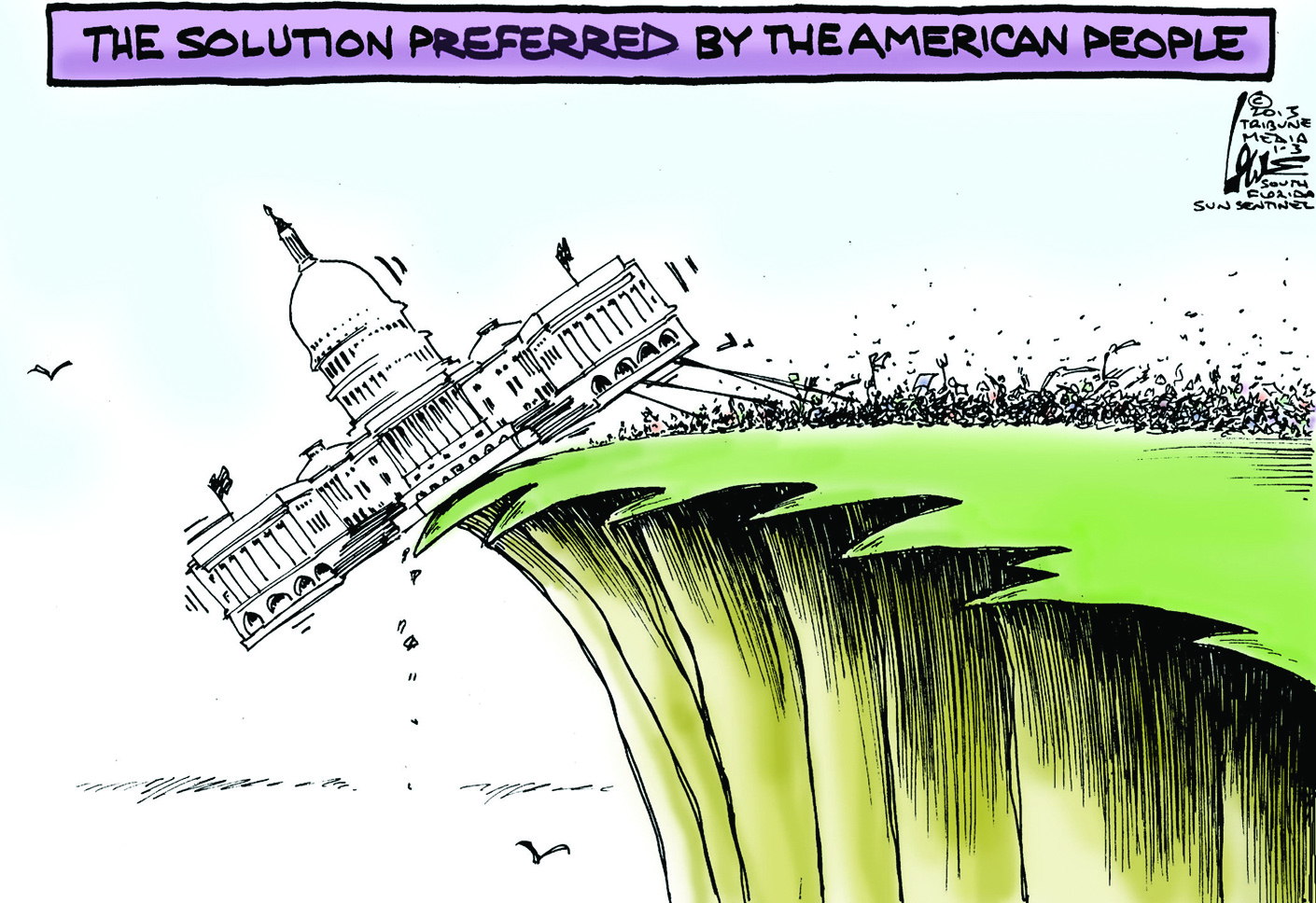
For too long, the beltway establishment has been driving this country down a two-lane country road that ends at a cliff: tyranny. When the liberals where at the wheel, the conservatives would call the cliff “socialism” and say the Democrats were racing us towards it, while the liberals would say that conservatives were steering us headlong towards the “fascism” cliff when Republicans had the wheel.

It was always the same cliff.

lowe-cliff1

Now the liberals are howling that Trump will stomp on the accelerator, and the “Never Trump” branch of the conservative establishment isn’t sure that he won’t do just that.  Nor am I.

What I am more confident of is that for perhaps only a brief moment, by electing Trump, the passengers have made ALL of the drivers slow down and take notice of the impending danger. Even if Trump turns out to be wise at the wheel, we may be in for a period of painful adjustment.

***

0094e7c2-675b-4b13-b325-e846ce30e305

Have you ever been irritated by Pecksniffian pipsqueaks who take any statement that does not absolutely validate or corroborate what they say and allege it means exactly the opposite?

Pipsqueak: We have to raise the minimum wage for the poor. (Sips his latte.)

Host: But won’t that mean there will be fewer jobs?

Pipsqueak: Hate speech! What do you have against poor people?  Are you a one-percenter? I can’t believe we still have troglodytes like you in this country!

Host:  But I was just-

Pipsqueak: I have to go. My limo is double parked, and I’m late for therapy.

***

6189757e341e0250bd04e817c3808ffe

Congress is now considering bills that would make it mandatory for females to register for the draft with Selective Service.  In my opinion, obligatory service of any kind is anathema to freedom.  You cannot protect freedom by taking it away. It is also not very effective to staff a high-tech, professional military with conscripts. It takes an inordinate amount of effort to train, motivate, and discipline people who are potentially there against their will…though it can, and has, been done.

It is far more efficient, effective, and easier to train qualified and self-motivated volunteers.

Wisely, the US stopped the draft in 1973…but unwisely kept the Selective Service, and is now taking a step in the wrong direction, IMO.  Instead of making females register, it should stop requiring anyone to register!

On the other hand, I would be in favor of examining the idea that we stop automatically conferring citizenship by birthright.  The idea that one should have to earn citizenship, with public service being one avenue to that end, has some interesting potential.

Globalism vs. Trumpism

9yedzw-1

By Mike Cronin

A common thread in the alarms raised by the election of Donald Trump is the concern that his brand of nationalism/populism will turn the US isolationist, or worse, into a fascist dictatorship. Why are globalists, themselves no friends of individualism, alarmed at such a prospect?  It might help to understand more about the complexities of globalism/globalization.

According to http://www.globalization101.org/what-is-globalization/;

“Globalization is a process of interaction and integration among the people, companies, and governments of different nations, a process driven by international trade and investment and aided by information technology. This process has effects on the environment, on culture, on political systems, on economic development and prosperity, and on human physical well-being in societies around the world….

…Globalization is deeply controversial, however. Proponents of globalization argue that it allows poor countries and their citizens to develop economically and raise their standards of living, while opponents of globalization claim that the creation of an unfettered international free market has benefited multinational corporations in the Western world at the expense of local enterprises, local cultures, and common people. Resistance to globalization has therefore taken shape both at a popular and at a governmental level as people and governments try to manage the flow of capital, labor, goods, and ideas that constitute the current wave of globalization.”

Don’t get me wrong.  There is nothing inherently wrong with globalization per se.  In fact, taken at face value, it is probably a net benefit to humanity. Think about the spread of modern medicine and information technology, for example.  I think unfettered international free markets would be a great thing.  I have often presented my bias for free-market capitalism.  My bias has no border.  Unfortunately, the only unfettered free markets that exist today are the “black” markets for illicit goods, and unfortunately, human trafficking.  The rest of the global market is beset by trade imbalances, currency manipulation, defaults, sovereign debt crises, bailouts, and other “fetters.”

Given that explanation, the shape of the globalist critique against Mr. Trump (and the recent “Brexit” vote) begins to emerge.  Among the proponents of globalism are those who have been unethically enriched by manipulating matters at the diplomatic, international finance, and CEO levels.  Many of the proponents of globalism are not proponents of an unfettered free market. They seek to establish and/or perpetuate imbalances that they can profit from.  These are not productive people; they are more like vultures or parasites. These are the globalists who fear that Donald Trump’s administration, a Republican majority Congress, and a conservative Supreme Court will upend the existing “globalist” order – the globalists who have the most wealth and power to lose.

And that is why we must also examine nationalism.  The elite manipulators of international intercourse may be parasitical; but that does not make their concern over a rise in Trump-branded nationalism baseless.  Extreme nationalism has led to dark places before. Consider the word “Nazi.” It’s a German abbreviation for Nationalsozialist, i.e. “Nationalist Socialist,” hence the anti-Trump crowds’ easy conflation of Trump’s “America First” populism with fascist nationalism.

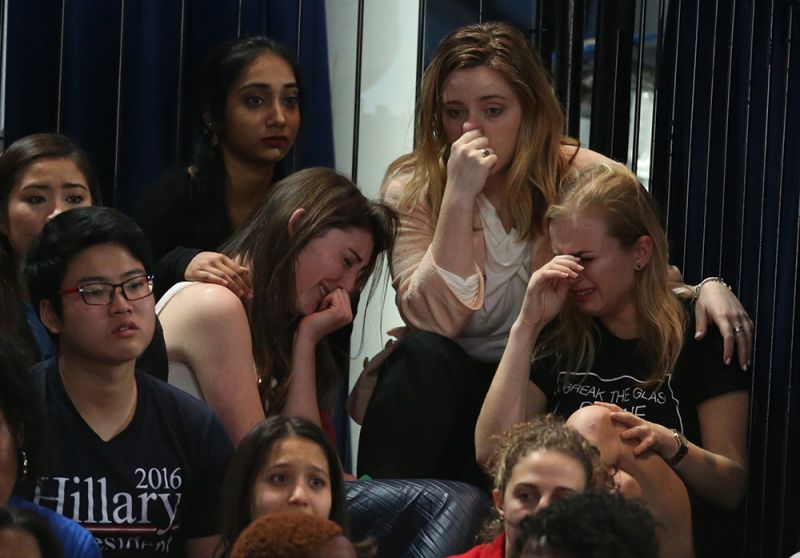
Will Mr. Trump’s brand of nationalism lead to that same dark place?  Did we just elect a tyrant-in-waiting?  Time will tell.  If Trump does become a dictator, I wonder: will the lachrymose legions lamenting Hillary’s loss begin to see the wisdom of the Second Amendment?

Ten Observations on Election 2016

hillary-clinton-supporters-cry-over-election-loss

By Mike Cronin

Donald Trump’s victory certainly stirred up a lot of clamor and noise this week.  Let’s see if we can herd some of the cats:

  1. Democracy has failed. The people chose Hillary Clinton by 200,000 votes, but the electoral victory went to Trump. Our “democracy” cannot fail if we don’t have one, which is in fact the case. We were given a federalist republic under the rule of law. We use democratic processes for some decisions to give the people a voice, but we are not supposed to have a system of straight-up majority rule. As to the electoral vote: It remains to be seen whether any electors will “go rogue” and vote against their “pledge” on Dec 19th, but it has happened before (as recently as 2004).  Of course, it’s never been by enough margin to change the outcome of an election.  In this case, at least 38 would have to be “faithless electors” to get Clinton to 270.
  2. Trump hates immigrants. He hates Mexicans. He hates Muslims. He’s racist.  We’ll, he might. Only he knows for sure.  However, he is married to an immigrant and he has people from all walks of life working for him.  He certainly doesn’t think people should be here illegally, which is not the same thing as hating the people who are or the people who want to be.
  3. Trump is a misogynist sexual predator. His caught-on-camera crudities certainly lend themselves to this narrative. There’s little actual evidence and no credible accusers that demonstrate he hates all women or has assaulted any of them, but Trump’s verbal vulgarity in this area is one of the most troubling things about him. Still, while Trump has been caught speaking like a sexual predator might; Hillary Clinton continues to aid and abet one.
  4. Trump is going to destroy all of the progress progressives have made over the last eight years. Possibly, but presidents seldom accomplish their full agendas.  Yes, Trump will have a Republican-majority Congress, but it won’t be a super-majority, and the Republican establishment doesn’t like him.  Trump bills himself as a deal maker.  He’ll have to be to get his agenda anywhere.
  5. Trump is going to elevate nationalism over globalism. Both are euphemisms for collectivism; only the boundaries are different. Neither is as good for individuals as unfettered free market capitalism.  There might possibly be temporary beneficial effects for Americans in the shift, especially if our troops come home and small businesses can thrive again.
  6. Trump is an idiot/outsider/politically inexperienced. He certainly does not articulate himself with Obama’s grace, but he is no dummy. In fact, he’s likely quite adept at persuasion (see items five and six on this list). He is certainly gifted at getting free publicity (or at least notoriety) from the very mass-media that hates him. Also, his lack of political experience, i.e. his NOT being a career politician or D.C. insider, is one of the fundamentals that led him to get elected.
  7. What happened with the polls? They consistently gave Clinton the edge! Bottom line: garbage in/garbage out.  The pollsters drew their samples from the same body of “likely voters” they always used, and in some cases “oversampled” Democrats.  The former was neglectful and led to the Democrats believing in their own invulnerability; the latter was a nefarious attempt to convince would-be Trump voters to stay home on Election Day. Once exposed, the revelation likely caused the exact opposite effect. Either way, the pollsters failed to obtain accuracy because they could not, or would not, sample validly.  
  8. FBI Director Comey’s shenanigans (i.e. his announcements regarding the on-again/off-again investigation into Clinton’s email debacle vis-à-vis Huma Abedin’s laptop) comprised the quintessential October Surprise, and it hurt Clinton. It certainly didn’t help, but it’s much more likely that Clinton’s shenanigans hurt Clinton.
  9. Why were Clinton and Trump our candidates? What secret weapon did they employ that none of their competitors had? 30-plus years of universal name recognition.
  10. What does it mean that Republicans gained more seats in Congress, strengthening their majority? They didn’t get a super majority, so there are a few (rare) actions they would have to earn Democratic support for in order to act: Impeaching the president and overriding his vetoes are two such cases. 2. Republicans will get to shape the Supreme Court for the next generation. 3. Republicans now have an opportunity to reverse much of the Democrats’ work over the last eight years. Whether they will actually do so, or get complacent and/or get caught up with internal divisions remains to be seen.

Choosing a Beekeeper?

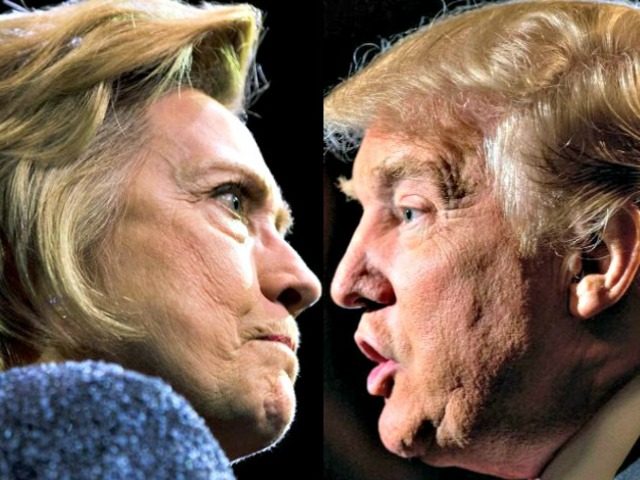
 hillary-clinton-and-donald-trump-face-off-ap-photos-640x480

By Mike Cronin

Today’s item is an update of “Will You Vote for a Beekeeper,” originally posted January 2, 2014.

The most basic (and most commonly employed) model of the political spectrum places Fascism (like Germany under Hitler and Italy under Mussolini) on the extreme right side of the scale, and Socialism or Communism (like the former Soviet Union or modern North Korea) on the extreme left side.  A government, a country, or a person’s political position can be gauged on this spectrum.

The problem with this model is that while the ideologies of Fascism and Communism may differ on the surface, in practice they result in the same conditions for the vast majority of people who live under them: subjugation. There may be distinctions between the two on paper, but in reality both ideologies are collectivist; that is, they espouse that the state, or the party, or the race, or the group, i.e. the collective, is more important than the individual, and that the individual exists to serve the larger group. In other words, both of these forms of politics, Communism and Fascism, treat humans like bees or ants, i.e. as drones (or slaves). The individual’s rights don’t matter (or even exist), only the party, or country (or hive/colony, i.e. collective), matters.

The achievement of the founding fathers was in creating a nation founded on the concept that the individual has rights that are inherent, that is, they are not granted by the state, and that the sole purpose of government is to protect those individual rights. The implementation of this idea was flawed, but still gave rise to a nation that brought more liberty and prosperity to more people than any other in history. One of the hallmarks of the system the founders built is the peaceful transition of power that has attended every presidential election and inauguration (save perhaps Lincoln’s).

One of our most contentious campaign seasons will culminate with the general election on Tuesday.  Consider: Whether a politician identifies as a liberal or a conservative, a Democrat or a Republican, does not matter as much as this: What does his or her character and voting record reveal about their understanding of individual rights?  Mrs. Clinton and Mr. Trump are remarkable as candidates in that each was chosen by their party seemingly on the strength of name recognition over any other factor.  (Both have been in the public eye on a national scale for 30+ years, far longer than any of the other candidates on either side.) They certainly haven’t been selected for their “sterling” personal attributes.  Will we elect one of them based solely on popularity (or notoriety)?  Can either of our candidates be considered defenders of our rights, or are we choosing between beekeepers?

5 Ways to Fight Hobgoblins

panic-button

By Mike Cronin

I often refer to H.L. Mencken’s “hobgoblins” quote: “The whole aim of practical politics is to keep the populace alarmed (and hence clamorous to be led to safety) by menacing it with an endless series of hobgoblins, all of them imaginary.” We see this every day, often with the enthusiastic pot-stirring of the main stream media.

Take today’s headlines, for example.  Rising tensions with Russia over the imbroglio in Syria. Hurricane Matthew. Gold prices. Stock prices. Jobs growth. Giving up control of the internet.  Hillary’s scandals. Trump’s crudities.  Duterte’s bombast. NFL ratings. Crazy clown sightings.

How is all of that really important? How can we ignore the hobgoblins and glean the “ground truth?”

A few rules of thumb can be useful:

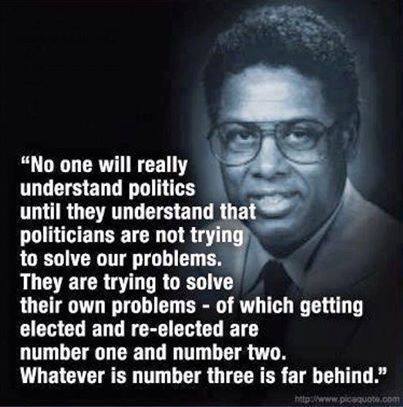
  1. Always keep Mencken’s quote in mind, together with Thomas Sowell’s observation:1931497_10156430011180515_9052930332313088412_n
  2. Get your news from a variety of sources. Journalism has evolved, or more precisely, de-volved, in the face of 24/7 cable news cycles, citizen-chroniclers, and the web.  According to the authors of Blur, the old media’s apex occurred at about the time of the Three Mile Island incident in 1979. CNN came online shortly after in 1980, and the 24/7 news cycle was born. The term spin as euphemism for truth-shaping entered the lexicon at about the same time. Consumers have had to contend with an ever more clamorous, ratings-driven media ever since. Every outlet is biased, but some do a better job of admitting what their bias is (my own, for example, is for individualism, reason, and laissez-faire capitalism) and/or mitigating for it (this reporter, for example, does a commendable job on reporting from Washington D.C. without interjecting his ideology). Alternately, check out the US news from a foreign source, such as BBC, Al Jazeera, or Xinhua.  They are biased as well, but perhaps not about the same things we are. It can be enlightening.
  3. Once the main-stream media have added unique theme music to a particular story, it’s not breaking news anymore. They are trying to turn it into a cash-cow and milk it for ratings.
  4. Most mainstream media operations lean left/liberal/progressive/Democrat, while Drudge, Breitbart, and Fox News (at least until the recent departure of Roger Ailes) tilt right/conservative/Republican – but what if both of those factions are two sides of the same coin? In order to see liberals and conservatives as opposites, you are supposed to accept a left-right political spectrum model with socialism on one end and fascism on the other. To the subjugated souls living under either, there is no practical difference. As the saying goes: All models are wrong, some models are useful.  A left-right / liberal-conservative model keeps you scared of the hobgoblins.  What if we look through a different lens? What if we put individual liberty on one end, and absolute tyranny on the other?  I contend that on such a model, “liberal” and “conservative” establishment politicians are continuously dragging us closer to the tyranny cliff, with only the flavor of tyranny at issue. Using a better model might get us closer to “ground truth.”  Who will lead us to liberty or drag us to tyranny?
  5. One kind of real hobgoblins we must watch for: luminaries with enough wattage to force the public eye to “look away.” Such wattage could come in the form of personal charm or charisma, whereby the figure is judged by their reputation instead of earning a reputation based on considered judgement (e.g. President Obama’s anticipatory Nobel Peace Prize), or via “wagging the dog” (e.g. President Johnson’s incandescent “Gulf of Tonkin” lie).


“…A lot of Dumb Things.”

no-smoking-films-photo-u1

By Mike Cronin

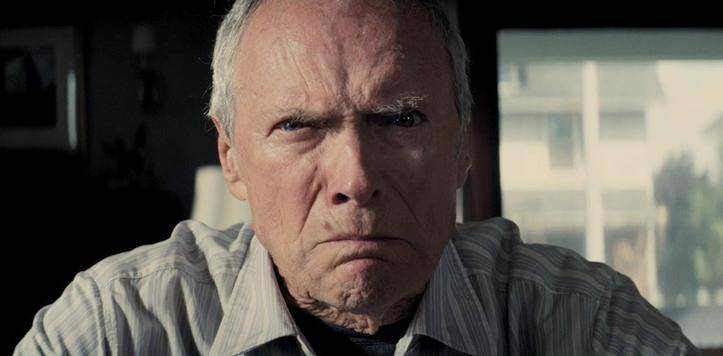
The latest kerfuffle in the culture wars has put Dirty Harry in the camp of Donald Trump.  In the latest issue of Esquire magazine and in other recent comments, actor Clint Eastwood laments political correctness and the attention given to some of Mr. Trump’s brasher statements.  (He did not officially endorse Trump.)

One need not support Mr. Trump, (or any other candidate) to find political correctness troubling.  The First Amendment to the Constitution charges the government to protect our right to speak freely. This is an intolerable condition to control freaks who just know that their ways and opinions are right and everybody’s lives would be better if we just obeyed them. Political correctness seeks to accomplish by peer pressure and social sanctions what cannot be legally done by government: the limiting of personal expression.

Last week’s post was bout the spotty availability of formal training in logic and critical thinking in America’s educational institutions.   The purposeful omission of such fundamentals from curricula smacks of an elite trying to restrict entry to their ranks.  Now add political correctness to the mix.

According to Merriam-Webster online, political correctness is “conforming to a belief that language and practices which could offend political sensibilities (as in matters of sex or race) should be eliminated.”

Bottom line: giving offense should be eliminated.  We can’t have dissent. Do not speak freely. Protect everyone else’s feeling, but don’t have any non-conforming thoughts of your own.

Don’t look at the value of the dollar.  Don’t examine public education.  Don’t question the dysfunction of maintaining an immigration enforcement enterprise while rewarding illegal immigration. Don’t peer into the doings of your city, county, state, or federal government. Don’t read the Declaration of Independence, the Constitution, or the Bill of Rights. Don’t ask probing questions.

Do not give offense. Don’t see the hypocrisy and irony of being offensive in the name of eliminating offensiveness, being racist in the name of eliminating racism, and churning out myriad petty laws in the name of reducing crime.

Do not think for yourself. Don’t find the insanity in trying to stimulate the economy by taxing real wealth out of it then pumping funny money back in. Don’t be self-reliant; rely on your elected rulers to use the power of government to steal from your more productive friends and neighbors and give some of the loot back to you.

Go with the crowd. Run the machines. Consume. Watch the latest reality show/sitcom/talent contest/news crisis on cable/satellite/internet.  Go find some Poke-mon.